The writers at The Atlantic have a singular gift for being wrong at length. Still, every once in a while, they manage to frame the story in a way that inadvertently reveals what’s actually happening.
“Trump is more demolition man than architect,” writes Charles Kupchan, in reference to the administration’s increasingly aggressive — and improvisational — foreign policy.
The sentence is meant to dismiss the president’s style. But demolition, especially in geopolitics, is rarely accidental. It clears space. It resets the board.
Eliot Cohen, writing in the same magazine, goes further: “The Greenland episode, disgraceful and shameful as it is, should be seen in the context of Trump’s other foreign-policy escapades — the capturing of Nicolás Maduro; the bombing of the Iranian nuclear program; the attempt to rebuild and reorient war-shattered Gaza; the on-again, off-again relationships with Vladimir Putin and Volodymyr Zelensky; the tariff bazookas that get downgraded to squirt guns with China.”
Cohen, though not a fan, at least concedes the obvious: “Erratic as the president sounds, the Trumpian worldview is comprehensible and even, in some respects, predictable. He has three principal instruments in foreign policy: tariffs and kindred economic sanctions, brief bombing campaigns, and commando raids. He has no tolerance for bloody battles, which is why he will not authorize an Arctic amphibious campaign that faces real opposition.”
In that sense, Greenland is a perfect case study.
 The Icy Prize
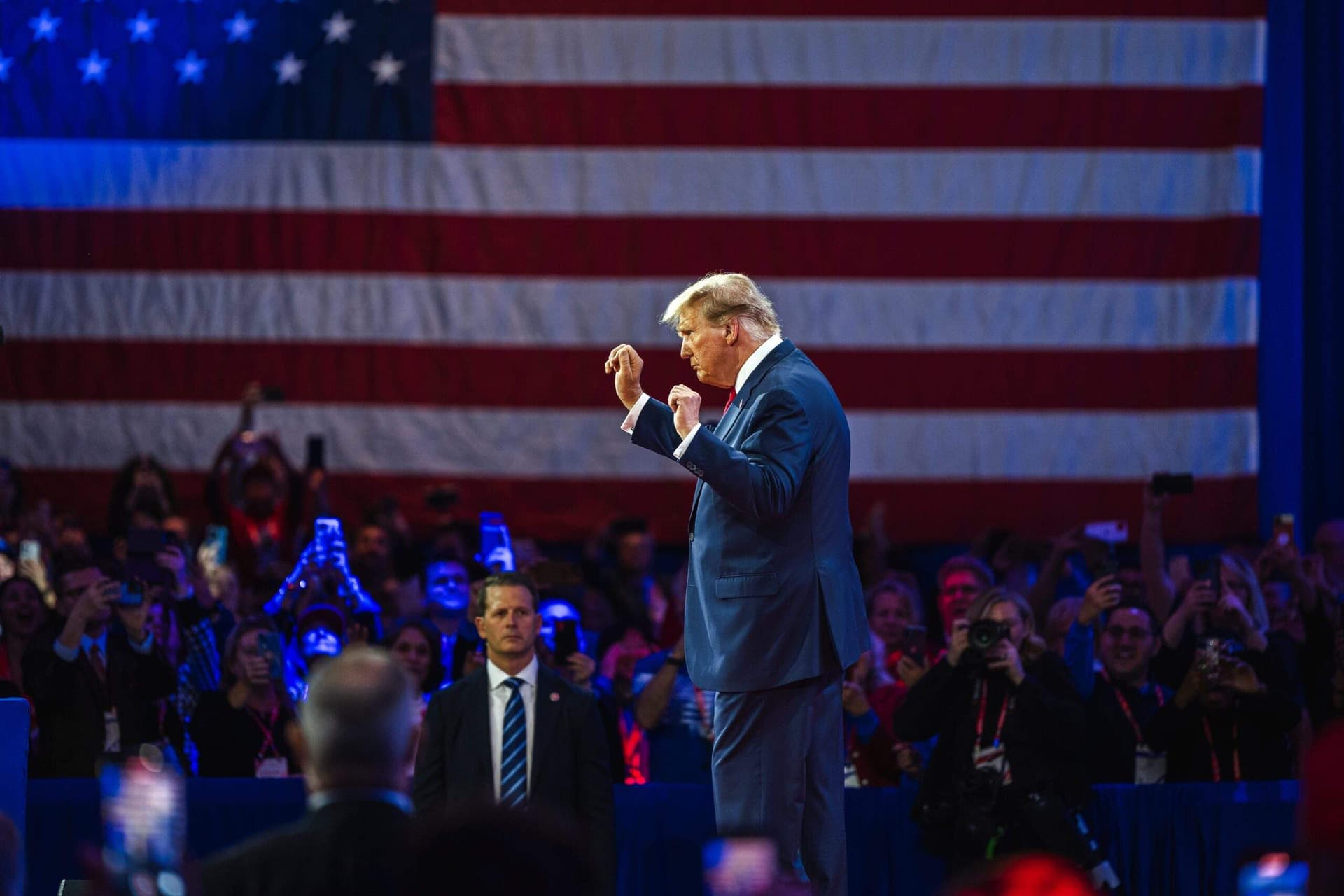
Trump boarded Air Force One this morning for the World Economic Forum in Davos, Switzerland. It’s been one year to the day since his second inauguration. At this year’s summit — already set to break attendance records with 65 heads of state and over 850 global CEOs — Greenland is top of the agenda.
“We’re going to do something on Greenland whether they like it or not,” Trump told reporters earlier this month.
To the Atlantic writers, this sounds like lunacy. To Trump and his inner circle, it’s leverage. Greenland is more than glaciers and puffins. It holds:
- 38.5 million tons of rare earth oxides
- Vast uranium and fossil fuel reserves
- Untapped precious metals
- And some of the world’s most important freshwater stores
Most crucial of all, Greenland is geography. It sits at the axis of North America, Europe, and the Arctic. As polar ice thaws, new shipping lanes are emerging between Asia and Europe.

The Arctic is becoming a real theater of trade, and military power, and whoever holds Greenland gets a front-row seat, regardless of what the Atlantic says. (Source: X)
Secretary of State William Seward wanted to buy it in 1867, shortly after Alaska. Harry Truman made a secret $100 million gold offer in 1946. Both were rebuffed.
Trump’s overtures are louder, more coercive — and possibly more effective.
 Markets Shiver as the Ice Moves
Global equity markets aren’t thrilled by Trump’s geopolitical to-do list.
European stocks fell 1.2% on Monday, marking their sharpest single-day drop in two months. U.S. stock futures also sank as traders returned from the MLK holiday.
The idea of American military presence in Venezuela and economic pressure on Denmark triggered the same uncertainty investors associate with war drums.
The irony, as Cohen pointed out, is that Trump rarely goes to war in the traditional sense. He wages it through tariffs, asset freezes, drone strikes, and asset grabs.
And markets are waking up to that new reality.
Gold surged to $4,738 an ounce — yet another all-time high. Silver, not far behind, brushed $96. The safe-haven trades are back, and not just because of inflation.
 What the CPI Hides
Much has been made of the “cooling inflation” narrative, as if the last two years of economic pain are already behind us. But under the surface, consumer pain continues — especially in the utility aisle.

Egged on by a hapless nattering class in the mainstream, most American voters would prefer not to think about foreign policy at all. Rather, they are looking to Trump and his current administration and asking “what have you done for me lately? (Source: Statista)
Gasoline prices, which peaked in mid-2022, have zigzagged lower. That’s helped moderate the headline CPI. But the real damage now shows up in electricity and natural gas.
Electricity prices are up 6.7% year-over-year. Since January 2020, they’ve risen a staggering 41%.
Unlike gasoline, these costs don’t fluctuate at the pump. They’re set by utility monopolies that face no real competition, outside of rooftop solar. Monthly bills include fixed charges, service fees, and per-kilowatt-hour costs — all carefully designed to rise without setting off alarms.
And they do rise.
Natural gas, too, has been quietly climbing. Not enough to make headlines, but enough to squeeze household budgets. With inflation camouflaged and CPI narratives massaged, this is the new normal: less sticker shock, more slow bleed.
 The Cost of Everything, and the Price of Power
Trump’s Davos pitch isn’t just about Greenland. It’s about redefining America’s leverage in a world that no longer revolves around the dollar.
Treasury Secretary Scott Bessent said in a press gaggle this morning that two-thirds of our outstanding U.S. debt “can be attributed to defending Europe through NATO and global security alliances.”
That’s not hyperbole. It echoes a central thesis we developed in Empire of Debt — that much of America’s deficit spending over the last fifty years has gone to maintain the post-WWII international order. An order that is now fraying.
Trump sees NATO as a liability. He sees Greenland as an asset. And in Bessent, he has a Treasury Secretary who understands both capital flows and the strategic value of hard resources.
Bessent has also gone on record in support of a sound regulatory framework for stablecoins — a cornerstone of the administration’s strategy to finance U.S. debt without sacrificing monetary stability.
This, too, aligns with our long-standing warnings about debt, inflation, and the declining credibility of fiat currency.
Trump and Bessent are executing a plan. It’s part petrodollar reset, part national security doctrine, part hard-asset investment thesis.
To the technocratic global elite, it sounds medieval. To investors who’ve been paying attention, it sounds like a new chapter.
 History Echoes in the Desert Air
And then there’s the mess in Iran.
Forty-five years ago today, another presidency opened with high geopolitical drama.
On January 20, 1981, just minutes after Ronald Reagan took the oath of office, 52 American hostages were released from Tehran after 444 days in captivity. The crisis had begun when militants seized the U.S. embassy in protest of the Shah receiving medical treatment in New York.
Jimmy Carter had failed to secure their release. A failed rescue mission killed eight U.S. troops. Negotiations finally succeeded only after Carter lost the election. Iran waited until Reagan was sworn in before releasing the hostages.
The message was clear. America projects power. But it only gets results when it’s taken seriously.
For all his faults, Reagan understood this. And so, it would appear, does Trump.
 The Great Reset Strategy is Now Realignment
We forecast several trends for 2026… a) global debt is skyrocketing forcing voters to reprice social and democratic priorities (at least in the bond market; b) the socialist wing of the Democratic Party is hammering home Trump’s “failure” to bring down prices for everyday Americans who are left out of the historic asset boom on Wall Street… and c) if the socialists take the House during midterms, all bets are off for the Trump realignment strategy.
The only spokesperson, in our view, who can translate the high-stakes view of the Trump administration and how their policies play out on Wall Street… and on Main Street, too… is the Treasury Secretary Scott Bessent.
Bessent, too, is in Davos this week. We’re expecting Trump’s speech tomorrow to try to bridge the gap between an aggressive geopolitical game of Risk and the direct impact on middle-of-the-road voters in the United States.
For better or worse, the narrative the two men set this week will, in fact, be the most important story “to be told” in 2026. It really depends on your perspective whether you plan to take advantage of the aggressive policy the Trump administration is putting into place ahead of the midterms.
A year into Trump’s second term, the question isn’t whether we’re witnessing a transformation — it’s whether the market, the public, and the opposition can keep up.
Approval ratings are near record lows. Tariff bluffs have become standard negotiating tactics. Foreign leaders are getting flummoxed (or arrested). Arctic islands are in play. Stablecoins are being fast-tracked. And the global financial system is, once again, at an inflection point.
2026 may well be the year when America’s “Great Reset” becomes a permanent realignment—one defined not by ideology, but by assets. Or it could end in total disaster. We don’t think Trump would have it any other way.
And in a world where everything is being repriced — energy, land, money, even democracy — that may be the only metric that matters. Our advice: pay attention to your own money.
~ Addison
P.S. For your overview, a replay of last week’s Grey Swan Live! with Shad Marquitz is up on the site. Paid-up members can check it out here. With gold and silver soaring, the theme of “Metals Mania” is certainly playing out.

Gold and silver haven’t looked this alive in decades.
This Thursday, January 22, 2026 we’ll be joined by our friend and fellow scrivener Joel Bowman from the far reaches of the globe in Buenos Aires, Argentina. Watch this space for details.
If you have requests for new guests you’d like to see join us for Grey Swan Live!, or have any questions for our guests, send them here.