In Waiting for Godot, Beckett’s tramps squander an eternity waiting for a man who never materializes. The play remains a masterpiece of futility: two men circling the same arguments, returning to the same patch of earth, consoling each other with a hope neither believes.
It’s an oddly fitting frame for Fed Day.
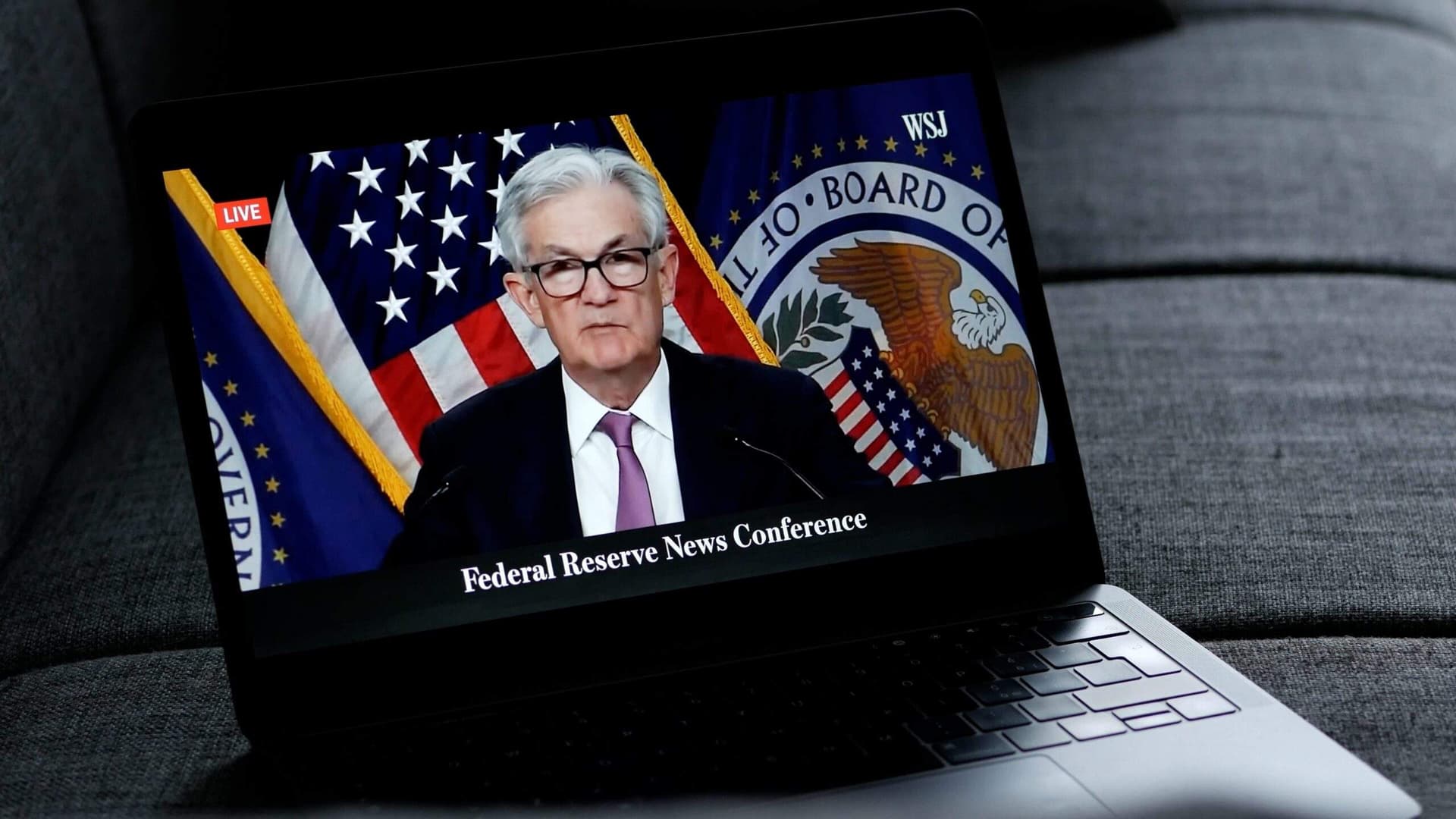
Here we sit — investors, analysts, retirees, accountants, even a few masochistic economists — gathered beneath the leafless monetary tree, rehearsing our lines as we wait for Jerome Powell to step onstage and tell us what the future means.
Spoiler: he can’t. But that does not stop us from waiting.
Tomorrow, he is expected to deliver the December rate cut. Polymarket odds sit at 96% for a dainty 25-point cut.
Trump, Navarro and Lutnick pine for 50 points.
And somewhere in the wings smiles Kevin Hassett — at 74% odds this morning, the presumed Powell successor — watching the last few snowflakes fall before his cue arrives.
It’s the great existential joke of modern finance: markets behave as though one man at one podium controls the tides, the seasons, and the 10-year yield.
Yet the thing Beckett understood — and central banks continue to demonstrate — the investment world rarely obeys the script.
As we wait for Jerome, everything else creaks and groans into motion.
 Why Rates Want to Go to 6–8% (Whether Jerome Likes It or Not)
Markets pretend the Fed sets the long end of the curve. They don’t. The bond market does — the last congregation of rational adults left standing.
Long rates move according to harsher gods:
- structural deficits and relentless issuance
- inflation expectations refusing to die
- global flows demanding hazard pay
- a dollar losing altitude as confidence wavers
This is why, last cycle, Powell began cutting — and the 10-year yawned and drifted higher anyway. The bond market was waiting for the Fed, too, but with the cold patience of someone who knows the visitor won’t arrive.
 Germany Steps Onto Japan’s Stage
The Krauts don’t want to be outdone. While we’ve been obsessed with the unwinding of the yen carry trade, Europe quietly steps onto the same trapdoor.
Despite 200 bps of ECB cuts since mid-2024, German 30-year Bund yields have continued to climb to their highest level since 2011.
Then Politico released that remarkable map — a heat chart not of “loan guarantees” but of future political immolation.

As a result of Trump’s geopolitical reset, Germany will be on the hook for the balance of European defense post-Ukraine hostilities. (Source: Politico)
Germany pledging €52 billion in liability on a “reparations loan” Russia will never recognize; Belgium sitting on €185 billion of frozen assets that may need to be paid back someday in a sick parody of justice.
This isn’t burden-sharing. It’s a continent drawing straws for who must hold the detonator last.
Meanwhile, the BOJ is quietly insolvent, sitting on losses equal to 225% of its capital. The carry trade unwind continues.
And the 20-year UST yield tripwire for Japanese selling — once thought theoretical — has long since snapped.
 China, Tariffs, and the Vanishing U.S. Buyer
China just posted its first-ever $1 trillion trade surplus in 11 months — with exports to the U.S. down 29%.
America has, in effect, been written out of its own tariff drama.

Is this going according to plan? (Source: Financial Times)
Beijing rerouted the entire supply chain while Washington was still composing talking points. Europe, Africa, Latin America — they picked up the slack without a fuss.
Here’s the tale of the ticker so far in 2025: We imposed tariffs; China built new trade corridors. We tightened; China globalized. We pointed fingers; China booked orders.
 Under the Surface Our Swan Finds a Few Morsels
Jerome may cut tomorrow, but the fundamentals look like a Beckett rehearsal:
- Initial jobless claims fall — but layoffs hit their highest for November since 2022.
- The BLS, still groggy from the shutdown, will simply not release an October jobs report.
- Small business bankruptcies under Subchapter V hit a record 2,221 for the year.
- Large bankruptcies reach 717 — already more than any full year since 2010.
- Consumers stop paying credit cards first, autos next, mortgages last — a pattern that typically precedes a foreclosure wave.
But the S&P? It floats serenely above it all, as if reading from a different script entirely.
 At the Grocery Store: A Can of Soup Tells the Story
Campbell’s Tomato Soup — the most honest economic historian in America — has no capacity for shrinkflation or narrative spin. It has held the same 10.75-ounce stubbornness for 128 years.
And that is precisely why its price chart looks like an EKG of American monetary misadventure.

We haven’t done the math yet, but as an exercise, you may want to: What’s a can of soup priced in gold through all this monetary mayhem? (Source: Political Calculations 2025)
Clean, unforgiving, and unmistakable:
1971 — gold window closes → soup takes flight.
2020–2025 — debt rockets to the outer planets → soup follows suit.
The “affordability” debate Trump keeps fumbling is not philosophical; it’s sitting right there on aisle seven, red and white. We abandoned monetary restraint, and the soup told the truth before the politicians did.
 Energy and Precious Metals: The Foreshadowing Act
Energy stocks are tightening like a coiled spring.
- rigs down
- shale peaking
- Tier-1 acreage gone
- decline rates accelerating
- and oil trading at one of its cheapest levels relative to global money supply
Gold and silver — the old sentinels — are whispering the same warning:
- central-bank gold buying at its fastest in a decade
- silver demand from solar alone projected to consume 40% of global output by 2030
- digital inflation hedges wobbly, metallic ones electrified
As hedges become harder to obtain physically, investors will eventually do what they always do in the late-stage Minsky phase: chase miners because the bullion has already slipped away.

Marin Katusa shows us how underserved gold and silver miners are in the natural resource sector (Source: Katusa Research.)
 And Through It All… Investors Pile Into Leverage
A record $239 billion has poured into leveraged ETFs this year — the most in history — as if investors are trying to outrun the very system they sense is shifting beneath their feet.
Cash on the sidelines has hit a historic 25% of GDP, a number historians will write footnotes about.

Time for a sea change? Energy, real estate and materials have gotten a raw deal as investors chase another tech boom. (Source: Yardeni Research).
Mostly, the ETFs are trying to play the AI tech boom safely.
As a consequence, information technology is now 45% of the S&P 500 — nearly the exact ratio the market held before the dot-com collapse.
But remember: in Beckett’s universe, the crowd always believes tomorrow will clarify everything. Energy, which we like, represents a scant 2.8% of the S&P 500.
 The Long Wait Continues
So here we are again, gathered beneath the bare winter branches, waiting for Jerome to arrive and tell us the world makes sense.
Markets will cheer the cut. Commentators will call it a turning point. The political class will dress it up as evidence that their policies work. And yet the deeper machinery — debt markets, energy constraints, demographic collapse, geopolitical misalignment, and the tightening vise of resource scarcity — continues grinding forward.
We wait for Jerome because he is convenient. We wait for the Fed because they are familiar. We wait for clarity because the alternative is admitting the truth:
This is more than a cycle, it’s still the early stages of a transformation. We’re waiting for AI as much as we’re waiting for the Fed. Yet no one — not Powell, not Hassett, not the bond market, not even the algorithmic gods — is going to arrive onstage tomorrow to explain it neatly.
That said, yesterday we promised some investment opportunities that are likely to avoid the bears this holiday season.
We enlisted Andrew’s help for a few interesting picks, those that have yet to make it into the Grey Swan model portfolio or any of our (now 61) special reports. Here’s what Mr. Packer said:
On a valuation basis, energy is the only sector trading at a discount to its historic average PE ratio, and offers tremendous cash flow for income investors now. Apache Energy (APA) is heavy in the U.S., so it should be tariff-immune.
Foreign stocks, especially strong brand/strong income plays offer higher yields than U.S. stocks, and their lower valuation could mean better returns in the years ahead. Unilever (UL) is a leader in global consumer brands.
Brokerage firms are printing profits from soaring trading volume right now, a trend we see continuing into the midterms. Interactive Brokers (IBKR) has one of the most robust brokerage platforms, and they don’t do payment for order flow.
Andrew: “Apache (APA) for energy, Unilever (UL) for global brand, and Interactive Brokers (IBKR) for brokerage are solid ideas that also aren’t in the model portfolio/any special reports.”
We also note that despite very low volatility in the markets today, bitcoin and all of our Dollar 2.0 plays caught a strong bid this morning. Paid-up readers can review our digital asset investment thesis, right here.
As we mentioned earlier, we’ll be off for the next three days, getting organized for 2026 and pre-gaming for the holidays in Baltimore.
~Addison
P.S. If you missed last week’s Grey Swan Live! with Dan Denning, the replay is up. We covered Powell, Hassett, QT’s demise, Japan’s slow-motion detonation, Dollar 2.0, energy, gold, and why the next crisis won’t resemble the last — except in the part where almost no one is ready. Tune in while you wait for Jerome.

If you have requests for new guests you’d like to see join us for Grey Swan Live!, or have any questions for our guests, send them here.