“So [Trump’s] going down one route — payment for security, using tariffs as leverage to try and correct the trade imbalance, to try and bring some of these issues back into line. And so, yeah, think big, think bold, because that’s what he’s doing right now.”
– Jim Bianco
April 1, 2025 — What is the Mar-a-Lago Accord? And what would a Mar-a-Lago Accord mean for the value of the U.S. dollar?
We begin our analysis with the name itself. Mar-a-Lago Accord is an echo of the three major international currency accords since the original Bretton Woods Agreements reached in 1944.
The first was the Smithsonian Agreement in December 1971. This came in the aftermath of President Nixon’s decision on August 15, 1971, to end the convertibility of U.S. dollars into physical gold by U.S. trading partners at the fixed rate of $35.00 per ounce. The major countries in the global system (U.S., UK, France, Germany, Italy, Japan, Netherlands, Sweden, Switzerland, Canada, Belgium, and Netherlands) met at the Smithsonian Institution in Washington DC to decide how to reopen the gold window.
The main U.S. goal was to devalue the dollar. In the end, the price of gold was increased by 8.5% to $38.00 per ounce (revalued to $42.22 per ounce in 1973), which equaled a 7.9% dollar devaluation. Other currencies were revalued against the dollar, including a 16.9% upward revaluation of the Japanese yen.
The effort to reopen the gold window failed. Instead, major countries moved to floating exchange rates, which remains the norm to this day. Gold moved to free market trading and is currently about $3,050 per ounce. That gold price represents a 98.8% devaluation of the dollar measured by weight of gold since 1971.
The period from 1971 to 1985 was tumultuous in foreign exchange markets including the Petrodollar agreement (1974), the Herstatt Bank collapse (1974), the sterling crisis (1976), U.S. hyperinflation (50% from 1977-1981), a gold price super-spike (1980), and a major global recession (1981-1982). By 1983, inflation was subdued, the dollar was gaining strength, and strong economic growth was achieved in the U.S. under Ronald Reagan.
The next major economic gathering on foreign exchange was the Plaza Accord in September 1985. This was convened by U.S. Treasury Secretary James Baker at the Plaza Hotel in New York and included the U.S., Germany, the UK, Japan and France. At the time, the dollar was at an all-time high relative to other currencies. The dollar had even strengthened against gold, which had dropped in price from $800.00 per ounce in January 1980 to around $320.00 per ounce in 1985.
The purpose of the meeting was to devalue the dollar in stages. In this respect, the meeting was a success. Importantly, the method of devaluation was to be gradual and it was to be accomplished by central bank and finance ministry interventions in the foreign exchange markets. It was not a fiat devaluation; it was a finesse.
In practice, the market interventions were quite few. Once foreign exchange traders got the message, they took the dollar where it needed to go on their own. No foreign exchange dealer wanted to be on the wrong side of the trade if the central banks decided to intervene on any particular day.
The Louvre Accord, signed on February 22, 1987, among the U.S., UK, Canada, France, Japan and Germany was, in effect, a victory lap following the Plaza Accord. Between 1985 and 1987, the dollar did devalue against other currencies. The dollar also fell against gold, which rose from $320 per ounce to $445 per ounce by the time of the meeting. It was mission accomplished for Treasury Secretary James Baker. The purpose of the Louvre Accord was to lock down the accomplishments of the Plaza Accord, stop further dollar depreciation, and return to a period of relative stability in foreign exchange markets.
This accord was also a success. The dollar was mostly stable after 1987, despite the introduction of the euro in 2000 (the euro bounced between $0.80 and $1.60 in the early 2000s. Today it’s $1.09, which is not far from its original valuation of $1.16).
The other wild card was gold. After hitting bottom at around $250 per ounce in 1999, gold surged to $1,900 per ounce in 2011, a 670% gain for gold and a de facto devaluation of the dollar when measured by weight of gold. The period of relative stability in foreign exchange markets lasted until 2010 when a new currency war was unleashed by President Obama.
Continued Below…
Gov’t Insider Predicts: 5 Decades of Stock Market Gains in Trump’s Second Term
In the past few weeks, Donald Trump and Elon Musk have exposed more waste, fraud and abuse than any administration in history. $32,000 spent on 25 coffee cups by the Air Force. $20 million from USAID to pay for a new version of Sesame Street in Iraq. $59 million spent to house illegal immigrants in luxury hotels. But Trump’s next move will be even more shocking – and potentially lucrative. One former White House insider predicts, “It will unleash five DECADES of wealth in just a few years.” When you see what President Trump is planning, I think you’ll be surprised. Our research indicates he is about to unleash a massive $150 trillion asset. For more than a century, it’s been hidden from the public. But in the weeks ahead – it could become the most talked about story of the year. For an inside look at Trump’s next big move and what it could mean for your money, click here. |
A New Mar-A-Lago Accord
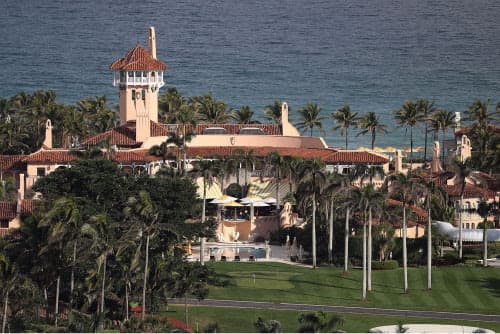
Which brings us to discussion of a possible new international monetary conference in the chain of conferences from the Smithsonian Agreement to the Plaza Accord to the Louvre Accord. Given Donald Trump’s dominance on the world economic scene today and his love of ornate architecture of the kind seen at the Plaza Hotel and the Louvre (Trump owned the Plaza Hotel from 1988 to 1995),it’s not a stretch to expect that Trump would convene any new world monetary conference at his equally ornate Mar-a-Lago club in Palm Beach, Florida.
The first discussion of a Mar-a-Lago Accord appears in Chapter Six of my book Aftermath (2019), published six years ahead of current attention to the topic. That chapter is titled “The Mar-a-Lago Accord” and contains extensive discussion of the evolution of the international monetary system starting in 1870, including the more recent accords noted above.
It then moves through my private meetings with IMF head John Lipsky and Treasury Secretary Tim Geithner with a focus on a possible new gold standard and the attempted replacement of gold by the Special Drawing Right (SDR), created in 1969 and used among IMF members ever since. It ends with the classic 1912 quote from Pierpont Morgan that, “Money is gold, and nothing else.” and recommends that investors acquire physical gold for their portfolios. The dollar price of gold has risen 120% since that recommendation.
Today’s vogue in Mar-a-Lago Accord research began with a November 2024 paper written by Stephan Miran titled “A User’s Guide to Restructuring the Global Trading System”, published by Hudson Bay Capital. Although the title refers to the trading system, it explains how currency devaluation can be used to offset the impact of tariffs and refers to “persistent dollar overvaluation.”
From there, it’s a short leap to the ghost of the Plaza Accord and the need for a new Mar-a-Lago Accord. (Shortly after the paper was published, Trump appointed Miran as Chair of his Council of Economic Advisors, which gives his views added weight).
Issuance of 100-Year Bonds
In the currency section of the paper (pages 27-34), Miran not only suggests a devaluation of the dollar; he proposes that the U.S. issue 100-year bonds. In Miran’s view, 100-year bonds will be attractive to foreign reserve managers and will reduce any dollar selling needed to prop up their own currencies. Those long-term dollar holdings will mitigate short-term dollar devaluation in a way that moves the entire international monetary system toward a desirable equilibrium. Miran specifically uses the term Mar-a-Lago Accord to describe his proposed system.
There are many more technical details in Miran’s plan that we don’t have room to discuss in this article. These include use of the Treasury’s Exchange Stabilization Fund, the Fed’s Bank Term Funding Program, and Fed currency swap lines. Miran also suggests using the International Emergency Economic Powers Act of 1977 (IEEPA) to impose withholding taxes on interest payments to foreign holders of Treasury securities (a form of capital controls) as a way to discourage trading partners from holding Treasuries and therefore a way to devalue the dollar.
Trading partners would be evaluated using a traffic-light system. Countries would be ranked green (friendly), yellow (neutral) and red (adversary). Green countries would get U.S. military protection and the most favorable tariffs, yellow would get reciprocal tariffs, and red countries would get no security help, punitive tariffs and possible capital controls.
A Financial Catastrophe in the Making
In effect, Miran is trying to have it both ways. He wants to devalue the dollar and at the same time keep the dollar at the center of the International Monetary System. Nixon did this in 1971 and Baker did it in 1985. With regard to Miran, one cannot resist a paraphrase of Lloyd Bensen – “Stephan, you’re no Jim Baker.” The success of the Plaza Accord depended entirely on close cooperation of the major country finance ministries. No such cooperation exists today given sanctions on Russia, tariffs on China and the U.S. isolation of the EU with respect to the War in Ukraine.
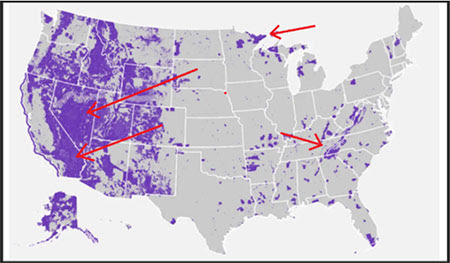
Since Miran’s paper, the topic has spun completely out of control. A recent MarketWatch headline says “Wall Street can’t stop talking about the ‘Mar-a-Lago Accord.’”Some analysts propose that gold on the Federal Reserve’s balance sheet (actually a gold certificate) would be revalued from $42.22 per ounce to the market price (now $3,050 per ounce) with the “profit” added to the Treasury General Account. Another idea is to use U.S. assets such as land and mineral rights to collateralize U.S. debt.
As of now, no one knows what a Mar-a-Lago Accord would actually be or whether it will even happen, so it’s impossible to describe the impact. Still, the best-known version of the plan would have unintended consequences that could lead to a global financial catastrophe.
There’s no need to force holders to swap short-term debt for long-term debt. You simply let the short-term debt mature and replace it with new 100-year bond issues through the existing primary dealer underwriting system. No coercion is needed; there would be huge demand for 100-year debt.
Dollar devaluation does not fight potential inflation from tariffs (there isn’t any). It actually causes inflation by increasing the cost of imported goods. Any gold price mark-up on the Fed’s books is simply an accounting entry. The suggested “audit” of Fort Knox by Trump and Elon Musk (if it happens) will be nothing more than a staged photo-op. Gold has a world price entirely unaffected by accounting games between the Treasury and the Fed.
Again, the Mar-a-Lago Accord as it’s envisioned today would cause a global financial crisis. That’s because it fails to understand the importance of short-term Treasury debt as collateral for inter-bank lending and derivatives. Substituting 100-year Treasury debt for short-term Treasury bills would make those bills scarce. Treasury bills are the most liquid collateral in the world and are at the root of the Eurodollar system and the $1 quadrillion derivatives market. Scarcity of Treasury bills would implode bank balance sheets and lead to the greatest banking crisis in history.
The big winner in this context is gold. The BRICS are moving toward gold as fast as they can. Investors can do the same. Don’t be left behind.
Regards,
Jim Rickards, Daily Reckoning & Grey Swan Investment Fraternity
P.S. from Addison: “It has been a great pleasure to read very knowledgable correspondences,” Ken N. writes, “Your new format continues your tradition of excellence. Thank you for the kindness you demonstrate with the time and thoughtful effort you share with readers like me.”
So far, so good.
P.P.S. To check out Jim’s full research on the dollar and what could happen with gold, click here.
Do you have any suggestions on content, angles, or ideas we should be pursuing? Please add your ideas or suggestions right here: addison@greyswanfraternity.com