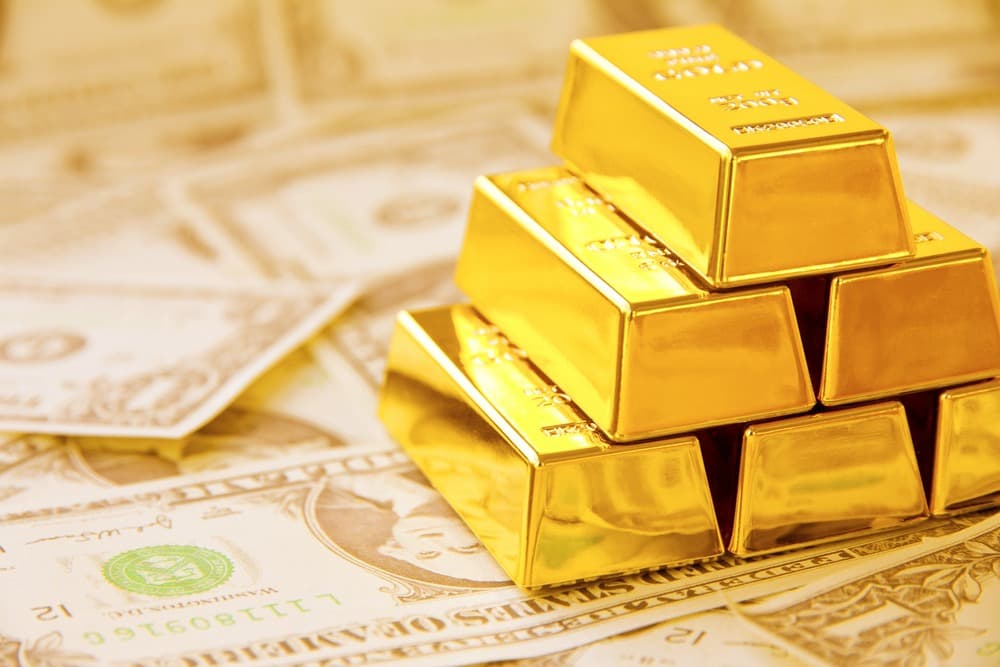
“Gold is money. Everything else is credit.”
— JP Morgan
Take away the honest money and everything gets a little fishy.
Long have we dwelt on the corrupting influence of funny money on capital asset prices and on the economy. Everything gets distorted, perverse…and false. We get high prices. We get low prices. What we don’t get are honest prices.
Yesterday, we looked at the ‘small time crooks’ — ripping off the public for a million or two.
Today, we move to the big fry.
You’ll recall that the money in question was never earned by anyone. No one has a genuine claim to it. And what kind of apple falls from this funny money tree? Just what you’d expect…a funny one…with the worms already in it.
Whatever else can be said about it, the Trump Team has an exceptional appetite for rotten fruit. The Economist:
Recently a delegation of Swiss businessmen arrived there bearing a gold bar and a Rolex clock for Donald Trump, who said “Job well done,” and accepted them on behalf of his presidential library. Days later America’s tariff rate on Switzerland dropped by more than half. In May Qatar gave Mr Trump a presidential jet worth $400m, also bound eventually for his library. In October the Gulf state won approval to build a training facility for its fighter pilots at an air-force base in Idaho.
Hardly a day goes by without the taint of scandal. But our point is not that people are crooks; crookedness will always be with us. But crooked money begets crooked people. In an honest economy, you get paid for providing goods and services. In a funny money economy, rackets, grifts and the ol’ false shuffle pay off. The Economist continues:
In the past ten months the president has dismantled the government’s anti-graft apparatus. The result is a widespread perception that the White House is pliable and that activity once treated as scuzzy, scandalous or punishable will be tolerated, if not welcomed.
The presidential pardon, for example, is now ‘up for sale,’ says The Economist. It reminds us that Trump pardoned Trevor Milton this past spring. Mr. Milton was the man behind Nikola…a company that took the Christian name of Nikola Tesla, leaving the patronym to Elon Musk. The stock was at one time worth $30 billion on the promise of a fleet of trucks that wouldn’t need gasoline. Alas, the company hit a serious speed bump; its new technology didn’t work. Milton towed a prototype of his truck up the side of a mountain and filmed it rolling back down, letting viewers imagine that it ran on its own power. This and other shenanigans resulted in a four-year prison sentence.
Bonner Private Research is supported by investors like you. To receive new posts and support our research, become a paid subscriber today.
But in the court case, Milton was represented by Brad Bondi, brother of Pam Bondi, now America’s attorney general. And last year, Milton shrewdly contributed $1.8 million to Trump’s campaign. The pardon — which sprung him from prison and also eliminated the requirement that he make restitution to Nikola investors (who were wiped out when the company went bankrupt) — came two months after Trump regained the White House.
And now, no spider weaves its web at a lobbyist’s door. Clients are coming in hot and heavy; ready to pay big money for a word whispered in the president’s ear. Lobbyists broker deals with the president to get them out of the pokey. The Washington Post:
In April, Alina Habba, the U.S. attorney for New Jersey, extolled her office’s role in the sentencing of a former nursing home magnate to three years in prison for defrauding the government of $38 million. The man, Joseph Schwartz, was alleged to have overseen a “collapsed nursing home empire” and “willfully” failed to pay employment taxes, Habba’s announcement said.
Around that time, Schwartz paid $960,000 to two lobbyists “seeking a federal pardon,” according to their lobbying filing.
Fake money seems to bring out the worst in people. Like the village prostitute, it is available to all…but cherished by none…and ultimately abused and depreciated.
But nothing in the history of chicanery even comes close to the opportunities presented by Mr. Trump’s crypto business. It takes fake money to a whole new level. People use one kind of fake money (dollars) to purchase the president’s crypto (also of no real value). But like magic, what they get in return can actually be worth something. The Economist is on the story:
In May a fund based in the United Arab Emirates, MGX, said it would buy $2bn-worth of World Liberty’s tokens. The transaction has netted the Trumps millions this year.
Two weeks later Mr Trump agreed to let the UAE buy the most coveted AI chips—a privilege denied by the Biden administration, on account of Emirati chumminess with China. Negotiating the chip deal for the Americans was Steve Witkoff, Mr Trump’s envoy, whose son is the boss of World Liberty. Opposite Mr Witkoff was the brother of the Emirati crown prince, the chairman of MGX.
But the grandest larceny leaves the public not only witless and clueless, but with a fawning admiration for the perps.
Regards,
Bill Bonner
Bonner Private Research & Grey Swan Investment Fraternity
P.S. from Addison: We’ll be talking with the inimitable Dan Denning this week on Grey Swan Live! @2pm on Thursday, December 4, 2025. Dan’s most important role in life is as the godfather to my middle son, August.
Dan’s also Bill Bonner’s investment partner in and managing editor for Bonner Private Research. More details to come as we hash out the focus of this week’s discussion. Dan’s easily one of the keenest minds in the macro space. It’ll be worth your time to join us on Thursday. In advance, send your suggestions and/or questions: here.