U.S. naval forces intercepted and seized the Iranian-flagged cargo vessel Touska after issuing repeated radio orders over a six-hour period. The ship continued on course. Boarding followed. Tehran called the seizure piracy and warned of retaliation.
The enforcement came after a weekend of conflicting instructions.
To catch you up briefly:
On Friday, Iranian Foreign Minister Seyed Abbas Araghchi said the passage for all commercial vessels through the Strait would remain “completely open” for the duration of a 10-day ceasefire agreement with Israel and Lebanon.
President Trump responded publicly, thanking Iran, then stating the U.S. would maintain its blockade “As it pertains to Iran” (all-caps removed for your benefit) until a formal peace deal is reached. Iran’s Islamic Revolutionary Guard Corps then declared the Strait had “returned to its previous state,” placing it under “strict management.”Shipping operators received three separate instructions within 24 hours. Some tankers transited under escort. Others held position outside the Strait awaiting clarity.
On Saturday, India reported that Iranian forces fired on two of its merchant vessels after allowing earlier passages. Insurance desks repriced coverage to reflect live-fire risk alongside detention risk.
By Sunday, the seizure of the Touska gave carriers a working rule: transit remained possible, but subject to interruption. Several firms paused plans to resume normal schedules.
Negotiators were expected in Islamabad for a second round of talks today. President Trump said his team would arrive. Iranian officials responded hours later that there was “no clear prospect” for face-to-face negotiations under current conditions.
The original two-week ceasefire expires on Wednesday, two days hence.
Yada. Yada.
Yada.
Following the headlines out of Iran is all but futile for now. Market prices are doing a better job of forecasting the eventual conclusion to hostilities than any other source.
Oil prices moved slightly higher. Stocks slightly lower. All three of the major indexes are sticking around, waiting for an excuse to spike to new highs again this week.
The real action during the sturm and drang of this Iran excursion is in individual Shadow Stocks. For a clear explication of why individual stocks are trading wildly even if the indexes remain calm, click here: Shadow Stock High Flyers.
🏛 IMF Issues an Article IV Warning Against the United States
Some quick background: In December 2001, Argentina’s banking system shut down over the course of several weeks. Depositors could not access funds. Transactions stopped. Supermarkets were looted as supply chains broke. Police fired on civilians during riots in Buenos Aires.
The president left the presidential palace by helicopter. Five presidents rotated through office within two weeks. The government defaulted on $93 billion in sovereign debt, the largest default on record at the time.
The sequence leading into that collapse had been documented in advance. IMF reports earlier in 2001 cited a sharp deterioration in public finances, deficits exceeding agreed limits and a rising debt burden.
Argentina entered the crisis with high unemployment, contracting GDP and declining investor confidence. Funding access narrowed, and liquidity disappeared. Political instability followed.
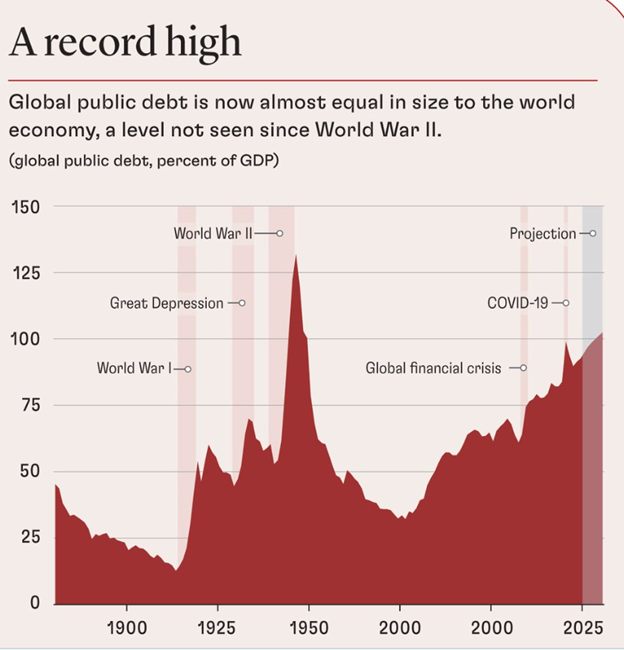
The IMF warning regarding the U.S. Government’s deteriorating finances comes alongside a global warning that debt has reached heights last seen during the epic pandemic lockdown crisis and near the end of World War II. (Source: Fortune Magazine)
The International Monetary Fund (IMF) released its 2026 Article IV consultation on the United States last week, warning that a similar scenario could unfold here.
The IMF report cited federal debt at 123.9% of GDP and fiscal deficits at 7.5% of GDP. IMF staff called for a “frontloaded fiscal adjustment,” referring to immediate spending reductions rather than deferred measures.
The report also noted the absence of a credible plan to stabilize the debt trajectory.
The dollar’s share of foreign exchange reserves fell to 56.1% in the first quarter, a 2.3 percentage point decline in three months. Over the previous decade, the total decline measured roughly 10percentage points. That places roughly one-quarter of the decade-long shift into a single quarter.
Accounting for the violence in the Persian Gulf, the SWIFT banking settlement system reported that non-dollar transactions in the Middle East increased from 18% to 31% over three months.
In Asia, the share rose from 35% to 42%. Central banks now hold more gold than U.S. Treasury securities for the first time since 1996.
The historical record provides plenty of examples of what happens next.
In 1914, governments suspended gold convertibility under wartime funding pressure. In the early 1940s, the Federal Reserve supported Treasury issuance during wartime deficits. In 1971, the U.S. ended gold convertibility after sustained pressure on reserves. After 2001 and again in 2020, liquidity programs expanded during periods of stress.
As such…
🏦 Paulson Suggests Contingency Planning, Now
Former Treasury Secretary Henry Paulson is back.
In an interview circulating widely on X, Paulson warned U.S. authorities should prepare for a scenario in which “demand for Treasury securities declines.”
Paulson, you may recall, delivered a quick-n-dirty three-page memo to Congress overnight on September 17, 2008 – the night after Lehman Brothers filed for bankruptcy. The memo kicked off trillions in bank bailouts during the 2008 financial crisis.
Since leaving the Treasury, Paulson has remained largely absent from public commentary.
If borrowing costs rise beyond policy targets, which is entirely possible if the conflict in Iran goes on too long, Pauson suggests traders get ready for the next GFC, which could be bigger and badder than its predecessor.
🥇 Money Supply Expands, Metals Respond
U.S. M2 money supply contracted during 2022 and 2023 as the Federal Reserve reduced its balance sheet. The measure reached a low in October 2023 and has since increased by nearly $2 trillion, or about 10%, during a period without formal crisis conditions.
Precious metals markets began moving in April 2024, roughly six months after the inflection in money supply. Core PCE inflation currently runs near 3%, above the Federal Reserve’s 2% target.
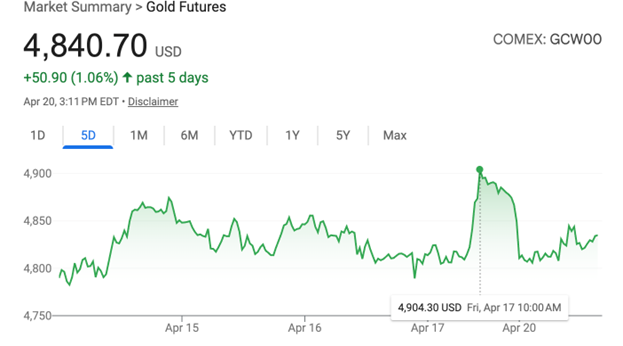
Milton Friedman described inflation as a monetary phenomenon tied to the expansion of currency supply over time. Gold is way ahead of the game. The yellow metal has been working its way back to $5,000 over the past week, touching $4,904 briefly on Friday. Silver’s back above $80.
💵 Treasury Expands Dollar 2.0 “Stablecoin” Oversight
On April 8, in response to concerns about its own debt financing, the U.S. Treasury issued a joint proposed rule integrating stablecoins into the Bank Secrecy Act.
Treasury Secretary Scott Bessent doesn’t want to wait for the Senate to get its act together and pass the Clarity Act.
The Treasury proposal is designed to protect the financial system while allowing U.S. companies to operate within the payment stablecoin framework.
The rule extends existing compliance structures into digital payment systems. Know Your Customer requirements, anti-money laundering rules and suspicious activity reporting apply directly to transactions executed through regulated stablecoins.
In other words, all the things the Clarity Act is supposed to codify into law.
📅 This Week, Keep an Eye Open For Fed Drama and Shadow Stocks
Kevin Warsh appears before the Senate Banking Committee this week. Senator Thom Tillis has said he will block any Federal Reserve nominee from advancing until the investigation into Chairman Jerome Powell concludes. Powell’s term ends May 15.
Earnings season is heatin’ up, too: UnitedHealth, 3M, and GE Aerospace report Tuesday. Tesla, IBM and Boeing file earnings on Wednesday. Intel, Blackstone, and SAP report on Thursday. Procter & Gamble and Colgate-Palmolive close the week on Friday. Several less interesting credit card companies and defense contractors also report.
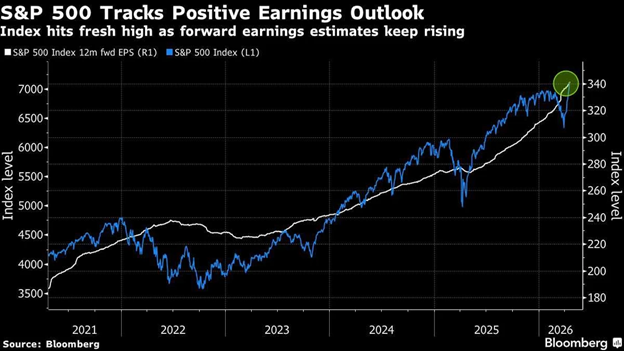
The S&P 500 Index has climbed to a record high, brushing off concerns about the potential economic fallout from the Iran war. (Source: Bloomberg)
We’ll be keeping an eye on Shadow Stock trading opportunities with each earnings report filed. (See the P.S. below if you want to follow along and trade them.)
🚀 Space Nuclear Program Moves Forward
The White House issued National Space Technology Memorandum-3 on April 14, directing NASA and the Department of War to develop nuclear reactor systems for space deployment.
NASA has 30 days to initiate development of a mid-power reactor, including a lunar surface system targeted for launch by 2030.
 The Department of Energy has 60 days to assess the capacity of the U.S. nuclear industrial base to produce up to four reactors within five years. (Source: Power Magazine on X)
This one sure beats the US government’s original plan to detonate a nuke on the Moon.
On this date, in 1958, the U.S. Air Force announced Project A119… a plan to send a nuclear device to explode on the Moon, thereby making the citizens of Earth quake in fear.
Researcher Leonard Reiffel led the feasibility study, with input from Edward Teller and renowned astronomer Carl Sagan. Project A119 aimed to calculate the visibility of the resulting dust cloud from Earth.
The project was canceled in 1959 due to concerns over launch failure (and public reaction).
~ Addison
P.S. Last week on Grey Swan Live!, we pulled back the curtain on what’s really happening beneath the surface — a fragmented market where individual stocks are making outsized moves while the indexes go nowhere.
That dynamic is creating a true stock-picker’s environment, especially during earnings season, when catalysts can send the right names sharply higher in a matter of days.

Alongside that research, we’re rolling out an upgrade to your Grey Swan forecast emails — including up to five stock or trade ideas each week.
To get started, we’re giving you three stocks free of charge. The setup is there, and the opportunity is real. Take a closer look here.