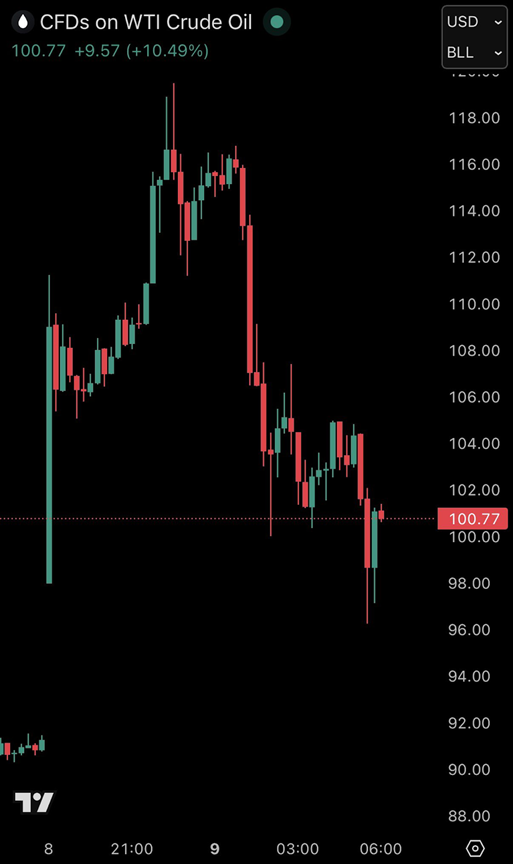
Oil prices opened significantly higher in overnight trading, following a weekend of news about shutdowns in Saudi Arabia and the bombing of Iranian oil infrastructure.
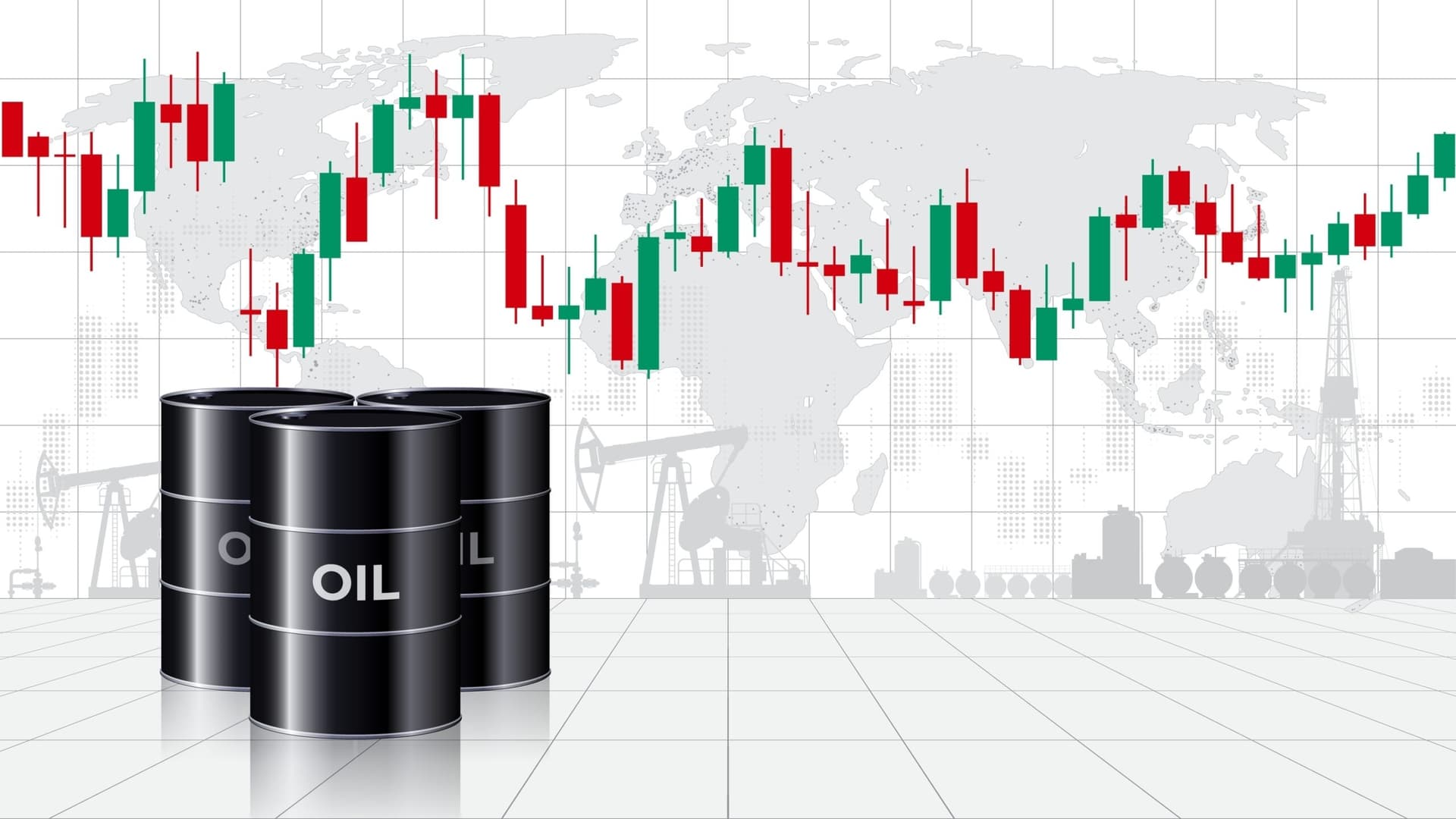
At its peak overnight, oil topped $119 per barrel, nearly double its price at the start of the year.
But what’s this? G7 countries are rumored to be opening up their strategic reserves… and now prices are settling closer to $100:
It’s, umm, a fluid environment. Black smoke could be seen by a geosynchronous satellite billowing from the BAPCO, Bahrain’s largest oil refinery. The fire was reported to have started after an Iranian drone attack.
Restarting oil operations and assuring Gulf shipping insurance companies will take weeks, maybe months. Emptying strategic reserves is a short-term salve – and then those reserves will need to be refilled.
Early in our Grey Swan analysis, noting high stock P/Es and the build-out in AI data centers, we warned that 15 years of misguided underinvestment in oil infrastructure had mispriced oil.
Our recommendation at the time: sell stocks, buy oil.
Given geopolitics and the great race for the AI economy, we expect energy prices to dominate trade for the next decade.
~ Addison
P.S. There aren’t too many conversations we have that will shake your worldview and make you rethink your assumptions about the market and the economy. Last week’s Grey Swan Live! with John Robb, author of Brave New War and a Grey Swan Investment Fraternity contributor, did just that.
John’s analysis of the U.S. military strikes in Iran and their strategic decision to decapitate the Iranian regime is fraught with unknown unknowns we hadn’t yet considered. That’s the value of having a former advisor to the Joint Chiefs of Staff on kinetic network warfare in the fraternity.
The conversation sent Andrew and I into the futures markets looking for ways to isolate portfolio risks should the U.S. and Israeli bombardments fail to restrain a decentralized and highly motivated, mobile Iranian drone network.
Passage of oil and natural gas through the Strait of Hormuz has been paralyzed for an indeterminate period, and the longer prices rise, the more insatiable global financial markets and the U.S. domestic economy will become.
John covered the strategy employed against Iran, its impact on neighboring countries, and what it means for the dollar and other assets. His analysis was shocking and sobering:
Robb’s expertise on network warfare is central to understanding the Trump strategy for killing 40 top Iranian leaders and what’s likely to happen next. The methods, technology and strategy of open warfare have changed dramatically since the Russian invasion of Ukraine in 2020.
If you’re not yet a member, click here to sign up and join the fraternity today so you can get caught up on the war and the longer-term implications as the missiles and headlines currently fly.