
The market is moving into February like a tired horse — still on its feet, but no longer eager to run.
This morning, all three major U.S. stock indexes traded lower. Mild selling spread beyond tech and into names that usually wear the “safe” label.
Not alarming, by any means. “People haven’t packed up and gone home,” one trader told Bloomberg, leaning back from his screen, “they’re just sticking close to what they know.”
“This feels like a market tapping the brakes,” another quipped. “Nobody’s panicking. Nobody’s feeling brave either.”
Gold has recovered 6% of the 8% it lost over the weekend today alone, in its best day since March 19, 2025 (so far). Silver is up 9%.
Bitcoin, however, has drifted lower again. The bellwether crypto reached an intraday 1-year low today. More on why the Dollar 2.0 digital asset space is getting hung up in a minute.
 Jobs Report Delay Leaves Traders Flying Without Instruments
The market weariness deepened a little when we got another sign that the data at the Bureau of Labor Statistics (BLS) is still discombobulated from all its efforts to make the jobs report fit a political narrative.
The bean counters in Washington delayed the January jobs report again, this time because of “a funding lapse.”
When labor data disappears, markets lose one of their few shared reference points. Reuters noted that desks were “flying blind” into the middle of the week, and the price action reflects it. Stocks eased lower together. Nobody wants to make a big bet without these labor numbers that are often used to justify it.
Ho hum.
 Nvidia Hesitates and AI Arithmetic Comes Due
Against that backdrop, the news that rattled the tape most came from technology’s high altar. Shares of Nvidia sagged after The Wall Street Journal reported the company was stepping back from a proposed $100 billion investment tied to OpenAI.
The story landed with a thump because it punctured a comfortable assumption: that capital would always show up for AI, no questions asked.
“Everyone still believes in the technology,” a portfolio manager said, “but when the checks get this big, people want to know how the loop closes.”
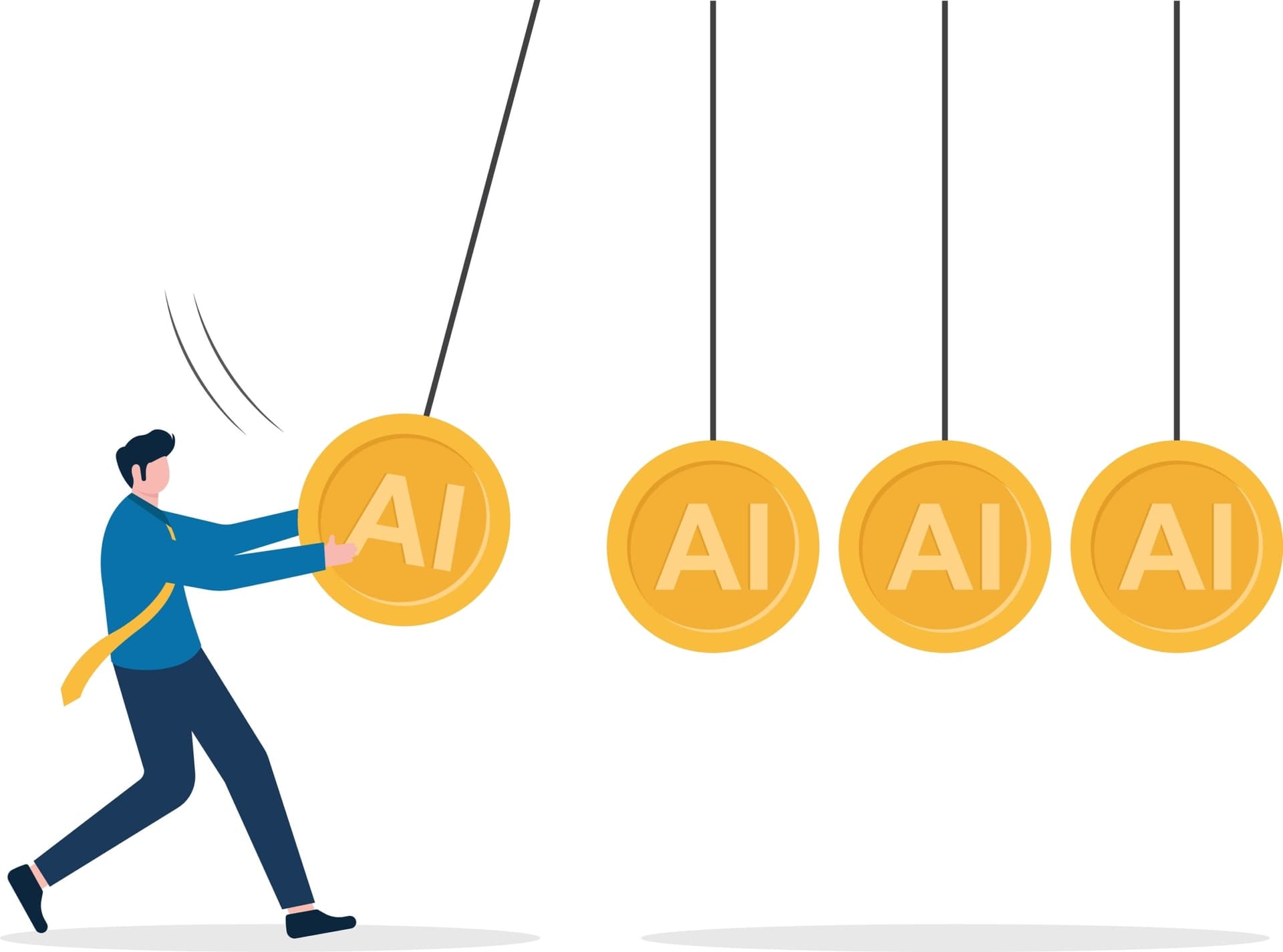
AI remains the defining theme of this market cycle. The financing structure around it is now being examined like a load-bearing beam.
Late-stage booms, like this one in AI, turn inward, recycling capital among the same players until arithmetic reasserts itself. Nvidia’s pause felt, briefly, like math knocking on the door. The real danger for the broader indexes is when the math starts pounding with authority.
 Paper Gold and Silver Lose the Crowd
Here’s what really happened in the gold and silver market on Friday and over the weekend: Paper gold and silver lost their audience.
Trading volume in the gold ETF GLD dropped roughly 50% from Friday’s record pace, according to Goldman Sachs data.

SLV slid another 3.98% as price swings widened and liquidity thinned.

Precious metals ETFs are proving why it’s difficult to trade the macro trends in play from the serene environment of your own home office. It’s one thing to be right about the trend; it’s entirely another to bet your retirement savings on it. (Source: TradingView and Global Markets Investor)
“Fast money’s stepping aside,” one metals trader told CNBC, sounding more resigned than alarmed. ETFs did what ETFs do under stress — move quickly, then grow shallow.
The distinction matters. Paper metals trade like financial instruments when volatility rises.
 Physical Precious Metals Buyers Are Still Accumulating
Away from the screens, the tone couldn’t have been more different.
In Singapore, Bloomberg reported that retail buyers crowded United Overseas Bank, the city’s only bank selling physical gold, until customers without pre-orders were turned away.
In Sydney, lines stretched into the street outside ABC Bullion after Friday’s selloff. Thai investors held existing positions instead of selling into weakness. In China’s Shuibei district, ahead of the Lunar New Year, buyers stepped in, and local prices held premiums over exchange benchmarks.
“It’s still a buying market,” said Globlex Securities CEO Thanapisal Koohapremkit. Quiet accumulation doesn’t announce itself. It just keeps happening.
 Silver’s Wild Ride and Algorithmic Results
Silver’s price action, specifically, sharpened the picture.
The metal surged above $100, printed briefly near $121, then reversed sharply.
Veteran analyst David Morgan told Money Metals Exchange that many long-time physical holders sold into strength. “That usually tells you the marginal buyer has changed,” he said.
Larger, slower capital tends to replace momentum traders at that stage.
India and China remained central to demand, shaped by geopolitics and reserve anxiety after the freezing of roughly $300 billion in Russian assets. China’s steady reduction of U.S. Treasury holdings — from around $1 trillion to roughly $600 billion — remained part of the background hum.
It’s worth pointing out, too. The machines took over the short-term tape during this weekend’s selloff.
In other words, as we watched it play out, silver’s spike and reversal, followed by gold’s more than $300 drop, unfolded at algorithmic speed.
“Once those levels went, it was mechanical,” a trader told Reuters.
Stop-loss commands triggered. Short exposure adjusted. Paper markets moved faster than physical. More of that whipsaw is likely on the way.
 Dollar 2.0 Gets Hung Up In Committee, Again
The crypto continues to sag without drama. Bitcoin remained more than 35% below its October highs. Shares of major exchanges slid further as volumes dried up and fee revenue followed.
At the same time, the White House hosted another closed-door meeting between major banks and crypto firms to break the logjam over the Clarity Act.
The meeting yesterday ended the same way the last one did. Polite statements. No agreement. “We’re still far apart,” one banking representative told reporters afterward. Stablecoin interest remained the sticking point. Banks fear deposit leakage.
Crypto firms argue rewards attract users. We observed this in the first edition of Demise of the Dollar when analyzing the U.S. dollar’s status as a reserve asset to the financial system: new money always runs into old balance sheets.
It’s not a mystery where we fall on the spectrum. The financial innovation represented by Dollar 2.0, stablecoins, tokenization is the solution to the reserve status conundrum for the U.S. dollar. And the Treasurys best shot at financing the nation’s ballooning $38 trillion in national debt.
The lobbyists for “too big to fail” banks are getting in the way of the Clarity Act because they don’t want to lose their monopoly lock on the U.S. citizens’ personal savings.
Here’s the real danger: if they don’t get the Clarity Act through the Senate before midterms, the pro-crypto White House may find itself at odds with both the U.S. House and Senate as it pertains to the legislation that unlocks the entire digital asset space. (We’ll be talking to Mark Jeftovic about this very topic on Grey Swan Live! this week… details in the p.s. below).
 Washington Starts Hoarding Metals
While digital money stalled, Washington leaned hard into the physical world.
The White House formally launched a $12 billion strategic stockpile of rare earths and critical minerals, modeled on the Strategic Petroleum Reserve.
The goal, officials said, is to blunt China’s dominance of supply chains essential to EVs, electronics, and defense systems. GM, Boeing, Alphabet, and major commodity traders signed on.
Industry veterans were quick to note that $12 billion won’t conjure new mines overnight. Geology doesn’t respond to press releases. Still, the move carried weight. When the government start stockpiling metals, they’re admitting scarcity matters again. Scarcity triggers higher prices.
 Naval Assets Are Within Striking Range of Iran, Diego Garcia Comes Back Into Focus
As U.S. naval assets moved into striking range of Iran, Washington took a harder look at an arrangement thousands of miles away.
The UK is moving toward final ratification of a deal transferring sovereignty of the Chagos Archipelago to Mauritius while securing a 99-year lease for the Diego Garcia military base.
That’s a good thing. “You get the base without the baggage,” a former U.S. official told Bloomberg.
But as with the UK’s former agreement to turn over Hong Kong to the Chinese after a similar 99-year agreement… the terms and timeline turn against the strategic vision of the current administration eventually.
As such, President Trump criticized the deal this year, calling it “stupidity” and arguing for outright control. And, as with his argument for infinite access to Greenland, there’s significant pushback. With carriers repositioning and tensions rising, the runway matters more than the flagpole.
 Trade, Tariffs, and the Shape of the Reset
Trade policy followed the same logic.
Trump confirmed a tariff-slashing deal with India that lowers U.S. duties in exchange for India reducing purchases of Russian oil and buying more American exports.
“Transactional but strategic,” Reuters described the Trump strategy without registering an opinion.
The phrase fits.
Tariffs, minerals, bases, and trade all pointed in the same direction. Physical control is back in fashion among the strategic visionaries trying to carry out the Trump grand realignment of trade, strategic alliances and national security.
When the wind starts blowing, you don’t argue about forecasts—you check what’s bolted down.
~ Addison
P.S. On Grey Swan Live! this week with Mark Jeftovic, we’ll dive right into today’s pressure points: bitcoin breaking down, crypto exchange volumes thinning, and the Clarity Act getting bogged down by the banking lobby at the White House.
We’ll also cover the paper gold and silver rout, alongside the physical buying surge in Singapore, Sydney, and China, and what that divergence means for capital positioning right now.
From there, we’ll connect those moves to Washington’s rare-earth stockpile, naval assets shifting toward Iran, and what tends to come next when markets, policy, and geopolitics start moving in the same direction.
If you have requests for new guests you’d like to see join us for Grey Swan Live!, or have any questions for our guests, send them here.