Beneath the Surface
Legacy of the Grey Swan: “What, Me Worry?”

November 22, 2026 • 28 minute, 14 second read

“Worry does not empty tomorrow of its sorrow, it empties today of its strength.”
~ Corrie ten Boom

Every boom produces its own collection of visionaries, promoters and skeptics. The trick is figuring out which ones are seeing the future and which ones are simply selling tickets to the next bubble. (Source: Shutterstock)
Years before Warren Buffett told a theater full of people not to worry quite so much about the fiscal calamity we had just spent two years putting on film, I had lunch with James Dale Davidson at the Maryland Club in Baltimore.
The club sits on Eager Street in Mount Vernon, a neighborhood where Baltimore’s nineteenth-century ambitions remain standing in stone even when much of the rest of the city seems determined to test their patience. The Maryland Club itself dates to 1857, and its present Romanesque clubhouse opened in 1892, back when private clubs still believed a proper lunch required enough dark wood to provision a small navy and a necktie.
Our publishing business had grown up around the Washington Monument, a few blocks away. Not the Washington Monument most people think of, but Baltimore’s, the first monument erected to George Washington, standing over Mount Vernon Place with the pleasant confidence of a city that got there before Washington, D.C.
The Bonner family has taken a strong interest in preserving Baltimore’s historic gems since the early 1990s.
At 14 West Mount Vernon Place, we occupied the old Marburg Mansion, built in 1847 and later owned by Theodore Marburg, a diplomat and peace advocate who entertained the likes of William Howard Taft and Woodrow Wilson there. Long before editors and copywriters began arguing over investment promotions beneath its plaster ceilings, meetings connected to the international peace movement had been held in the house. The first draft of the League of Nations was written in the library where we used to hold our editorial meetings.
Across the square, the Peabody Institute had been founded by George Peabody in 1857 with a $1.4 million gift to provide Baltimore with a conservatory, library, art gallery and lecture series. Peabody made money in London banking circles by developing international finance and lobbing American securities into them.
His banking firm (George Peabody & Co.) was taken over by Junius Spencer Morgan and later run by his son, J. Pierpont Morgan. It was J.P. Morgan who ultimately bought out Andrew Carnegie when Carnegie sold Carnegie Steel in 1901. Peabody’s own philanthropy in Mt. Vernon is visible everywhere.
The Walters Art Gallery grew from the collections of William and Henry Walters, who spent part of the family railroad fortune accumulating enough art to leave the city a museum rather than another railroad.
A few blocks north at 1217 St. Paul Street stood the Ross Winans mansion, a French Renaissance pile designed by Stanford White for a family whose fortune had been made partly through railroads in Russia. It had later served as a girls’ school, a funeral parlor and medical offices before we restored it for the publishing business, which may be the only use in that sequence that required more copywriters than embalming fluid.

With its elaborate architecture and imposing presence, the Ross Winans mansion was the kind of Baltimore mansion that seemed to belong to another era entirely. (Source: Flickr)
Down the street stood the Belvedere, already one of Baltimore’s grand old hotels by the time we arrived. In 2006, Porter Stansberry’s longtime friend and former employee Rey Rivera was found dead in a closed room inside the building beneath a hole discovered in a lower roof. The medical examiner left the manner of death undetermined, and the circumstances were strange enough that the story resurfaced years later in Netflix’s Unsolved Mysteries.
Mount Vernon had that sort of atmosphere. Diplomats, railroad barons, musicians, undertakers, newsletter publishers and the occasional unsolved mystery had all managed to occupy the same few blocks without anyone thinking the zoning particularly odd.
James Dale Davidson fit right in.
“I Wasted My Youth”
By the time we sat down at the Maryland Club, Davidson had already spent years looking at politics, technology and markets from angles that made conventional economists uncomfortable.
With Lord William Rees-Mogg, he had written Blood in the Streets, The Great Reckoning and, most provocatively, The Sovereign Individual. The last of those books argued that digital technology would weaken some of the political arrangements built during the industrial age and give individuals new ways to move their work, capital and allegiances across borders. Davidson was also a founder of the National Taxpayers Union and had spent years writing Strategic Investment, a newsletter Bill Bonner had published in an earlier incarnation of our business.
The book interested us because it did something newsletter publishers are always trying to do. It looked at a trend before the vocabulary around the trend had settled, and asked what sort of world might emerge if the thing kept going.
Davidson wanted to launch another advisory, Vantage Point Investment Advisory, that would take the macro ideas in The Sovereign Individual and follow them toward companies working at the front edge of the information revolution.
This was still early enough in the information age that saying “information revolution” wasn’t yet a proper noun and didn’t immediately produce a pitch deck containing a “.com” shoehorned into the company’s DBA declaration.
At that time, artificial intelligence, blockchain, quantum computing, and photographs of a server farm at sunset were only figments of the imagination. The internet was becoming commercially important, but nobody yet carried a supercomputer in his pocket capable of summoning a car, moving money and photographing lunch for strangers. The iPhone ads on network TV wouldn’t appear for another decade.

The Information Age arrived before most of us had any idea what it would become. The tools during the early stages were primitive by today’s standards, but the underlying idea was revolutionary: information could move instantly, globally and increasingly outside the traditional gatekeepers. (Source: The Reporter)
At lunch, I asked Davidson why he wanted to launch Vantage Point.
“Well, Addison,” his gravelly baritone answer has stuck with me for more than two decades. “I wasted my youth trying to avert national bankruptcy.” He never finished the thought. His voice trailed off.
Davidson had spent years warning about government debt, monetary instability, and the habits of political systems that promise more than taxpayers are willing to fund. He had reached the point where another warning about national bankruptcy apparently seemed less interesting than finding entrepreneurs who might profit from the world being rearranged by technology.
He had become enamored with the possibilities of the new age.
His existing readers were less enamored.
They had subscribed to macroeconomic gloom, currency trouble and warnings about governments behaving badly. Davidson began writing about technology companies, digital networks and entrepreneurs whose value existed largely in intellectual property rather than mines, factories, or other objects a suspicious investor could kick with his shoe.
The transition nearly wrecked the newsletter.
Readers canceled.
The business wobbled.
Davidson kept going.
Conviction can be expensive in our trade, particularly when the publisher is the one paying for it. But without conviction, the financial newsletter business becomes little more than clipping whatever the market already believes and attaching a subscription form.
Davidson eventually found his footing with Vantage Point. I kept his remark about wasting his youth filed away somewhere in the back of my mind.
A decade later, after spending several years worrying publicly about debt, deficits, savings, trade and Washington’s leadership deficit, I began to understand the fatigue behind it.
One Night In Omaha
Funny how life is made up of short bursts of precise memories.
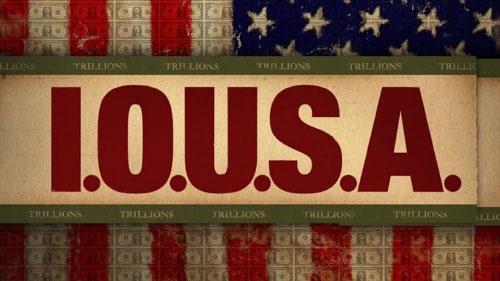
If you recall where we left the story earlier this week, I.O.U.S.A. had finally made its way through production, Sundance, a battery of attorneys and the sale of its assets to Pete Peterson’s new foundation.
David Walker’s four deficits had given us the structure. Warren Buffett’s agreement to sit for an interview and help animate his Squanderville story had helped us persuade an astonishing collection of people to appear in the film: Paul Volcker and Alan Greenspan from the Federal Reserve; Robert Rubin and Paul O’Neill from Treasury; senators Kent Conrad and Judd Gregg; congressmen Ron Paul, George Miller and Ander Crenshaw; Alice Rivlin, Arthur Laffer and Steve Forbes; Pete Peterson, Bill Bonner and others who had spent their careers somewhere inside the machinery we were examining.
Patrick Creadon and Christine O’Malley had turned all of that footage into a film.
Patrick and Christine were already known in documentary circles for Wordplay, their film about Will Shortz, the New York Times crossword puzzle and the gloriously obsessive people who competed at the annual American Crossword Puzzle Tournament in Stamford, Connecticut. The film had made a surprisingly good theatrical business out of watching people fill little white squares with letters, which gave us confidence that Patrick might also make federal accounting watchable.
The national premiere of I.O.U.S.A. took place in Omaha at the Qwest Center on August 22, 2008 and was simulcast live to 450 theaters around the country. After the film, CNBC’s Becky Quick moderated a town hall with Warren Buffett, Pete Peterson, David Walker, economist William Niskanen and Bill Novelli, then head of AARP. Contemporary accounts list that same five-man panel.

Released at a moment when few people were paying much attention to the trajectory of America’s finances, the documentary asked a simple question: What happens when a country keeps promising more than it can afford? Looking back, some of the numbers have changed dramatically. But the underlying question has only become more urgent. (Source: IMDb)
We had an audience spread across the continent. Questions came in from the participating theaters, and the whole thing had the slightly improbable feeling of a group of people gathering on a summer evening to watch 85 minutes of warnings about government accounting. And a consumer culture in which citizens had long adopted the government practice of managing debt rather than saving and investing.
Becky introduced the panel with the practiced ease of someone accustomed to speaking with billionaires during cocktails after dinner. Then, with the natural deference you extend to Warren Buffett when you happen to be conducting a financial discussion in Omaha, she gave him the first question.
As I remember it, the question was essentially this: Warren, after everything we have just seen about debt, savings, trade and the government’s obligations, how worried are you?
Buffett chuckled.
“I’m going to be the token Pollyanna here,” he began. Contemporary coverage recorded the same line for posterity.
My stomach sank.
The Token Pollyanna
Warren did not accuse us of making up the numbers. We’d intentionally used the CBO’s own accounting sheets. He did not deny the trade deficit or suggest David Walker had misplaced a few trillion dollars behind the filing cabinet.
He simply did not believe the problems amounted to the sort of national calamity the film’s tone might have led the audience to expect.
Buffett had spent his life betting on American productive capacity. Factories became more efficient, entrepreneurs started businesses, workers learned new skills and technology allowed each generation to produce more than the last.
He had watched the country survive depressions, wars, inflation and financial panics. He was not about to abandon what eventually became known as his “never bet against America” view because the federal balance sheet looked ugly on a movie screen.
You could feel the mood change in the room. We didn’t know it at the time, but the popular phrase, “we’ll grow our way out of it,” was about to catch air as one does as a kid after surfacing at the other end of a pool, having attempted to swim the distance underwater.
We were sitting near the front of the stage. People who had spent the previous hour and a half watching David Walker explain the federal government’s growing obligations shifted in their seats while Buffett explained that he expected the country’s productive machine to keep getting larger.
The panelists had come prepared to discuss what should be done about the problem. Now, the richest and most famous investor among them was telling the audience that America had an enormous capacity to grow through it.
There is a peculiar sinking sensation available only to publishers and filmmakers. It comes when the most credible person in your promotion tells the audience, in effect, that they might want to lower their blood pressure.
David pushed back respectfully.
Pete Peterson had spent decades worrying about precisely these problems and was hardly prepared to throw Gray Dawn into the fireplace because Warren was cheerful.
William Niskanen brought the economist’s reservations, while Bill Novelli had the delicate job of representing millions of Americans whose retirement benefits occupied a fairly important position in arithmetic.
We continued the discussion for roughly two hours, with questions coming from around the country.
The conversation remained substantive. Buffett had not declared the film foolish, and some viewers appreciated having someone on the stage challenge the prevailing argument.
But you could feel another question settling over the evening.
If Warren Buffett isn’t worried, why did we just spend eighty-five minutes worrying?
The Morning After
We had expected the premiere to carry straight into the following morning.
CNBC had planned extensive coverage around the film’s themes. David Walker was scheduled for a substantial portion of the morning to talk about the deficits and the Fiscal Wake-Up Tour, while Bill and I were supposed to discuss Empire of Debt and the ideas that had led us to the movie.
Patrick and Christine had their own segment lined up to talk about I.O.U.S.A., Wordplay and the odd route by which a husband-and-wife documentary team had moved from crossword enthusiasts in Stamford to the federal debt.
For everybody involved, the exposure would have been useful.
The Peterson Foundation had just begun trying to turn David’s fiscal campaign into a national conversation. The Concord Coalition had spent years taking the Wake-Up Tour from city to city.
The movie needed an audience. Our books and newsletters were part of the intellectual trail behind the film, while Patrick and Christine were building careers in a corner of Hollywood where a successful documentary can still disappear beneath a studio picture’s catering budget.
Early the next morning, we received word that we no longer needed for the CNBC broadcast.
Our appearances had been canceled.
CNBC had Warren Buffett.
Live.
For three hours.
We sat in our hotel room in Omaha and watched the same man who had opened the town hall as the “token Pollyanna” take over Squawk Box.
Becky Quick interviewed him about Berkshire Hathaway, the economy, financial markets and the investment moves he was making at the time. The transcript from that morning confirms that CNBC devoted the three-hour program to Buffett from Omaha and opened by reminding viewers that I.O.U.S.A. had premiered the night before.
Warren was good on television.
David Walker, explaining the long-term fiscal gap, was competing against Warren Buffett, explaining where he was putting actual money that morning.
No contest.
We sat and watched him “talk his book.”
The documentary business had already taught us that getting over the hurdles to get a picture made was only part of the exercise.
In one early episode, for example, the production company we initially contracted was a startup run by a couple of B-listers. One with a penchant for snorting the film’s budget up his nose. We’d had to cut ties with them at a celebratory dinner, turned sobering intervention, planned at Frank & Mussina’s, a legendary restaurant made famous by Frank Sinatra and the Rat Pack back in the day.
Now the financial media was supplying another lesson: yesterday’s urgent national argument could be displaced before breakfast by the portfolio of the man who had just told everyone not to worry too much about it.
Twenty-three Days Later
A sunset more than three weeks later, Lehman Brothers filed for bankruptcy.
Lehman had survived since 1850. It had made it through the Civil War, railroad busts, the Great Depression and nearly every financial panic America had managed to manufacture over a century and a half. On September 15, 2008, it filed the largest bankruptcy case in U.S. history, reporting more than $600 billion in assets.

The Lehman failure marked the moment the financial crisis stopped looking like a problem contained to housing and banks and became something much larger. Credit froze, markets plunged and the assumptions underlying the global financial system began to unravel in real time. (Source: Shutterstock)
The financial instruments involved had names that sounded as though they had been designed specifically to discourage ordinary people from asking what they were.
Mortgage-backed securities bundled home loans together. Collateralized debt obligations carved claims on pools of debt into layers. No Job, No Income (Ninja) loans offered prior would prove to be the end of many a bank officer’s career. Credit default swaps allowed firms to buy and sell insurance-like protection against defaults without always maintaining the reserves a conventional insurer might consider prudent.
Wall Street had constructed a financial ecosystem whose organisms had become so specialized that when one died, nobody was quite certain which other creatures depended on it for oxygen.
Henry Paulson was the Treasury Secretary.
We had previously asked him to sit for the film.
He had previously declined.
Within days of Lehman’s collapse, Paulson and Federal Reserve Chairman Ben Bernanke were on Capitol Hill telling congressional leaders that the financial system was in danger. The Treasury then sent Congress an extraordinary proposal, only three pages long, requesting authority to buy up to $700 billion in troubled assets. Contemporary accounts describe congressional leaders as stunned by the scale and urgency of the request.
Congress did not immediately salute.
The House rejected the first version on September 29, sending markets into another fit. A revised bill was finally passed, and President George W. Bush signed the Emergency Economic Stabilization Act on October 3, creating the $700 billion Troubled Asset Relief Program.
By then, AIG had already required an $85 billion rescue from the Federal Reserve. Goldman Sachs and Morgan Stanley had converted themselves into bank holding companies, and financial institutions that had spent years explaining the virtues of free markets were suddenly discovering several attractive features in federal assistance.
Buffett and his firm, Berkshire Hathaway, invested $5 billion in Goldman Sachs, receiving perpetual preferred stock with a 10% annual dividend, along with warrants to buy common stock.
The purchase proved Buffett’s habit of keeping his powder dry – piling up cash reserves during a boom period – quite useful. He became a significant minority stakeholder and served as a crucial financial vote of confidence for one of Wall Street’s global behemoths.
The phrase moral hazard enjoyed a brief career in the financial press.
Then everybody got busy.
What’s $10 Trillion, Anyway
During the two years we spent making I.O.U.S.A., the number that loomed over the project was $10 trillion.
When we began, the national debt was below that. By the time the crisis was in full swing, the $10 trillion threshold had been breached, and by the end of fiscal 2009, federal debt outstanding was approaching $12 trillion. The Treasury’s historical series records roughly $10.0 trillion at the end of fiscal 2008 and $11.9 trillion a year later.
We had spent two years making a documentary asking Americans to contemplate the approach of a $10 trillion national debt.

America’s national debt has always been more than a number on a government ledger. What once seemed extraordinary gradually became ordinary — and the scale of the debt has become so large that the question is no longer simply how much America owes, but what happens when the bill finally comes due. (Source: Shutterstock)
Then Wall Street nearly blew itself up.
Suddenly, there were banks to recapitalize, money markets to guarantee, insurance companies to rescue, automobile manufacturers to keep alive and a recession to fight.
The round number that had looked ominous in the editing room became a milestone glimpsed through the window of a speeding ambulance.
Nobody wanted to discuss whether the ambulance was financed.
There was an emergency.
The government had to “do something.”
That phrase deserves more attention than it receives.
Government officials who would spend months fighting over relatively modest appropriations could commit hundreds of billions of dollars over a weekend when the financial system appeared likely to seize up before Monday morning.
The alternative could have been worse. Depositors, employers, pension funds and businesses far removed from mortgage speculation were tangled in the same credit system. But watching the process from the vantage point of our little fiscal documentary was surreal.
We had made a movie asking what might happen if debt and financial obligations kept piling up.
The answer, at least in 2008, was more debt and financial obligations. Trillions more. And a “new normal”.
Armageddon, Inc.
The media had already begun collecting people who had worried about the credit bubble before it burst.
TIME had published a 2007 article titled “The Armageddon Gang,” which listed us as a member of the group alongside other market pessimists who had warned that the housing and credit booms were more fragile than the consensus allowed. The piece appeared well before Lehman and described Empire of Debt as part of a genre of financial jeremiads that fashionable opinion regarded as excessive.
After the crash, some of those old warnings received another hearing.
Kurt Richebächer, who had died in 2007, was remembered by the Financial Times and others as one of the economists who had spent years warning that credit creation could imitate prosperity for only so long.
Kurt’s distinction had always been brutally simple. Productive investment created income with which debt could be serviced; credit used to bid up existing assets merely made the asset owner feel richer until the cycle turned.
Brian Sullivan interviewed us from above the U.S. Chamber of Commerce building, with the White House sitting below in the background. There was a certain visual economy in discussing federal debt with the executive mansion over your shoulder while the federal government was busy adding several new rescue programs to its balance sheet.
Bethany McLean called me at home.
Bethany had already made a career out of looking behind the stories Wall Street was selling itself. She had helped expose Enron before its collapse and later co-wrote The Smartest Guys in the Room, so when she called to ask what it felt like to have spent years warning about a credit crisis and then watch one arrive, I expected the conversation to be about whether being right changed anything.
Her question was more personal.
How has my life changed?
I told her the truth as I understood it.
We had written books. We had made the movie while the newsletter business kept going.
The world had become intensely interested in people who had warned about the crisis, but the experience of being one of them did not involve finding a bag of gold on the porch.
When the piece appeared in Fortune, the frame was more entertaining.
Nassim Nicholas Taleb was among the people who had become newly famous for warning about financial fragility. His Black Swan had given the crisis a ready-made metaphor, and the strategies associated with Taleb and Mark Spitznagel had done very well when markets came apart.
Nouriel Roubini had gone from “Dr. Doom” to a kind of celebrity economist after warnings he had made about housing and the credit system looked considerably less eccentric in retrospect. By 2009, TIME would put him on its list of the world’s most influential people, a promotion from Cassandra that financial crises occasionally confer on the people nobody particularly wanted at the dinner table during the boom.
The whole episode had a carnival quality. In retrospect, it even smells funny.
Wall Street had just experienced its worst crisis in generations. The government was rescuing financial institutions with public money, while the media naturally wanted to know who had seen it coming and whether anyone had made a fortune doing so.
The prophets got profiles.
The bankers got capital.
“What, Me Worry?”
With Pete Peterson’s help, I.O.U.S.A. still had its theatrical run.
We had already taken the film into the orbit of both national political conventions during the 2008 election campaign. The Democrats could watch the film and see the cost of wars, tax cuts and deregulation; Republicans could see entitlements and runaway federal spending.
Both parties could find their opponent somewhere in David Walker’s four deficits.
What had seemed alarming during the campaign became harder to sell as alarming once the crisis began.
With the housing market on the rocks, unemployment rising quickly and health care getting the Affordable Care Act (ACA), intended to stave off a wave of medical bankruptcies, it wasn’t hard for politicians or Wall Street to blame anyone else but themselves.
When risk is socialized, everybody feels the pain. Some more equally than others.
When banks were failing and the indexes on the stock market, capable of losing several hundred points in the wee hours after a day’s market open, retirees glancing at their 401(k) balances, at least those that dared to do so, shuffled through the stages of grief in rapid succession.
A warning about the government’s long-term finances began to sound almost quaint as politicians asserted that it was the government’s duty to rescue the global financial system in the short term.
Buffett could perhaps afford to be the “token Pollyanna,” but not a lot of people had the means at the time to agree with him.
His actual view was more sophisticated than “everything will be fine.” On CNBC the morning after our premiere, he acknowledged that the financial situation was getting worse and said he did not see an early end to it.
But the public message that survived was closer to the old Alfred E. Neuman grin from MAD magazine.
“What, me worry?”
The financial crisis began producing institutions, policies and habits that would stay with us much longer than the panic itself.
Interest rates moved toward zero.
The Federal Reserve’s balance sheet expanded. Quantitative easing joined the financial vocabulary, followed eventually by more quantitative easing whenever the previous round proved insufficiently permanent.

When conventional interest-rate policy was no longer enough, the Federal Reserve began buying enormous quantities of Treasury and mortgage securities, creating money to push down borrowing costs and support the financial system. (Source: Shutterstock)
Markets learned to listen for central-bank rescue with the attentiveness of a Labrador hearing a refrigerator door open.
The film that had warned about long-term government obligations arrived just before an era in which government and central-bank intervention became increasingly normal.
The timing was exquisite, as a perfectly researched short sale can be six months before the stock doubles.
Back to Work
Eventually, the circus left town.
And, we still had a publishing business to run. The following decade supplied more material than we could reasonably have ordered.
Gold and precious metals surged after the crisis. Commodities joined them, and then many of the trades rolled over hard enough to remind late arrivals that a sound macro thesis can still become an awful investment at the wrong price.
The shale boom rewrote the American energy story.
Horizontal drilling and hydraulic fracturing released oil and natural gas from formations that had long been known but were not economically viable to produce. Capital flooded into the patch, production surged, and the eventual glut punished many of the same companies that had successfully proven the geological argument.
The Federal Reserve supplied QE and ZIRP for terms that once belonged outside polite conversation.
Global markets became accustomed to interventions by central banks. Traders who had once watched earnings reports began watching press conferences for adjectives.
Donald Trump came down the escalator and proceeded to drive a bulldozer through the assumptions of the political establishment. David Stockman and Jim Rickards joined our team of analysts.
Bitcoin went from an obscure experiment in cryptography to an asset class worth hundreds of billions of dollars. Thousands of other tokens followed, some representing ingenious new networks and others representing the enduring human desire to sell a poker chip to the next fellow at twice the price.
NFTs briefly allowed people to attach extraordinary prices to digital pictures whose right-click function remained stubbornly operational.
Meme stocks turned message boards into trading floors.
Marijuana legalization moved state by state, and pot stocks enjoyed the familiar trajectory in which a genuine social and legal change attracted enough speculative capital to finance business plans that had only passing acquaintance with profits.
Each one produced its own larger-than-life characters.
Promoters appeared. Skeptics warned. Fortunes were made early enough in the cycle to inspire with testimonials for everyone who arrived too late.
The publishing business grew through it all. Some years we doubled in size and in the number of mouths to feed.
There is an old expression among financial publishers that “the copy practically writes itself.”
It does not mean the copywriter can pack up and go fishing.
It means the market has supplied a story so powerful that readers can already feel it in their portfolios, their businesses or the conversations they are having at dinner.
When gold is moving hundreds of dollars, nobody has to be persuaded that gold exists.
When shale drilling is remaking North Dakota, an energy investor does not need a lecture on why oil matters.
When bitcoin rises by thousands of percent, the writer’s problem is no longer attracting attention. The problem is deciding which part of the attention contains information and which part is the fellow three seats down, explaining that this time the old rules do not apply.
Our job was to find the people closest to those changes before they became feature-length television narratives.
Sometimes they were geologists. Sometimes they were traders, engineers, entrepreneurs or monetary cranks who had spent years studying something the mainstream had only just discovered.
The recommendations could make money.
They could lose money too.
Market prices retain their discipline and record the story for posterity through it all.
The Trouble With Growth
A publishing company grows strangely.
At the beginning, everybody knows what everybody else is doing because there are not enough people to hide from one another.
An editor can walk down the hall to find the copywriter. The publisher can sit beside the analyst who came up with the idea, while the fellow running customer service knows which claim in yesterday’s promotion has generated 50 angry calls before lunch.
Add revenue, and the organism changes.
Departments appear.
Managers begin managing managers, while meetings appear to coordinate the people whose principal problem has become the number of meetings.
Employees require reviews, policies, compensation plans and the occasional conversation explaining that coming to work remains a traditional feature of employment.
Press attention follows success.
A financial newsletter publisher promising unusual investment opportunities makes an easy character for a reporter, particularly after enough readers have made and lost money to provide both sides of the story.
Some journalists came to understand what we did. Others approached the business as though they had discovered a traveling medicine show in a clearing.
Regulators, reading the press we were getting, eventually took an interest too.
Financial publishing occupies an awkward place in American commercial life. In fact, “regular and general” communications regarding opinions on the stock market were allowed, having been written into the statute that created the SEC in 1934. Then challenged and reaffirmed by what’s known as the “Lowe Decision” in the Supreme Court in 1985.
The statutory exemptions allow market historians, money managers, investment advisors, business leaders, entrepreneurs and any other manner of ne’er-do-well to write opinions about investments, charge people to read them and advertise those opinions aggressively enough to convince strangers to subscribe.
The First Amendment sits on one side of the arrangement. Securities laws sit nearby, watching suspiciously, waiting for writers and publishers to make mistakes.
As the business grew, ambitious regulators found more reasons to examine it.
Lawyers multiplied.
Compliance departments grew, while every dispute generated another procedure designed to ensure that nobody would ever experience the same dispute again.
After the Global Financial Crisis GFC the financial media moved on to the next story, while the publishing business moved through gold, oil, crypto, cannabis, political upheaval and one speculative fever after another.
By the beginning of 2020, management, lawyers, regulators, and the accumulated machinery of a fast-growing company were consuming more of our days than the ideas that had built the company in the first place.
Then somebody in China came down with a pernicious cold.
Within a few months, nobody was going to the Maryland Club for lunch.
The offices around the Washington Monument emptied, the airport lounges disappeared from our lives, and the great publishing campus in Mount Vernon grew quiet. The evening light outside turned to darkness. Depressing.
We opened Zoom, uncorked a bottle of wine and began writing names on a whiteboard. The people we wanted to hear from were scattered around the world, and for once, nobody had anywhere else to be.
More to tell next week. The Grey Swan story had found another room….
~ Addison
P.S. Every time the backbone of money shifts, a small group of early movers gets the lion’s share of the gains.
It happened with gold. It happened with oil. And it’s happening again right now, this time with compute.
Six Wall Street heavyweights have already put $500 billion behind it. Most people won’t hear about it until the biggest moves are behind us.
See how to position yourself now.