Beneath the Surface
Legacy of the Grey Swan, The Middle Years
November 20, 2026 • 7 minute, 4 second read
“It’s said in Hollywood that you should always forgive your enemies — because you never know when you’ll have to work with them.”
~ Lana Turner
Before Zoom, the legends of finance phoned in. One was on a treadmill, and the other wrecked our opening night. (Source: WatchDocumentaries)
Meeting financial gurus and niche celebrities for the first time is a peculiar activity.
You know them through book jackets, magazine profiles, television interviews and the accumulated mythology that grows around anybody who has been right in public often enough.
Then somebody gives you the telephone number you requested, and five minutes later, the legendary trader, the Oracle or the former chairman of the Federal Reserve is asking whether you can hear him properly.
The first time we spoke with Jim Rogers, he was huffing and puffing on a treadmill.
Jim had recently finished the media rounds for the sequel to Investment Biker and was beginning to dial down what he called his press activities. This was before the iPhone, before Zoom. and before every person with a laptop could turn a spare bedroom into a television studio.
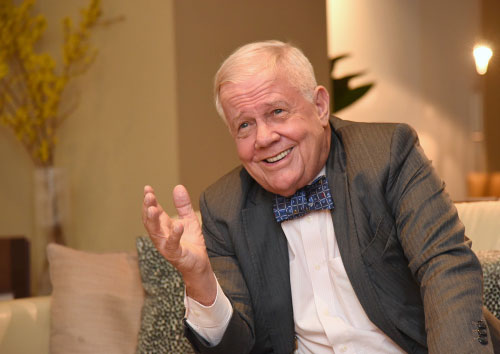
Jim Rogers believed in doing your own homework, going against the crowd and investing in what others overlooked — with the patience to wait for the opportunity to come to you. (Source: The Japan Times)
We were in our office in Paris, with Jim joining us via a speakerphone connected to an ordinary landline.
Back in New York, Jim was exercising under protest.
His doctor had apparently ordered more physical activity, and Jim spent part of the conversation complaining about the indignity while continuing to walk. Long before watches congratulated their owners for reaching 10,000 steps, one of the most famous global investors in the world was grunting into our office because his physician had told him to get off his ass.
That was Jim.
He could spend years riding a motorcycle through dozens of countries, studying black markets, currencies, borders, commodities and political decay firsthand, then complain bitterly about twenty minutes on a treadmill.
We had called with a specific purpose.
Bill Bonner and I were finishing Financial Reckoning Day, our first book together, and we wanted Jim to write the foreword. He agreed on the condition that we interview him, draft the piece from the conversation and send it back for his edits.
So we did.
The relationship lasted.
Jim later became a keynote speaker at our Vancouver investment symposium for several years. He would arrive carrying observations gathered from roads, borders, currencies and commodity markets rather than from the usual circuit of Wall Street research departments.
The first image always remained with me, though: Jim Rogers, legendary international investor, somewhere in New York, complaining about his doctor while his footsteps thudded through a speakerphone in Paris.
The Oracle of Omaha
A couple of years later, Warren Buffett entered our lives in much the same way. We picked up the telephone.
Buffett answered on the other end.
There was no layer of handlers explaining that Mr. Buffett would have eight minutes between CNBC and a meeting with the board. No elaborate choreography preceded the conversation.
We had a particular question to ask. He gave us all the time we needed to get it answered properly.
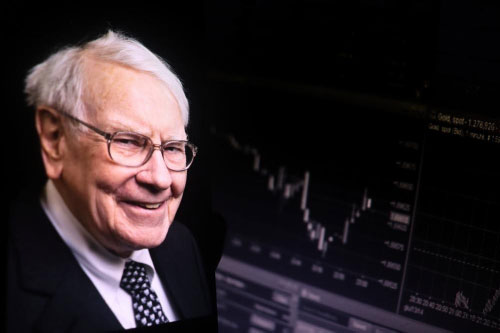
Warren Buffett’s rise to prominence wasn’t built on flashy predictions or chasing the next big thing. It came from doing something far less exciting — buying good businesses at sensible prices and letting time do the heavy lifting. While Wall Street chased the latest hot stock, Buffett quietly compounded his way to the top. (Source: Shutterstock)
In November 2003, Warren Buffett published a famous Fortune article titled “America’s growing trade deficit is selling the nation out from under us. Here’s a way to fix the problem — and we need to do it now.”
He used a parable of two fictional islands, Thriftville and Squanderville, to warn about the long-term dangers of persistent U.S. trade deficits.
Our pitch to the Oracle was simple enough. We wanted to animate the Squanderville story for a film we were making. He was surprisingly animated in his response, as if he had thought about doing the exact thing at some point in his own life.
Warren Buffett had already accumulated the kind of public identity that turns a person into a shorthand. It was the early days of the internet, but there were already pages set up to accumulate Buffett quotes and folksy investment wisdom. A whole genre of best-selling investment books had already been written about him.
Say “Buffett” and people see Berkshire Hathaway, Disney, Coca-Cola, Benjamin Graham, value investing and the annual pilgrimage of shareholders who come to the Qwest Center in Omaha to listen to him and Charlie Munger talk about their business of investing for hours.
On the telephone, he was simply a man interested in the question we’d posed. Little did we know at the time that Buffet would not only make our little film possible but also kick it in the knees during the film’s premiere, which he agreed to host at the Qwest Center with the other luminaries of the film for a private party.
Before we get to that anecdote of misfortune, we should explain what the film was and why there were luminaries in it at all.
The year was 2006, and our second book with Bill Bonner, Empire of Debt, was already a New York Times bestseller. During a particular stretch of research for the book, I had gotten snowed in at a condo in Sugarbush, Vermont, with only my research to keep me company. Among the items I’d brought was a 10-hour PBS documentary based on Daniel Yergin’s best-seller, The Commanding Heights. Over three days, I watched the 10-hour series, then again… and again for a third time.
By the time Empire of Debt was in circulation, we had already been inspired enough to turn it into its own feature-length film. Our line of thinking: “Rather than dump a 450-page tome of American economic and political history on readers’ laps, why not send them a 2-hour film instead?”
Easy peasy, right?
Heh. The film took two and a half years, thousands of miles traveled by planes, trains and minivans, red-eye flights to London one way, Beijing in the other, hundreds of hours of editing mundane interviews, our very own Hollywood embezzlement story and a battery of high-caliber entertainment attorneys to premiere, showcase and distribute.
The highlights were, of course, being accepted into the competition at the Sundance Film Festival in Park City, Utah; getting shortlisted by the Academy for an Oscar in the documentary category; a successful theatre run; and numerous press interviews beyond the scope of our original intention.
We’ll reveal all of those details in good time.
But for now, we couldn’t have planned the timing any better. Twenty-three days before Lehman Bros. shocked the financial world by declaring bankruptcy, our own little film forecasting a debt-inspired bankruptcy premiered with a who’s who of the finance world’s most influential personalities, and became available for public consumption.
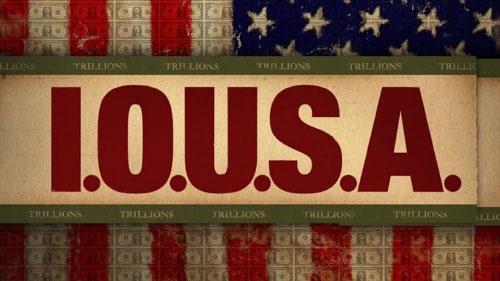
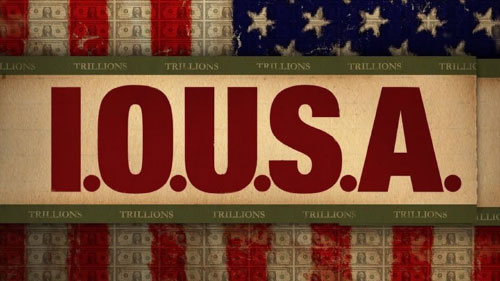
On August 22, 2008, I.O.U.S.A. premiered at the Qwest Center in Omaha, as I mentioned, and it was simulcast to 450 theatres around the country and in Canada.
After the film, we planned a live Q&A with Buffett and some of the cast members, taking questions from all over the continent. CNBC’s Becky Quick was the moderator. She directed the opening question to Buffett.
In a way, it was his show too.
And that’s where Buffett tanked the film’s momentum… before the opening night festivities had even truly begun.
Before we get to the trauma, we need to give credit where credit is due. In his own folksy way, Buffet made the film possible to make at such a high level just by being himself.
More to tell… more to tell… tomorrow.
~ Addison
P.S. When the foundation of money changes, the biggest opportunities go to the people closest to whatever comes next.
Gold had its moment. Oil had its turn. Now a third shift is underway — and this time, it revolves around something called compute.
A new financial power is emerging, backed by six of the biggest names on Wall Street and a $500 billion commitment. The question isn’t whether this shift will create winners. It’s whether you’ll be positioned to benefit before the money starts flowing.
Here’s how to get in line early.