
A large investor can keep his political opinions private. His or her money is harder to hide.
A fund manager who wants meaningful exposure to a $50 billion company has to buy shares. A trader who expects a sudden move may reach for calls. A portfolio manager worried about a collapse may buy puts. Dealers who take the other side hedge their books.
All of it leaves tracks in the market.
Our AI system was built to look for those tracks.
It processes enormous quantities of trading data and flags activity that differs sharply from the normal pattern. Volume, volatility, options positioning, price behavior and historical analogues can give Andrew and our analysts a shorter list of places to investigate.
The computer handles the haystack.
We still have to inspect the needles.

No crystal ball, no emotional roller coaster, no pretending you can predict every twist and turn on Wall Street. Just a repeatable process that helps take some of the guesswork out of investing. The market is unpredictable enough without your portfolio making decisions based on guesswork. (Source: Shutterstock)
Because money flow tells us where people are betting. It doesn’t tell us whether they’re right. In a speculative market, following the footprints without examining the balance sheet can simply lead you to the most crowded part of the stampede.
That distinction matters more than ever because the options market itself is changing. Reuters reported this week that the NYSE is launching all-or-nothing binary options on securities including Nvidia (NVDA), Apple (AAPL), Tesla (TSLA) and the State Street SPDR S&P 500 ETF (SPY) as investor demand for event-driven trading grows. The exchange also wants contracts tied directly to corporate KPIs.
Investors increasingly trade events rather than simply own companies.
Election Day gives them a whopper.
We already know the date: November 3. We know the S&P 500 Index’s post-midterm record. We know control of Congress remains genuinely unsettled. Decision Desk HQ currently projects Democratic control of both chambers, with considerably more confidence in the House than the Senate.
And we know where an extraordinary amount of speculative capital has gathered.
AI.
Reuters recently described the current buildout as a race to transform the economy before the money runs out. Never has so much capital flowed into a new technology so quickly.
The money now reaches far beyond Nvidia.

For now, the spending spigot is wide open — but the longer it runs, the bigger the question becomes: How much money can these companies throw at AI before Wall Street starts demanding receipts? (Source: Gartner)
It flows through data-center developers, private-credit funds, utilities, chipmakers, cable manufacturers, natural-gas producers and defense contractors. Goldman Sachs estimates roughly $7.6 trillion of spending on computing, data centers and power infrastructure between 2026 and 2031. It also expects hyperscalers to issue about $420 billion of debt in 2027, financing roughly 35% of their capital spending with borrowed money.
Seven trillion dollars leaves footprints.
So does $420 billion of borrowing.
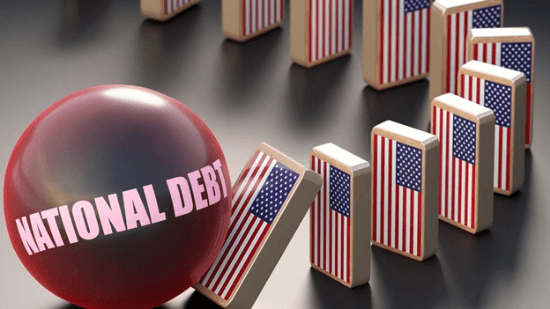
The second figure may ultimately matter more than the first. Borrowing brings future spending into the present, but it also leaves interest payments and maturities behind. If the assets generate cash faster than the debt compounds, the leverage can finance productive growth. If they don’t, today’s expansion becomes tomorrow’s refinancing problem.
That’s the stress test: compare the return on the new capital with the cost of financing it. The technology can work exactly as promised and the investment can still disappoint if too much money was committed at too high a cost.
Our system won’t tell us the future. It tells us where traders are putting unusual amounts of money at risk today. Then Andrew asks the questions machines still struggle with.
Who benefits? Who pays? What changes after Nov. 3? What would make the trade fail? How much can we lose if we’re wrong?
Three AI-related signals survived that process.
Those are the ones we’re taking to members.
~ Addison
P.S. On Tuesday, one of two things is going to happen. Republicans will retain control of Congress and the Trump mandate will kick into high gear for the remaining two years of his second term.
Or, the data proves out, and socialists move into positions to stall tax reform, impeach administration officials they don’t like and let TDS run wild through the mainstream press all over again.
Either way, it’s up to you to keep your own eyes on your money, right?
Take a look at this:

It’s remarkably accurate. The AI tool sifts through millions of transactions in the open market simultaneously and gives us strong forward guidance on any stock we choose to run through the system.
It’s fantastic. And gives us insight into larger-than-life macro trends as well as granular price movements on individual stocks.
Why does the patent matter?
Well, the good news is you don’t have to forecast political winners or agree with the flaccid promises candidates make to get elected to find potential winners on Wall Street.
The patented tool also helped us assemble the exact historical patterns that will help you make and preserve your money before, during and after the midterm elections and the investment opportunities that will naturally flow from a political shift in Washington. Click here to see how you could put them to work in your portfolio.