GSI Banner
  • Free Access
  • Contributors
  • Membership Levels
  • Video
  • Origins
  • Sponsors
  • My Account
  • Sign In
  • Join Now

  • Free Access
  • Contributors
  • Membership Levels
  • Video
  • Origins
  • Sponsors
  • Contact

© 2026 Grey Swan Investment Fraternity

  • Cookie Policy
  • Privacy Policy
  • Terms & Conditions
  • Do Not Sell or Share My Personal Information
  • Whitelist Us
Ripple Effect

Higher For Longer on Interest Rates

Loading ...Addison Wiggin

July 3, 2025 • 1 minute, 36 second read


Federal ReserveInterest Rates

Higher For Longer on Interest Rates

Following yesterday morning’s ADP numbers, showing a miss, today’s Labor Department data showing a massive gain isn’t throwing the stock market off its stride.

It’s clear that, even with muddled economic data from different sources, that we’re not in market crash conditions yet.

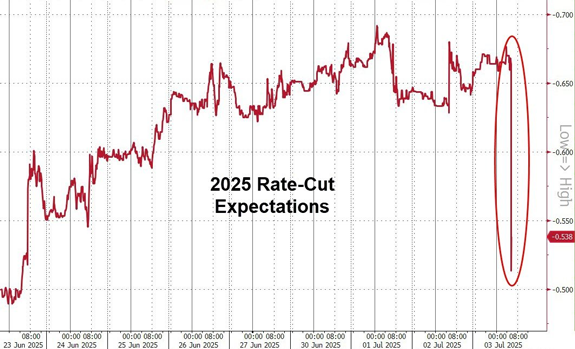
That’s even evident by expectations for the Federal Reserve to cut rates in July – which got absolutely crushed this morning:
Turn Your Images On

Following the latest government labor data, rate cut expectations for July have sunk

For now, the mixed economic data means stocks will likely trend higher, until there’s a crisis. And when there is a crisis, the Fed will finally make its move and aggressively cut rates.

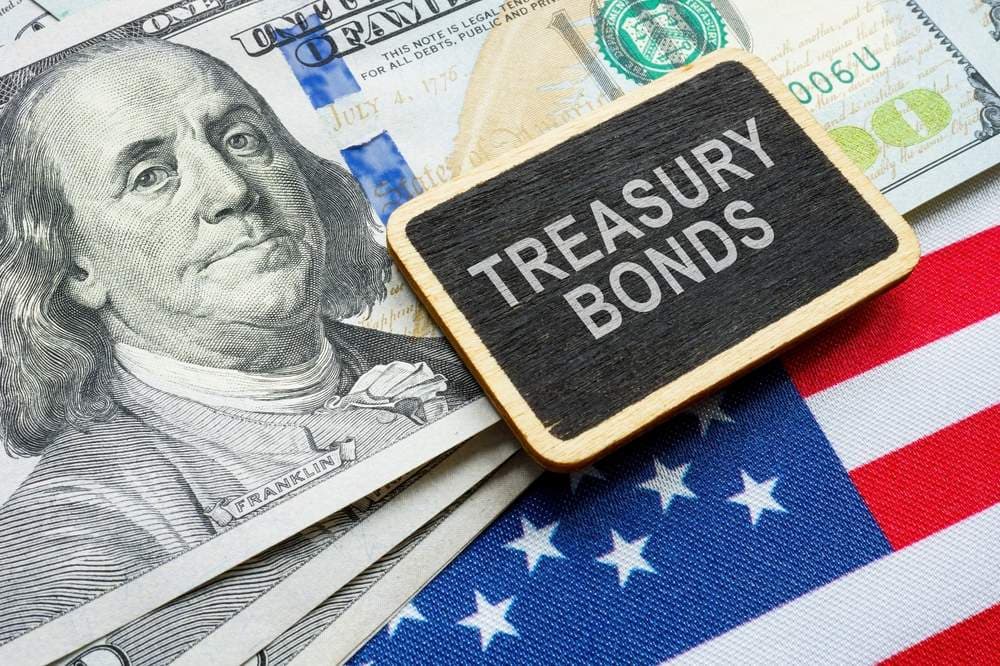
And, for now, bond yields are still near their highest level in 15 years. Bond yields, even on U.S. Treasury bonds, are over the rate of inflation.

In short, it’s not a bad time to lock in bond yields now – which will go lower during a crisis, pushing bond prices higher. And in a crisis, today’s high-flying stocks, driven by retail investors with a fear of missing out – could easily get crushed.

~ Addison

The World Should Fear September 9…

Turn On Your Images.

The United Nationsl General Assembly isn’t typically a headline-grabber.

But the upcoming Assembly— beginning on September 9 — has an air of great urgency, because a major announcement could be forthcoming.

The potential bombshell announcement?

Well, it concerns a classified map of a “secret America” from 1946 — a map whose expanded U.S. borders could go into effect in 2025.

If enacted, this wildly controversial map would grant the federal government astonishing economic, societal, and military power.

But the investment implications could be even bigger.

Click here to view the secret map ASAP >>

P.S.: We’ll be off tomorrow for Independence Day. Enjoy the long weekend!

As always, your reader feedback is welcome: feedback@greyswanfraternity.com (We read all emails. Thanks in advance for your contribution.)


The Grand Realignment Gets Personal

January 13, 2026 • Addison Wiggin

Sunday night, Powell addressed the probe head-on in a video post — a rarity. He accused the White House of using cost overruns in the Fed’s HQ renovation as a pretext for political interference.

The White House denied involvement. But few in Washington believed it.

What followed was bipartisan condemnation of the investigation. Greenspan, Bernanke, and Yellen co-signed a blistering rebuke, warning the U.S. was starting to resemble “emerging markets with weak institutions.”

The Grand Realignment Gets Personal
A Rising Sign of Consumer Stress

January 13, 2026 • Addison Wiggin

Estimates now indicate that the average consumer will default on a minimum payment at about a 15% rate – the highest level since a spike during the pandemic lockdown of the economy.

President Trump’s proposal over the weekend to cap credit card interest at 10% for a year won’t arrive in time to help consumers who are already missing minimum payments.

Not to fret, the other 85% of borrowers continue to spend on borrowed time. Total U.S. household debt, including mortgages, auto loans, student loans, and credit cards, reached record highs in late 2025, exceeding $18.5 trillion. This surge was driven partly by rising credit card balances, which neared their own all-time peaks due to inflation and higher interest rates.

A Rising Sign of Consumer Stress
Protest Season Amid the Grand Realignment

January 12, 2026 • Addison Wiggin

There’s an old Wall Street maxim: “Don’t fight the Fed.”

This year, you could add a Trump corollary.

A wise capital allocator doesn’t fight that storm. He doesn’t argue with it. He respects it the way sailors respect the sea: with preparation, with humility, and with a sharp eye for what breaks first.

In 2026, the things that break first are the stories. The narratives. The comfortable assumptions.

Protest Season Amid the Grand Realignment
Breaking: Government Budgets

January 12, 2026 • Addison Wiggin

Total municipal, state and federal debt service costs soared to nearly $1.5 trillion in the third quarter of 2025. Debt’s easy to accumulate when rates are low. Trouble is, you are obligated to refinance them even after rates go up.

It’s also a key reason why the Trump administration is demanding lower interest rates – even if it means reigniting inflation.

Breaking: Government Budgets