Beneath the Surface
2025: The Lens We Used — Fire, Transition, and What’s Next… The Boom!

December 22, 2025 • 12 minute read
“Science has not yet mastered prophecy. We predict too much for the next year and yet far too little for the next ten.”
– David Hilbert
December 22, 2025 — Before we scored the Grey Swan forecasts for 2025, we had to slow the tape, rewind a few times… and get clear about how we watched the remarkable year 2025 unfold.
Without a lens, a year like this dissolves into a blur of record highs, sudden selloffs, legislative breakthroughs, regulatory skirmishes, inane U.S. politics and multiple crises deferred.
With a lens, all the political changes Trump is pushing, and the economic influence of AI and a weakening dollar begin to take shape.
We see the enormous will and effort the Trump administration and the tech oligarchy are imposing on the markets, economics, politics and culture.
Reviewing the year has been instructive, mundane, confusing and illuminating all at once.
The writer in us chomps at the bit to turn the actual events of 2025 into a dramatic arc, a compelling narrative.
Unfortunately, we ain’t Hemingway or HL Mencken who made contemporary history of their time leap off the page. We’re not as skilled a satirist as PJ O’Rourke as much as we’d like to be.
Alas, we give it a go all the same.
In our story, our understanding of the future begins with an analysis of the past. Incentives start to repeat themselves across markets, policy, and behavior.
What first appears as chaotic gradually reveals structure, which, as investors ourselves, we hope you find helpful.
The “past is prologue” discipline has always defined the Grey Swan approach even before we gave the fraternity a formal title. Forecasts are not about precision for their own sake. They exist to preserve your right to act and offer some suggestions on how to do so successfully.
Our working philosophy — what we describe internally as reasonably probable — rests on reading incentives early enough to act while options still exist, rather than after they have narrowed.
Or after the opportunity has flown the coop…
 The Framework We Carried Into 2025
Back in April, when we published what we called the Trump Great Reset Strategy, we described the grand realignment we believed President Trump and his acolytes were embarking on in three phases.
At the time, it read like a conceptual map. As the months passed, it began to feel like a set of operating instructions written in advance of turbulence.
As you can expect, any grandiose plan would get all kinds of blowback… but this year exhibited all manner of Trump Derangement Syndrome on top of the difficulty of steering a sclerotic empire clear of the rocky shores.
The “phases” were never about optimism or pessimism. They were about sequencing — how stress surfaces, how systems adapt, and what must hold before confidence can regenerate. And in the end, what do we do with our money?!
 Phase One: The Great Fire
The first phase announced itself quickly. We called it The Great Fire, and the metaphor continued to earn its keep as the year unfolded.
In nature, fire clears excess growth, exposes rot, and resets conditions for what can grow next. Financial systems behave similarly when accumulated leverage and optimistic assumptions finally encounter friction.
That moment arrived in early April. The selloff following Liberation Day cut through markets with unusual speed. Equities dropped sharply. Volatility spiked. Leveraged positions unwound across options books and margin accounts.
The Wall Street Journal captured the tone succinctly at the time: “Investors are reassessing risk in an environment where higher interest rates are no longer theoretical but structural.” The Financial Times echoed the same theme, noting that “liquidity that appeared abundant in calm markets thinned rapidly once positions began to move in the same direction.”
What mattered was not the headline trigger, but the recognition embedded in the reaction. Stress that had been compounding quietly under tighter financial conditions suddenly became visible.
That recognition matters. In Empire of Debt, we argued years ago that credit expansion does not erase reckoning; it reshapes it and postpones it.
The April selloff did not resolve imbalances. It clarified where strain already lived — on balance sheets, in funding assumptions, and in the widening gap between asset prices and the cost of capital required to sustain them.
Phase One did not repair the system. It exposed it.
That exposure made the next phase easier to recognize as it unfolded.
 Phase Two: Transition and (painfully boring) Implementation
Phase Two arrived as a process rather than an event.
Policy shifted toward lower taxes, reduced regulatory friction, and more favorable financial conditions, but always unevenly and under constraint. Not stimulus. At least not yet, more like implementation shaped by arithmetic.
The oddly titled “Big Beautiful Bill” offered benefits that won’t be felt by anyone, especially the middle class left out of the tech boom, until 2026.
The bill is designed to alter after-tax incentives and shift corporate cash-flow expectations. Bloomberg framed it as “a bet on investment behavior rather than a guarantee of immediate growth,” emphasizing that policy could change incentives without dictating outcomes.
The GENIUS Act, passed midyear, played a quieter but more structural role. It established digital assets’ first coherent regulatory framework.
The heavy lifting of all the alphabet agencies of the executive branch was given marching orders… but like anything in Squanderville, the regulations come with billable hours of hearings, meetings and directives. Reuters described the legislation as “a line-drawing exercise focused on custody, compliance, and settlement — less about promoting innovation, more about defining boundaries.”
Extreme pressure on the Federal Reserve followed naturally. Federal interest expense climbed toward record levels. The Congressional Budget Office had already warned that debt servicing costs were becoming a binding constraint on fiscal flexibility.
By summer, even The Economist was openly asking whether financial conditions could remain tight “without forcing difficult trade-offs elsewhere in the economy.”
As these adjustments accumulated, a pattern emerged. The system adapted to new heretofore unimaginable limits. There is no other choice save default.
Each policy move redistributed stress — between public and private balance sheets, between present relief and future obligation.
The headlines bellowed with speculation of Trump’s plan to fire Jerome Powell and forecasts about how quickly the Fed could cut rates.
Here again, though, the benefits – if they accrue at all – of a lower rate cut cycle come over time. Specifically, those seeking to enter the housing market must wait for lower rates and for prices to come down.
For the most part, the Fed influence of the economy is a pale spectre of the “Committee To Save The World,” as the Fed under Alan Greenspan had been considered during his tenure over increasing destructive crises.
In the words of macro analyst Stephanie Pomboy, “the Fed lever is broken. They will need stronger tools if they hope to remain relevant.”
Enter the end of quantitative tightening (QT), the effort of the Fed to lighten its balance sheet from pandemic era binge-buying. A new round of quantitative easing (QE) will likely do what it always is meant to do… stoke inflation.
A new era of inflation will prove to be the biggest challenge to the Trump grand realignment next year.
If his policies do not yield fruit for the reasonable party centrists and independent voters, the Republican majority in the House is under serious threat during the November 2026 mid-terms.
That pattern runs straight through Financial Reckoning Day, where we described how governments favor gradual adaptation of policy while costs accrue to everyone else who is participating in the economy daily.
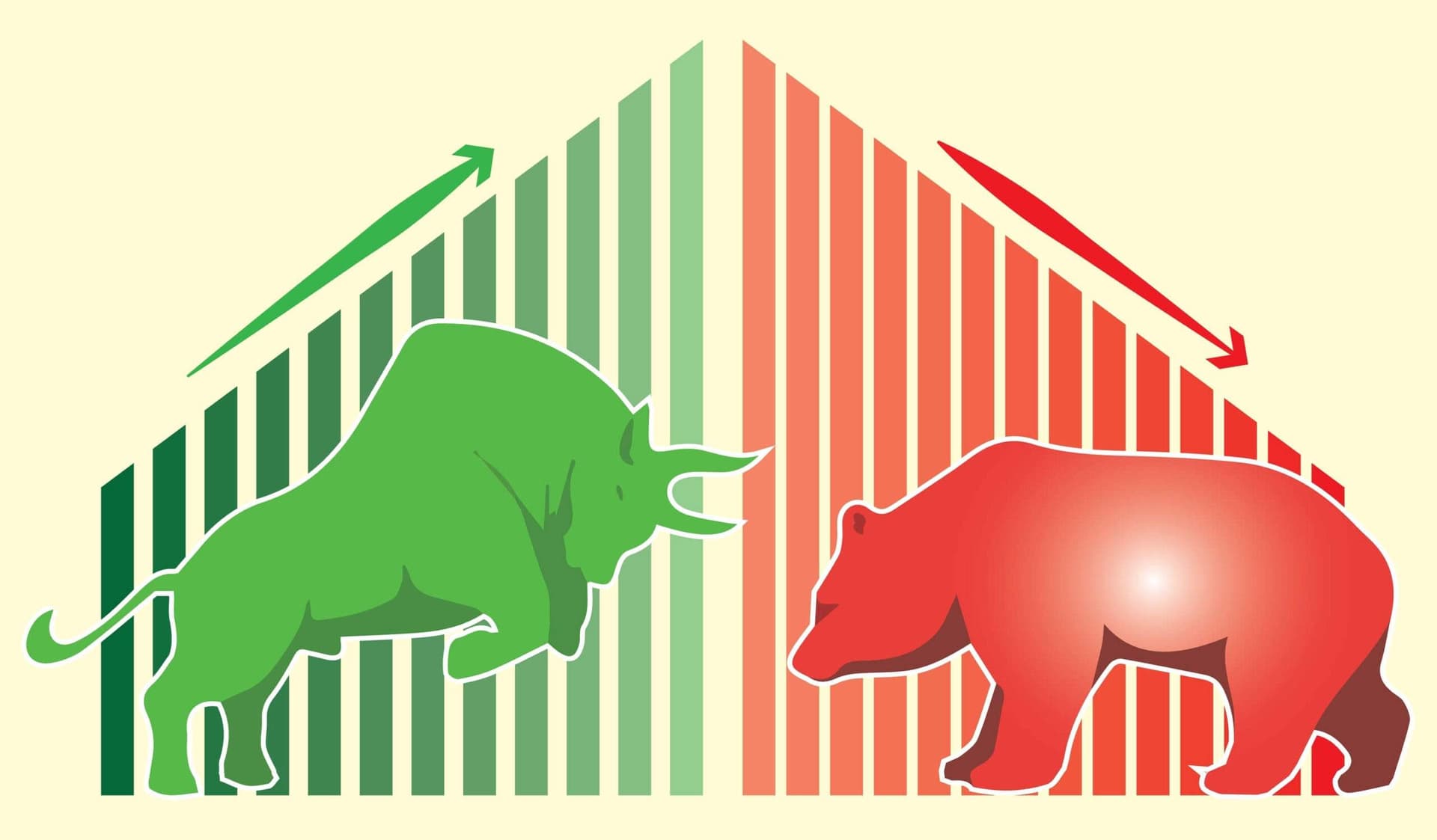
 The Most Terrifying Bull Market in History
This framework also helped explain the most visually striking feature of 2025: the market itself.
By nearly every measure, this was a record year. Major U.S. equity indices reached historic highs. Retail investor participation surged to record highs, as did global investors in New York.
Margin debt – borrowing to chase capital gains in the market – itself claimed a few new records. A historic level of capital concentrated into a narrow group of mega-cap AI-linked stocks at levels that rivaled prior cycle extremes, including one burned into investor memory… the dotcom boom and bust.
At the same time, gold and silver advanced decisively, and bitcoin followed. Markets did not rise selectively. In this mad bull, they rose together.
By midyear, Bloomberg noted the “unusual coexistence of rising bond yields, record equity prices, and strong demand for hard assets.” The Economist described the configuration as “characteristic of late-stage debt cycles, when capital seeks flexibility more than conviction.”
Ludwig von Mises’ description of the “crack-up boom” provided a useful lens. When confidence in money begins to thin at the margins, capital does not exit immediately. It shifts toward assets that gain value faster than inflation.
Our view is even with record highs across all the major indexes, we have not yet seen the beginning of Mises’ crack-up. The market has reserved those fireworks for some unforeseen event in 2026. Maybe the world’s first trillion-dollar IPO? Who can say?
In Demise of the Dollar, we described this stage as one where monetary systems continue to function smoothly even as belief in their permanence weakens. The bull market of 2025 carried that tone—energetic, profitable, and faintly uneasy – all the way through the year with a dizzying array of confusing headlines.
 Dollar 2.0 Comes Into Focus
The unease also sharpened our attention on the third theme of the year: Dollar 2.0.
In our investment thesis, the dollar retains its central role in global finance. What changes is how it’s going to move through the system. And what access the global pool of capital will have to it, Treasurys and the US stock market… 24/7.
Tokenization, blockchain settlement, and stablecoin regulation advanced steadily and the biggest international institutions set up shop. JPMorgan expanded on-chain settlement. BlackRock scaled tokenized Treasury exposure. The DTCC published a roadmap toward tokenized collateral markets.
The Wall Street Journal framed these developments as “infrastructure upgrades driven by necessity rather than ideology.” Reuters emphasized that the push came from incumbents, not evangelists.
Seen through that lens, Dollar 2.0 functions as an upgrade. Faster settlement and improved collateral mobility made it easier to carry debt at scale. U.S. Treasurys remained the benchmark. The rails beneath are evolving, and by virtue of the law, are intended to keep it that way.
Readers of Empire of Debt will recognize the pattern, too. Reserve currencies endure through adaptation. They are re-engineered repeatedly to preserve function — until credibility finally exhausts itself.
Until this mess at the upper end of the Federal balance sheet – Social Security, Medicare and Defense Spending – are grappled with honestly, the dollar will continue to be suspect to bankers all over the world. All empires die when the promise of the dominant currency cannot be trusted any longer.
 What the Structure Revealed
By late 2025, the shape of the year came into full view.
Phase One exposed accumulated weakness. Phase Two addressed political, financial, and institutional constraints in real-time. The historic bull market reflected capital repositioning under sustained monetary pressure. And euphoria consistent with all tech innovations of the past from railroads, radio and electrification to the internet, globalization and the crypto space. Dollar 2.0 began rewiring the system to carry that pressure more efficiently.
Phase Three — the boom — remains conditional. 2026 is going to be an interesting year. The longer it takes for direct benefits to fickle voters and middle-class families, the harder it’s going to be for Trump’s Great Reset to get to the critical boom phase, his “Golden Era” promise.
Like him or not, we’re all in this experiment together.
The boom’s arrival depends on Phase Two holding long enough to rebuild credibility. Policy changes must survive political tests, including the 2026 midterms.
Transition phases carry the most tension because results lag policy decisions and the interminable angst of watching the state bureaucracy get their tuckuses out of their arses to implement them.
As The Economist observed near year-end, “liquidity can be repriced quickly; legitimacy requires repetition.” And a boatload of patience and faith.
 Why This Lens Mattered
Like everyone else in 2025, the lens was foisted on us by what Trump calls the people’s mandate. As always, the context in which we review our Grey Swan forecasts is what matters most.
We’ll take a look at the specific forecasts tomorrow. Each forecast recognized the stress a major economic and political overhaul puts on the human beings who live through it.
By year’s end, our feeling is neither relief nor alarm. We’ve been enjoying the bull market as much as anyone. And frankly, we’ve also been enjoying what John Nesbitt called the “passing parade.”
It turns out, this year, our first full year with the fraternity, the Grey Swan forecasts were never about calling a single breaking point. They mapped fault lines that matter during transition.
In 2025, those fault lines shifted, deepened, and began interacting in plain sight. What comes next builds from there.
We expect, as we explored with Dan Amoss in our final Grey Swan Live! of the year, in 2026 “something wicked this way comes.”.After we review the forecasts we made for 2025, we’ll get down to business with a whole new set of prognostications for the year ahead.
Cheers,
Addison
P.S. In addition to our forecasts this year, we’ve been expanding our investment research – thanks in part to the popular demand of members.
That includes the launch of our Grey Swan Trading Fraternity, which takes many of our big-picture ideas and pairs them with shorter-term trading opportunities.
So far, under Portfolio Director Andrew Packer, the trading fraternity has racked up several big gains, including some trades with put options – going short on – the S&P 500 index.
He’s also racked up some triple-digit winners in the commodities space, in uranium and last week a 187% gain in a precious metals miner.
But we’re not content to rest on our winning trades so far. We’ve been looking for ways to ensure we have more winning trades like this – and our research is paying off.
We’ll be coming to you next week with the new indicator we’re incorporating to find the next round of options trading winners in 2026 and beyond.
This tool is able to scan the market and find where there’s movement in a stock’s option chain – before a stock makes its move. That means traders can see opportunities before they break out.