Beneath the Surface
Dan Amoss: Squanderville Is Running Out Of Quick Fixes

December 19, 2025 • 6 minute, 48 second read
“Theft by stealth is preferred to theft by force.”
– Warren Buffett
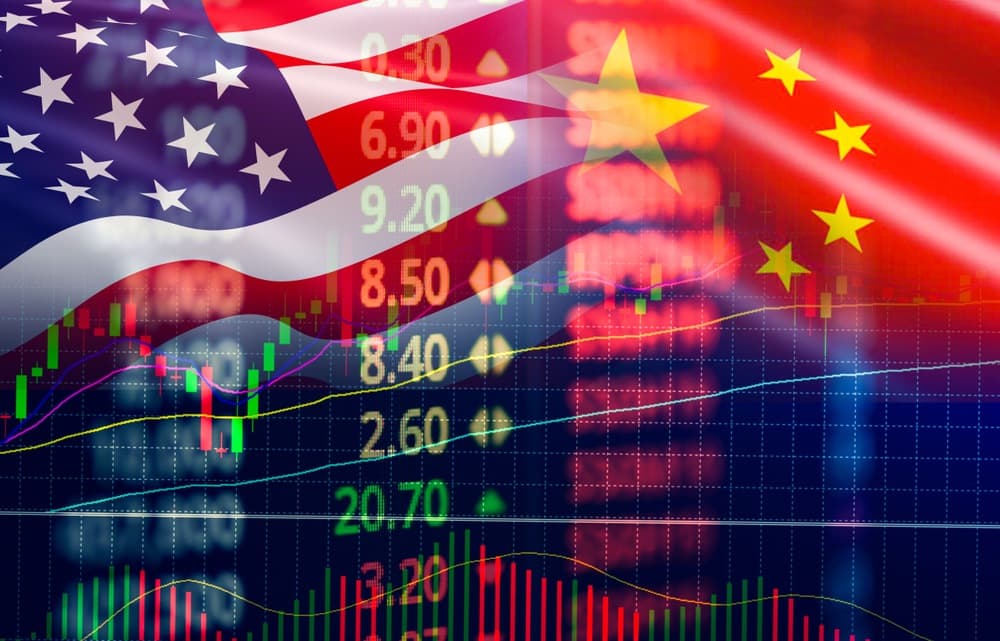
December 19, 2025 — For decades, America has imported many more goods and services than it has exported. When imports exceed exports, there is a trade deficit. This is not necessarily a problem if trading partners are happy about currency, political, and policy arrangements.
But when will trade patterns fracture, as they are between America and China? That is another thing entirely.
Twenty years ago, Warren Buffett, the most famous investor in the world, was worried about our trade deficit. He has not been vocal about it lately, but the trade deficit has gotten much worse since then. Because so few see the trade deficit as a problem, it no longer gets much attention.
I think it’s worth your attention. So today, we will revisit Mr. Buffett’s concerns and present a stock that will help you to hedge your portfolio against this risk.
In a 2003 Fortune Magazine article, Warren Buffett sounded the alarm on America’s burgeoning trade deficits. He warned that the U.S. was essentially selling off the nation from under its own feet. He illustrated the dangers through a parable of two islands – Squanderville (the U.S.) and Thriftville (our collective trading partners, mostly China).
The industrious Thriftville citizens worked hard and saved their earnings. The lazy Squanderville citizens issued IOUs to Thriftville to finance their lavish consumption. Before long, Thriftville owned all of Squanderville.
“In effect,” wrote Buffett, “Squanderville has been colonized by purchase rather than conquest. It can be argued, of course, that the present value of the future production that Squanderville must forever ship to Thriftville only equates to the production Thriftville initially gave up and that therefore both have received a fair deal. But since one generation of Squanders gets the free ride and future generations pay in perpetuity for it, there are – in economist talk – some pretty dramatic ‘intergenerational inequities.’”
Quick Fixes Have Worked… For Now
Thus far, the parable has had a happy ending. The U.S. is widely recognized as the richest country in the world. Seemingly everyone wants a piece of our stock market. And they have been huge buyers. Quick fixes, like deficit spending and Fed money printing, seem to have worked – for now.
Will Thriftville continue to pile up ever more U.S. dollar-denominated assets? Will they always be huge buyers? That remains to be seen. Our resilient economy, powerful military, rule of law, and relatively positive demographics bolstered the dollar’s dominance. Running up debts didn’t seem like a real concern.
My, how things can change in twenty years. Jim has written many articles in recent years that unpack the assumptions behind the U.S. economy, its troublingly politicized military, its fraying rule of law under the influence of clandestine Marxist (woke) philosophies, and its civil society and culture that is being undermined by the cancer of illegal – rather than the nourishment of legal – immigration.
To summarize Jim’s view: There are grave concerns on all of these fronts. How would foreign owners of U.S. assets react, for instance, if America’s obvious political divide grows ever wider to encompass more areas of life? Few are asking these questions. But we are. And the answers do not lead one to conclude that future “60/40” stock/bond portfolio returns will resemble those of the past.
In 2023, Squanderville is prosperous on the surface, with lofty bids for stocks and houses. But these bids are supported more by momentum and inertia than by solid, sustainable fundamentals. The cumulative effect of bids for American assets is almost too big to visualize. The U.S. net international investment position has deteriorated to negative $18 trillion. That’s the amount that foreigners own of U.S. assets beyond what Americans own abroad. In 2003, at the time of Warren Buffett’s warning, the figure was negative $2.5 trillion.
Quick Fixes Are No Longer Very Effective
Let’s frame the problem in terms of a popular measure of the economy, GDP. Relative to GDP, the net international investment claim on the U.S. economy was 20% in 2003. It had swollen to 65% by 2023. Practically every type of American company, bond, or real estate asset now has some degree of foreign ownership.
But it’s even worse than that. As the federal deficit has pumped up the GDP figures, and made a larger share of the economy dependent on government spending, the quality and sustainability of GDP have deteriorated. So, foreigners, to the extent they are paying attention, are accumulating claims on an economy that has been eroded by inefficient, government-directed spending and “investments.” Why should foreign creditors maintain confidence in the integrity of these paper claims? Only to the extent that their economies are even worse off. And in the case of China, that’s probably true.
Sadly, U.S. manufacturing now resembles a Rust Belt theme park, preserved for nostalgia but otherwise only competitive in niche applications. U.S. manufacturing is rebuilding in certain areas, but remains dependent on China and Europe for many components. For most finished physical goods, we’ve ceded ground to China’s state-sponsored factories.
So here we are in 2024, twenty years after Buffett’s Squanderville warning. Will the next twenty years be similar?
As long as foreign creditors are happy to keep buying and holding American assets (stocks, bonds, and real estate) this situation can last.
But we all suspect – and history says – that this state of affairs won’t last forever. In fact, there are signs that American consumption is becoming increasingly difficult to fund until the Fed fully pivots back to easing and printing money to fund the U.S. government. We’ll eventually be forced into a decision of funding more of our consumption internally, through a higher savings rate, or selling off a critically high percentage of our asset base. And we’ll eventually be forced into a decision of raising taxes or cutting federal spending to reduce the deficit, or pressuring the Fed to monetize most of the deficit, like a banana republic.
Costly Fixes Are Required To Make Up For Decades Of Quick Fixes
What we want you to take away from this complex, perilous state is not to despair, but to prepare. Preparing starts by assuming the winning assets of the past will not necessarily be the winning assets of the future. Our policymakers cannot forever pump up asset prices with no consequences.
They will be limited in what they can do to keep our system afloat. If they try to inflate our way out of debt, the dollar’s exchange value would plunge. A plunging dollar would in turn drive many foreign creditors out of our stock and bond markets. If they veer too far in the other direction and reduce federal deficits while maintaining tight money, they risk sparking a deflationary collapse.
“There are no solutions, only tradeoffs,” said Thomas Sowell. Sowell is an all-too-rare example of an honest economist. His famous phrase is another way of saying you can’t get something for nothing, that there is no free lunch. And you can’t forever pursue policies that pull forward benefits from the future while pushing off costs. Eventually, the future arrives and shortsighted policies are exposed for what they were all along.
To prepare for an environment of limited policy choices, more investors will look to own gold. We suggest beating the rush. One way is to buy this undervalued gold producer.
Best Regards,
Dan Amoss, CFA
Strategic Intelligence & Grey Swan Investment Fraternity
P.S. from Addison: Dan Amoss provided an excellent, on-the-spot analysis of what’s actually going on in the accounting department of today’s marquee AI companies.
For investors in U.S. tech stocks, today’s essay is the perfect “chaser” to yesterday’s Grey Swan Live!
America’s trade deficits pose a massive problem. President Trump has tried to hammer out agreements – with an emphasis on the hammer. But the status quo can only last for so long.

If you have requests for new guests you’d like to see join us for Grey Swan Live!, or have any questions for our guests, send them here.