
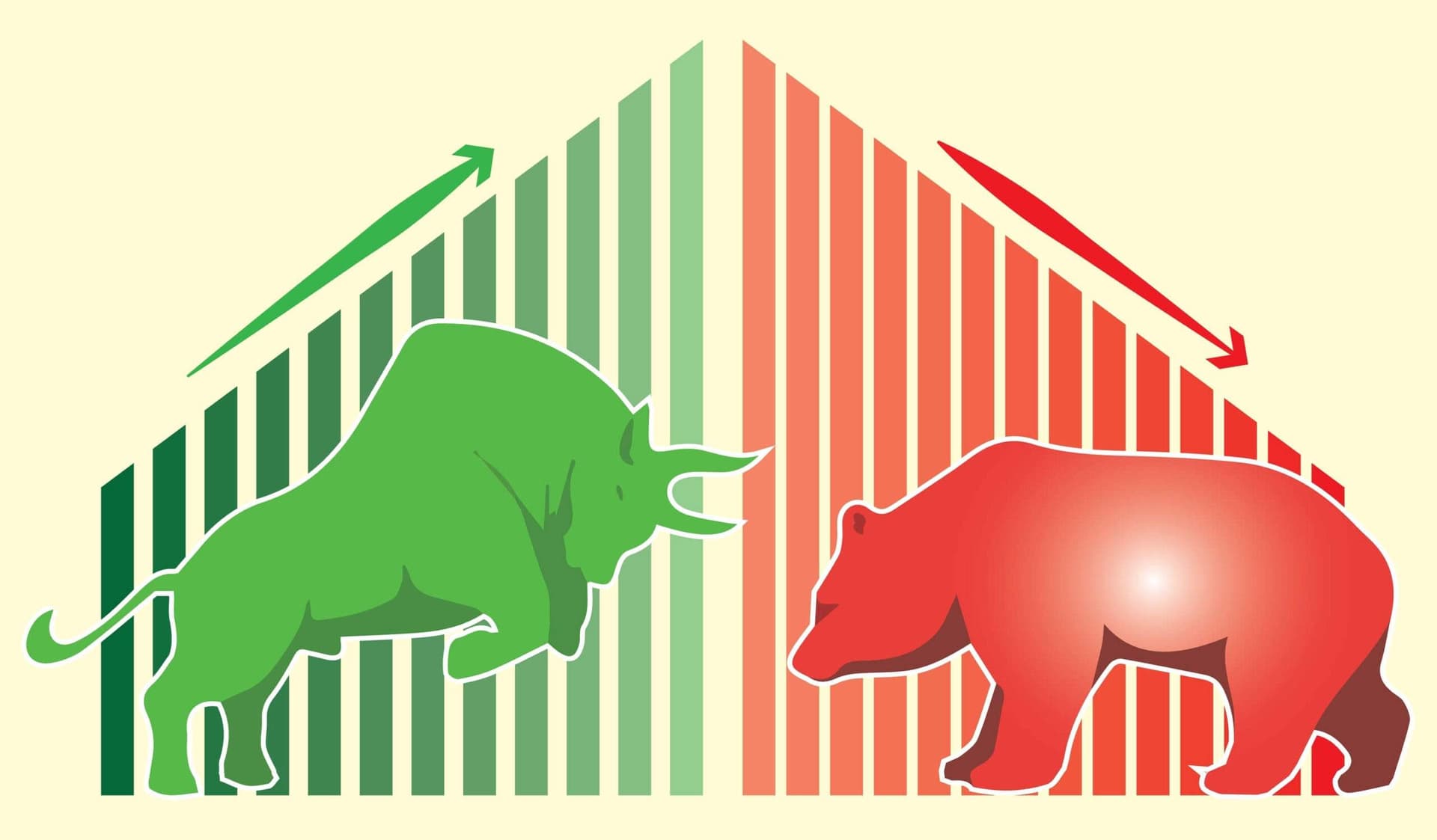
Curiously, hedge funds piled into short positions on U.S. stocks last week, wagering that artificial intelligence keeps slicing through business models faster than earnings can adjust.
Goldman Sachs’ prime brokerage desk recorded the largest notional single-stock shorting since it began tracking the data in 2016.
Shorts outweighed longs by roughly two to one.
The push followed a flare-up of anxiety after Anthropic released new automation tools, reminding managers that labor costs and pricing power now share the same fault line.
Funds net sold U.S. equities for a fourth straight week, at the fastest clip since the opening chapter of the Trump trade war on April 2, 2025.
Despite that positioning, the indexes pushed higher on Monday.
Dip buyers stepped in after last week’s slide and nudged indexes back toward their highs.
Chipmakers gained ground, and a software ETF tacked on close to 7% across two sessions, a quick counterpoint to the sector’s recent purge. Sameer Samana at Wells Fargo Investment Institute described the move as the market’s reflex after steep selloffs—fast hands cover, slower money watches.
 BlackRock Names the Bottleneck
Beyond the tape, the physical economy pressed back.
BlackRock warned that the data-center boom now runs into stubborn limits—power, permitting, labor—threatening the U.S. position in the AI race. Rachel Witkowski at Semafor reported that Larry Fink called a Washington summit to gather lawmakers, Cabinet officials, and industry leaders around solutions.

BlackRock estimates up to $85 trillion over fifteen years to modernize legacy systems and build AI-era infrastructure, alongside hundreds of thousands of new skilled jobs. Capital waits. Concrete, electrons, and people set the pace.
 Metals Answer the Currency, Not the Crowd
Precious metals defied urgency a little more clearly. Gold rose 2% to regain $5,057. Silver jumped 7% back to $83. Mining shares followed, with the GDX and SIL both pushing higher by 6%.
The move came after both gold and silver got oversold in last week’s leverage bust.
The driver for yesterday’s rally appeared to be foreign exchange: the U.S. Dollar Index fell 1%, giving back much of its recent rebound.
 The Consumer Slows at the Edges
Headline sales printed flat month over month, well below expectations. Sales excluding autos also came in flat. The control group that feeds GDP slipped 0.1%, the weakest of the set.
Eight of thirteen categories declined, including clothing, furniture, and autos.

Adjusted for inflation, retail sales fell less than 1% year over year – still, it was the worst reading in sixteen months.
Over five years, real retail sales barely moved, underscoring how much aggregate spending depends on the top fifth of earners. Inflation changes behavior long before it listens to vapid “affordability” speeches and or real-world deregulation.
 The Warsh Strategy and the Ghost of 1951
Kevin Warsh’s proposal for a new Federal Reserve–Treasury accord stirred bond desks after Bloomberg and others detailed the plan. Warsh aims to shrink the Fed’s roughly $6.6 trillion balance sheet, shift holdings toward short-term Treasury bills, and a narrower role for the central bank as “lender of last resort.”
As if to make monetary history buffs giddy, Warsh went spelunking in the Fed archives for his strategy.

Yesterday, Warsh pointed to the 1951 Accord, when the Fed reclaimed independence after World War II, financing blurred the line between monetary policy and fiscal need. He would like to see a similar reform of Fed practices following the dual financial crises of 2008 and 2020, during which the Fed overstepped its authority, influencing financial markets and the consumer economy.
The net result of 2008-2020 errant strategy led to the Fed losing money for the first time in its 112-year history by September 2022 and failing to pay its remittance back to the Treasury, as is outlined by the Fed’s original charter.
Warsh’s plan includes selling long-dated bonds and mortgage securities, shifting duration back to private markets, a change that tends to steepen the yield curve. Short rates may ease; long rates may demand a higher premium.
Supporters of the see restored, credible boundaries.
Critics, especially those inside big banks on Wall Street, see volatility if markets lose their backstop guarantee.
Warsh signaled a slower transition and a return to “sparingly used” lender-of-last-resort authority, a posture likely to draw pointed questions in confirmation hearings about mortgages, funding markets, and crisis response.
 Antimony Moves From Talk to Steel
Our resource maven, Shad Marquitz, alerted us this morning to a new antimony mine opening in Idaho. He’d already given us the heads-up early in January during our Grey Swan Live! discussion of rare earths and critical minerals.
Americas Gold and Silver signed a joint venture with U.S. Antimony to build an antimony processing facility in Idaho’s Silver Valley.
The pairing unites the only two domestic companies focused on this defense-critical metal, with U.S. Antimony bringing processing know-how and government relationships.
The announcement followed earlier signals that the Department of Defense—now permitted to use “Department of War” in certain contexts—prioritizes domestic supply for strategic materials.
A similar theme surfaced last fall when MP Materials announced a rare-earth refinery partnership with the Department of War and Saudi Arabia’s Maaden.
 Subsidies Step Back, Prices Step Down
Contributor James Hickman flagged a smaller story with a sharp lesson.
After Health and Human Services Secretary Robert F. Kennedy Jr. persuaded eighteen states to bar SNAP purchases of soda and processed snacks, PepsiCo announced price cuts of up to 15% across major Frito-Lay brands.
The company cited affordability and store-brand competition. USDA data showed why the shift mattered: roughly 20% of SNAP dollars flowed to sweetened beverages and snacks, with Pepsi products appearing in more than 7% of SNAP-funded shopping trips.
When the guaranteed buyer stepped back, prices adjusted within days. The same mechanism shows up in tuition, health care, and defense procurement. Not that anyone in Congress is aware.
We seem to recall someone saying at some point in history: “Government that governs least, governs best.” Such a simple concept.
Tariffs Test the Physical Economy
In typical Trump fashion, the trade friction with Canada arose as the president threatened to block the opening of the Gordie Howe International Bridge between Windsor and Detroit, demanding compensation and “fairness” from Canada.
The bridge stands ready to become a major artery for autos and industrial goods. Any delay tightens supply chains just as capital rotates toward businesses that ship and build.
Put it all together, and today’s snapshot sharpens a little.
Shorts crowded the trade, betting against Trump’s grand realignment and tariff strategy. Gold, as a proxy for the metals, took its cue from the dollar. Consumers continued to slouch their way in the real economy.
For their part, policy wonks and politicos in Washington began debating how much help Wall Street should expect during the next crisis, should the AI trade collapse, for example.
This time around, it sounds like the debate will yield actual results.
Stay tuned…
~ Addison
P.S. On Grey Swan Live! at 2 p.m. on Thursday, February 12, 2026, U.S. Global Investors Frank Holmes.
There’s a shift that’s been building quietly for years — and now it’s impossible to ignore.
The U.S. debt load, foreign ownership, and gold reserves all hit inflection points at the same time.
Frank Holmes is going to join us this week for Grey Swan Live! to break down what’s happening beneath the surface of global finance…
Here’s what’s driving the conversation:
- Foreign holders were paid a record $292 billion in interest on U.S. Treasurys in Q3 2025 — more than double 2020 levels.
- Foreign investors now hold $9.1 trillion in U.S. debt, four times the amount held just two decades ago.
- Central banks are quietly rebalancing reserves — gold’s share has surged from 13% to 24% since 2021, overtaking the dollar for the first time.
- Meanwhile, Washington is betting that crypto assets and stablecoins can create a bigger, more efficient market for U.S. debt, extending the dollar’s reserve-currency status.
But there’s a catch.
As Frank will explain, the banking lobby is pushing hard to lock its monopoly into the next wave of digital-asset regulation.