In one episode of our misspent youth, we worked in the Cato Institute’s development office. We could go on for a bit explaining why that turned out to be a really bad idea. But we won’t.
One of our duties at Cato was publishing the Caro Journal, an academic beast that seeks to prove monthly John Maynard Keynes’ point: “practical men, who believe themselves to be quite exempt from any intellectual influences, are usually the slaves of some defunct economist”.
Keynes also attributed a highly suspect amount of influence to “those in power,” who seem to be acting irrationally and are often influenced by past academic writers.
Another duty we held was hosting forums in Cato’s F.A. Hayek Auditorium for writers of such academic doctrines.
Guys like Keven Warsh.
Kevin Warsh, former Fed governor and one-time Morgan Stanley hand, is officially President Trump’s pick to replace Jerome Powell as Chairman of the Federal Reserve.
The choice is meant to be brazen, if not entirely unexpected. Despite having been nominated in his first go in the Oval Office, Trump has been gunning for Jerome Powell since Day One of his second term.
Now, Warsh, whose libertarian-leaning critique of the Fed has hovered like a drone over Jackson Hole for years, will succeed Powell should the Senate confirm him before May 15, 2026.
Warsh is no modern central planner.
He quotes Hayek, mistrusts models, and argued in last April’s Cato Journal that “we know far less than we purport about the price formation process… and less still about the current constellation of loose monetary policy, stagnant wages, and elevated financial asset prices.”
One of FA Hayek’s most notable contributions to the dismal science was his 1945 essay “The Use of Knowledge in Society.”
In the essay, Hayek argued that the economic problem is not merely resource allocation but the utilization of dispersed, local knowledge.
Information cannot be centralized in Washington. A market price system is necessary to communicate prices without a central planner.
That includes the price of money… which the Fed centrally plans through interest rate policy.
Warsh’s big idea? The Fed’s operating model – on data collection and seeking a natural rate of interest – is a bureaucrat’s wet dream. But simply not possible.
Likewise, the Fed is not and should not be a repair shop for Congress’s fiscal recklessness.
“The Fed is not independent from government. It is independent within government,” Warsh says.
Central bankers should not be “pampered princes,” and the central bank’s job is to act as first responder—not rescuer-in-chief.
The Fed, under Warsh’s guidance, would no longer be a “first-responder” for all that ails the economy, including the incessantly asinine policies enacted by Congress.
In that spirit, Warsh has lambasted the Fed’s post-2008 role in backstopping markets and expanding its balance sheet beyond recognition. He sees that as mission drift—and a serious threat to the Fed’s institutional credibility, which he calls its “greatest asset.”
If confirmed, Warsh could shift the Fed back toward humility and restraint.
Heh.
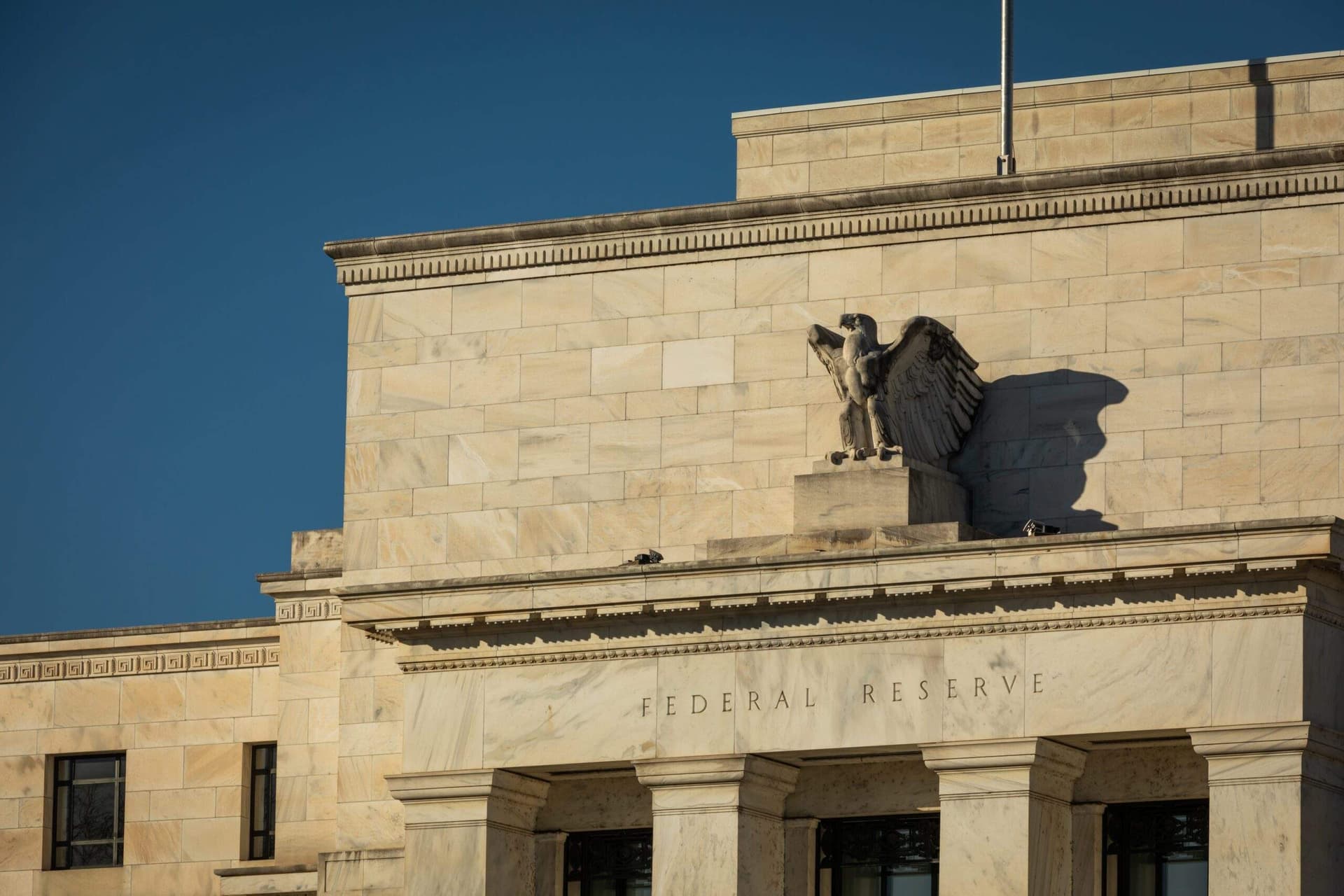
Warsh has been a vocal critic of renovations of the Federal Reserve headquarters on Eccles Street in Washington, D.C., noting that it’s always the first thing bureaucrats do in Washington… renovate their offices.
Ironically, the criminal investigation into Powell’s role in the gilding may actually impede his confirmation.
Republican Senator Thom Tillis said he will oppose President Donald Trump’s nomination of Kevin Warsh as the next chair of the Federal Reserve until the federal criminal probe is resolved.
One “nay” vote from a Republican will nix Warsh’s appointment.
 Gold in the Age of Currency Collapse
Gold capped off its blistering 2025 rally with a strong start to 2026. Until yesterday’s rout. Gold and silver both had their worst single trading day since the last bull rally in precious metals in 2013.
So it goes.
The price dipped to $5,100 this morning, but the trend remains vertical. Goldman Sachs’ Anshul Sehgal says this isn’t speculation—it’s central banks running from the dollar.
“These are tiny markets compared to global stocks or fixed income,” Sehgal notes. “The smallest change in demand makes prices go parabolic.”
Only 5% of the world’s gold is held by speculators. The rest is quietly moving into bullion and Treasurys.
Sehgal calls it a multi-decade shift. Gold did nothing from 2010 to 2020. It’s catching up now.
Even JPMorgan is raising eyebrows: one analyst sees a path to $8,500.
Back in 1920, the defunct academic Keynes warned us: “There is no subtler, no surer means of overturning the existing basis of society than to debauch the currency.”
Inflation, he wrote in The Economic Consequences of the Peace, empowers speculators and punishes savers. It turns wealth creation into a “gamble and a lottery.” And then the government, regardless of whether it’s run by the Red or Blue tribe, confiscates wealth by stealth and plausible deniability.
 The Dollar in Retreat
Since last January, the Swedish krona has surged nearly 25% against the dollar. The peso’s up 19%. The franc, 18%.
The greenback, once the world’s anchor, now drifts in a current of its own making.

Blame it on rising fiscal chaos, the erosion of Fed independence, and Trump’s tariff-bloated populism. A softening yield curve and better growth abroad have investors looking elsewhere.
Markets may be crowded with short-dollar bets, but the politics still point down. Trump claims the dollar is “doing great.” But MarketWatch reports it just hit a four-year low.
Lower dollar = higher prices. As Leon Hadar puts it, households face extra annual costs of $1,300 to $2,100 due to tariffs, deregulation, and inflation.
Worse, 75% of Americans now believe tariffs are raising prices. A rare majority that includes 56% of Republicans. A new Gallup poll finds voters blaming Trump—not Biden—for rising costs and shrinking paychecks.
The White House is in damage-control mode, offering stimulus checks, rent caps, and child care credits—bread and circuses before the midterms. More to come in 2026.
 Shutdown Kabuki
Meanwhile, Congress, as feckless at governing as they are at communicating their political ambitions or trading strategies, performs its regular improv sketch: “This Is Not a Budget Process.”
With DHS funding stuck over immigration fights, a partial shutdown looms. Senate leaders have a deal. But the House doesn’t return until Monday. A weekend shutdown is already baked in.
Speaker Mike Johnson was refreshingly candid: “We may inevitably be in a short shutdown situation.”
 Meta: AI That Pays; Microsoft: AI That Waits
AI continues to be the shiny object in the stock market. Meta crushed it Thursday, with AI-driven ad revenue up 24%. Capex will soar 90% this year. But the Street doesn’t mind. Zuckerberg’s bots are delivering returns.
Microsoft stumbled. Investors wanted GenAI profits, not press releases. They didn’t get them. The AI story still has legs. But the easy money phase is over. Wall Street wants cash flow, not code.

Goldman released this comparative ,chart this morning showing that investors have not seen nearly the capital gains that dominated the early stage of the dot-com rally in the late 1990s.
 Geoeconomics and the Age of Chokepoints
Goldman also released this warning summarizing research from the Council on Foreign Relations to its macro traders this morning:
Economic statecraft is back with a vengeance. Chokepoints—like U.S. dominance in semiconductors or China’s stranglehold on rare earths—are now strategic weapons.
Edward Fishman of CFR says the trust that underpinned globalization has cracked. Countries, not just in the U.S. under Trump, are scrambling to secure their weakest links. Economic war is the new Cold War. And in this new regime, even the winners are exposed.
Tomorrow’s chokepoints might be in cloud computing, AI algorithms, or green tech, dominated alternately by the U.S. and China.
Today: Semiconductors, rare earths, cloud access—these are the new levers of power. Governments are stockpiling vulnerabilities, treating commerce as warfare by other means.
This isn’t new analysis, per se. Especially if you’ve been following along with our analysis in Grey Swan. But… we do suggest it’s one of those cases when “it’s not what’s being said, but who’s saying it:” Goldman and the CFR.
~ Addison
P.S.Yesterday’s Grey Swan Live! proved a masterclass in how to look for international real estate deals. Ronan’s business model is unique. He’s able to bring serious negotiating weight to the table with developers in markets you’re most likely to find both rental income and capital appreciation.
The intrepid Ronan McMahon of Real Estate Trend Alert explained his system, and showed how owning property – particularly bought in foreign locales – can avoid much of the volatility of traditional assets in the U.S. And, done properly, can be a great source of retirement income.

The replay is up on site for paid-up members.
Real estate plays an important role in the asset allocation model we model out for Grey Swan Investment Fraternity members. Later today, at 2 p.m. ET, for paid-up annual Fraternity members, we’ll have a special session reviewing our model portfolio with Andrew Packer.
As always, we’ll go over the charts on all our model portfolio positions and what we expect amid the unfolding chaos (and opportunities) of 2026.