Beneath the Surface
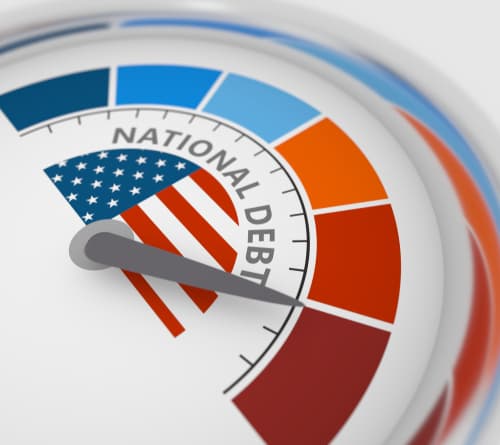
Grey Swan Forecast #7: A Global Debt Crisis Will Reprice Democracy

December 24, 2025 • 7 minute, 41 second read
“Debt is like any other trap – easy enough to get into, but hard enough to get out of.”
-Henry Shaw
December 24, 2025 — There are years when markets feel loud and years when they feel honest.
2026 is shaping up to be the latter.
The defining Grey Swan event of the year ahead will not arrive as a crash, a vote, or a declaration of emergency.
Rather, an extended revolt in the bond market. We’ve already been covering the historic rise in long-dated Japanese bonds since they started getting serious in September.
That’s the thing about the bond market, though, isn’t it? Nobody really pays any attention to it until the price of low-risk assets doesn’t give the portfolio the coverage it has historically provided.
The global debt crisis will unfold gradually through bond auctions, yield curves, and budget tables.
It will also force democratic societies to confront a problem they have postponed for decades: a century of industrial age welfare and income distribution programs that operate more like Ponzi schemes than well-thought-out, publicly financed assistance.
The global debt crisis now coming into view will force entire nations to reprice democracy itself. Will this be the year deficit spending and limitless debt accumulation begin to lose votes in the ballot box?
The last time we had globally saturated government balance sheets this dire… they came with fascist authoritarian governments packed nearly in their suitcases.
 The Arithmetic (er, Basic Math) Has Stopped Cooperating
For most of the past generation, Western democracies have operated under a shared assumption: social commitments could expand indefinitely as long as borrowing costs remained low and growth eventually materialized.
That assumption is breaking down in real time.
In Japan, the world’s most indebted developed economy, the bond market has begun asserting itself after years of dormancy. The Bank of Japan has been forced into ever-larger interventions to stabilize auctions, even as inflation and currency weakness complicate its control.
Bloomberg noted late last year that Japan’s government bond market “has re-entered the realm of price discovery,” a polite way of saying policy no longer sets the terms alone.
Germany, long Europe’s fiscal disciplinarian, has crossed a psychological threshold of its own. Massive defense spending commitments, energy subsidies, and social transfers are now embedded in multi-year budgets.
The Financial Times observed that Berlin’s fiscal posture now assumes “permanently higher borrowing layered onto a welfare state built for a different era.”
In the United States, the numbers have grown too large to ignore. The Congressional Budget Office projects that federal interest costs will approach — and then surpass — defense spending within the decade. The Wall Street Journal summarized the shift bluntly: Washington is issuing debt at yields that assume growth outcomes it no longer controls.
None of this signals alarm to politicians – journeymen or that rat pack of lifers in Washington. What it does require is the cojones to govern by subtraction.
 Bonds Vote Before Voters Do
Bond markets, on the other hand, are not ideological. They do not care about platforms, coalitions, or press conferences. They care about time, risk, and compensation.
When yields rise simultaneously across Japan, Germany, and the U.S., that signal deserves attention.
It reflects a shared reassessment of fiscal sustainability in societies where political systems struggle to reduce benefits, raise taxes, or openly accept inflation.
In Empire of Debt, we argued that empires rarely fall because they run out of money. They falter when promises compound faster than credibility. More aggressive debt postpones the reckoning. It also heightens the severity of the inevitable crisis.
By 2026, governments will continue borrowing. Central banks will continue managing optics. Markets will continue demanding higher compensation. Each step will feel incremental. Together, they tighten the available choices.
This is where democracy gets repriced.
 Why Democracies Are Uniquely Exposed
Authoritarian systems can impose austerity, suppress dissent, or redirect blame. Democracies must negotiate with voters who expect benefits without visible sacrifice.
The ongoing civil negotiation – between haves and have-nots, the rich and the poor, the old and the young, the liberal and the conservative – is all but gone from public discourse.
Cut entitlements and face electoral revolt. Raise taxes and face capital flight. Inflate away obligations and erode trust. Each option narrows legitimacy. Each delay increases the eventual cost. None are palatable to an ill-informed body of voters.
Europe offers a preview. Prolonged support for the war in Ukraine, combined with energy policy missteps and demographic stagnation, has left voters less patient with Brussels.
As senior researcher Larry Fein pointed out in his contribution to our Grey Swan forecasts, institutions that look permanent often fail suddenly once fiscal legitimacy goes poof!.
The comparison to late-Soviet Europe is uncomfortable — and increasingly apt.
Japan offers another preview: an aging society financing stability through domestic savings that are shrinking, while the central bank absorbs risk that no private actor will. The yen’s repeated selloffs in 2025 were not currency bets. They were distinct balance-sheet signals.
The U.S. remains privileged by reserve-currency status. That privilege buys time. It does not cancel arithmetic.
In Financial Reckoning Day, we described interest expense as the invisible tax that crowds out policy options long before voters recognize the tradeoffs. By 2026, that crowding will become politically visible.
 Adaptation, Not Resolution
Grey Swan #7 does not require a default to be accurate. All that is needed is persistence in demanding a reasonable return on government-issued bonds.
A handful of weak auctions.
A fiscal package that disappoints.
A central bank statement that falls short of reassurance.
By the time “debt spiral” becomes a mainstream phrase, markets will already have imposed their emotionless discipline.
Watch the language. When officials begin emphasizing “market confidence” as often as growth or employment, priorities will have shifted behind oak panel doors and puffs of cigar smoke.
When bond volatility becomes routine rather than rare, the transition is underway.
 Individual Investors Take Note
Dollar 2.0 aligns perfectly with this phase of adaptation. Tokenized Treasurys, faster settlement, improved collateral mobility — these are not rebellions against the system.
They are attempts to keep it functional under heavier loads. As The Wall Street Journal put it, these are “infrastructure upgrades driven by necessity, not ideology.”
We forecasted the end of fiat currencies and specifically the dollar as the global reserve currency over a decade ago in the first edition of Demise of the Dollar. Our angle has been correct enough to sustain two new editions of the book, a rarity among popular finance non-fiction.
Reserve currencies survive by re-engineering their plumbing long before credibility entirely cracks. They adapt repeatedly — until the end-user throws their hands in the air and gives up.
Wall Street’s most prominent institutions have already formulated an exit strategy from a bond market that just won’t play along with extended, untenable political promises.
Long-duration promises grow less attractive. Optionality grows more valuable. Assets tied to real cash flow, pricing power, and scarcity behave differently when interest expense dominates public finance.
Portfolio Director Andrew Packer’s warning about a potential “lost decade” deserves attention here.
Markets can move dramatically while delivering modest real returns, once inflation, taxes, and volatility are taken into account.
Equal-weighted exposure may matter more than index headlines in a world of concentrated capital and rising costs.
Liquidity will still fuel rallies. It will also sharpen reversals.
 Why Is “ Global Debt Crisis” Grey Swan #7?
This forecast is a formative one. It sits at the base of the stack. Wars, technology races, and political upheavals — all of them rest on fiscal capacity.
In 2026, that capacity will tighten across the developed world simultaneously. Democracies will discover that generosity financed by debt carries conditions, whether voters approve of them or not.
Bond markets will not shout so much as clear their throats. Repeatedly.
And when they do, policy debates, election outcomes, and investment returns will all begin to sound different.
That is the Grey Swan. The repricing of democracy has already begun.
Addison
P.S. We have six more Grey Swan forecasts for 2026 that you won’t want to miss – and will want to be prepared for … stay tuned in the days ahead.
To help us place trades in the year to come, we’ve obtained the rights to a patent from the U.S. Patent and Trademark Office.
The new technology has some of the strongest predictive power I’ve seen in all my years of finance.
It utilizes a proprietary algorithm and patented software designed to track unusual trading activity in real-time, on occasion even making it possible to identify what insiders and individuals with special, high-level information are doing with their money.
This data hosts over 13.4 billion rows of data, analyzing more than 134 million historical trades and counting. And it scans over 1.3 million items daily.
We’re putting that AI-powered patent to work in our Grey Swan Trading Fraternity.
We’ll have more details on this patent, how it identifies stocks before they move based on ripples in the options market – and more. Stay tuned for further details after the holiday. I wish you and yours the best this holiday season!
If you have requests for new guests you’d like to see join us for Grey Swan Live!, or have any questions for our guests, send them here.