Beneath the Surface
Grey Swan #2: The Crack-Up Boom Reaches Terminal Velocity

January 1, 2026 • 7 minute, 53 second read
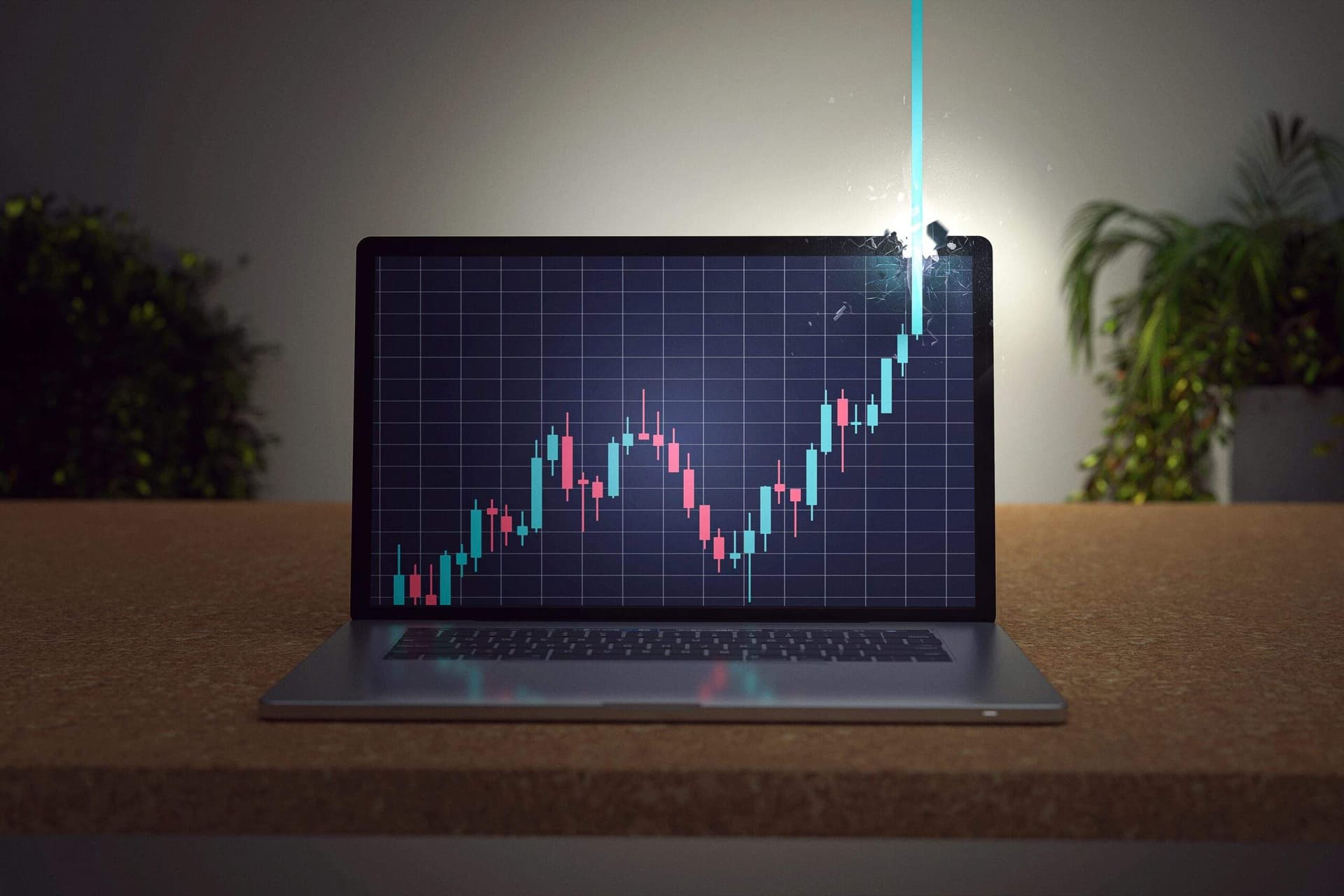
“But then finally the masses wake up. They become suddenly aware of the fact that inflation is a deliberate policy and will go on endlessly. A breakdown occurs. The crack-up boom appears.”
– Murray Rothbard
January 1, 2026 — There are years when markets advance on fundamentals, and years when they advance on hope. The year in markets 2026 belongs firmly in the second category.
By July of 2026, the crack-up boom has already entered its acceleration phase. Liquidity is abundant, incentives are aligned toward risk-taking, and political pressure favors rising asset prices as proof of competence.
What follows is not subtle. It is fast and profitable—for those who know what game they’re playing.
This particular Grey Swan matters because it strikes at the heart of all the other 2026 forecasts. Markets are where debt dynamics, political realignment, AI exuberance, and Dollar 2.0 all express themselves through the simple metric of price.
In 2026, prices become the primary language of the system, spoken best by those who are capable of ignoring politics altogether.
 The Setup Is Already in Motion
The groundwork was laid in 2025.
Taxes promise to trend lower. Regulation, we’re confident, will ease. The Federal Reserve, already bent under sustained pressure from the Trump reset agenda, will continue its rate cut cycle.
Quantitative tightening ended in early December without ceremony. Financial conditions loosened even as headline interest rates stayed high for everyday Americans.
Mainstream coverage has already shifted tone. Bloomberg noted that “financial conditions remain far easier than policy rates imply.” The Wall Street Journal observed that markets are behaving as if intervention is now assumed rather than debated.
In Financial Reckoning Day, we observed that during this phase of the dot-com bubble of 1999-2000, facilitating the boom became policy.
Growth metrics replace balance-sheet maintenance. Asset prices become the focus of investors, professional and retail alike, rather than capital allocated to the best innovations and business models.
 Where the Boom Expresses Itself
By early 2026, the boom mindset has become dominant. And will begin to convert even the most stalwart bears.
Across the board, U.S. equities continue higher, led by a narrow group of dominant names. AI platforms, semiconductor supply chains, energy infrastructure, defense contractors, and space-adjacent firms will suck up a disproportionate amount to investable capital.
The indexes closing at historic highs will continue to grab headlines, further enticing unwitting speculation into wanton stock market participation.
The S&P 500 will push through round numbers that would have sounded absurd a decade ago. The Nasdaq will behave more like a leveraged instrument than a broad market for tech stocks.
There is one new influence in the market, pushing it higher than the last, that didn’t yet exist in 2000 or 2008.
Following the mass issuance in 2025, there are now more ETFs (4,300) than publicly traded stocks (4,200), a milestone reached in 2025 due to the surge in specialized funds.
In a rare crack-up twist, ETFs now isolate individual investors even further from corporate balance sheets… allowing them to ogle their retirement balances instead of paying attention to which companies are dominant in the real economy.
Precious metals will continue their advance, too.
Mark Jeftovic asserts that gold, silver and bitcoins are as much a feature of the terrifying bull as other asset classes. Gold and silver will rise steadily, supported by central-bank demand and private hedging. The Financial Times framed the 2025 move as “insurance against fiscal drift,” a phrase that captures the setup for 2026 well.
Bitcoin advances differently, at a novel pace. Regulatory clarity under Dollar 2.0 brings institutional capital. Volatility remains high. Price action reflects both speculation and monetary signaling. Crypto trades as a barometer of confidence in policy discipline.
This isn’t science, but here’s our forecast for these markets during the crack-up phase:
The Dow will hit 60,000 before it falls back to 30,000;
The S&P 500 will crest 8,000 before it drops to 4,ooo;
The Nasdaq will see 30,000 before it 15,000;
Gold will rise steadily to $7,000 before falling back to $3500;
Silver, ever ambitious, will achieve $100 before it drops back ot $40.
Bitcoin is still in a price cycle that is independent of other markets. It will seek $170,000 before dropping back to $70,000 again.
With those numbers under our belt, let’s look at the mechanics of the bubble – from the setup in 2025 to the peak in 2026.
 AI Continues As Accelerator
Artificial intelligence supplies the narrative fuel.
Capital spending on data centers, chips, power generation, and networks accelerates. Vendor financing expands. Circular funding structures deepen. Expectations become embedded in valuations more quickly than cash flows can justify.
The Financial Times reported in late 2025 that AI investment increasingly resembles earlier general-purpose technology booms, where scale outpaces measurable productivity gains.
The observation doesn’t slow capital. It validates investors’ urgency to get in on the boom before it’s too late. The AI narrative rewards conviction, even when false. Hesitation carries opportunity cost. Participation becomes the only rational choice….
 The Monetary Backdrop Tightens the Spiral
The Federal Reserve’s role shifts further toward volatility management. Rate cuts arrive framed as prudence. Balance-sheet support returns framed as stability. Markets internalize the pattern.
Stephanie Pomboy’s observation that “the Fed lever is broken” echoes through this phase. Quantitative Easing (QE) will be the first of many efforts to maintain trust. Each intervention feels as necessary as the last.
By mid-2026, markets assume intervention as baseline behavior. That assumption, too, feeds acceleration.
 How Momentum Turns
Every crack-up boom has its fuse. The question at this point will be what sets it alight?
- A marquee IPO that disappoints.
- An AI platform that stumbles publicly.
- A regulatory clarification that tightens margins.
- A bond auction that underperforms enough to actually attract notice.
- A geopolitical flare-up that intersects capital flows.
During our early December Grey Swan Live!, Bonner Private Research’s Dan Denning postulated this scenario: In a fervent race to be first to announce Agentic Artificial Intelligence (AGI) – machines that are smarter than humans and can set up their own economies – will trigger the first market quake.
Either OpenAI or Anthropic will IPO and signal the top of the market.
Bubble dynamics are equally vicious during the bust as they are euphoric during the boom.
 Why Timing Amplifies the Risk
The 2026 boom will peak at an awkward political moment.
Midterms approach. Debt service competes aggressively with policy promises.
Populist pressure, already heightened, will intensify.
The largest wealth transfer in history – Baby Boomers passing on their lifetime earnings to Generation X – will collide with irrational volatility.
Households experience the cycle differently depending on asset exposure. Political narratives harden. Markets price uncertainty faster than polls can capture it.
In Financial Reckoning Day, we described how asset booms financed by debt tend to collide with democratic cycles. That collision sharpens conflict between classes and age groups even as headline indices remain elevated.
 Why This Is Grey Swan #2
This forecast feels exhilarating to participants and unsettling to observers. That tension defines it. During 2025, we referred to this tension as the most terrifying bull market in history. In a phrase, you know your money’s at stake, but you don’t dare miss out.
The crack-up boom does not signal immediate collapse. Monetary policy gets a new master… inflation rages… and investors chase stocks as a means of keeping pace with their savings.
Markets may even finish 2026 higher than they begin. Many investors will still lose purchasing power along the way. Terminal velocity will feel like momentum… until reality hits.
In 2026, expect breathtaking advances, with the AI narrative remaining dominant, and sudden reversals to occur quickly. Expect liquidity to remain plentiful and erode discipline even more.
Volatility will become familiar in ways 2025 lulled us into believing it had been conquered. Above all, expect this crack-up boom to reveal who understands cycles—and who mistakes price for skill and permanence.
~ Addison
Next up: Grey Swan #1 — The Real Age of Intelligence Begins
P.S. from Addison: We’ve got just one Forecast for 2026 left — what thoughts do you have? What forecasts do you think we’ve missed and will be valuable to members? Send them here.
Consider your email a warm up, early in the new year, we’re going to be launching the second phase of our fraternity upgrade. First the patented AI-driven trading tool for the Grey Swan Trading Fraternity (details below).
Second a community forum to discuss investment trends, trade ideas, thoughts about economics, politics, the Fed… you name it. We’re testing the forum out behind the scenes now… we’ll update you as soon as we’re ready to release it into the wild.
With a crack-up boom likely as the calendar turns, trading will be incredibly useful for both growing your wealth and protecting it on the downside.
With this boom in mind, we recently acquired the rights to a patent to better identify money flows in the options market.
We’re putting the AI-powered patent we acquired to use in our Grey Swan Trading Fraternity.
Big moves in the options market often precede a big move in an underlying stock – providing better opportunities.
This patent allows us to harness knowledge about what’s moving in the options market – filtering out a lot of the typical “noise” in unusual options activity to detect actual big-money moves.
With a contentious year ahead, we expect more volatility – and plenty of opportunities to profit from the market’s ups and downs.
Our research going into more details on this new tool, and how we’ll use it to rack up more wins in 2026, just went live – click here for a replay.