Beneath the Surface
Gideon Ashwood: The Bondquake in Tokyo: Why Japan’s Shock Is Just the Beginning

December 5, 2025 • 4 minute, 25 second read
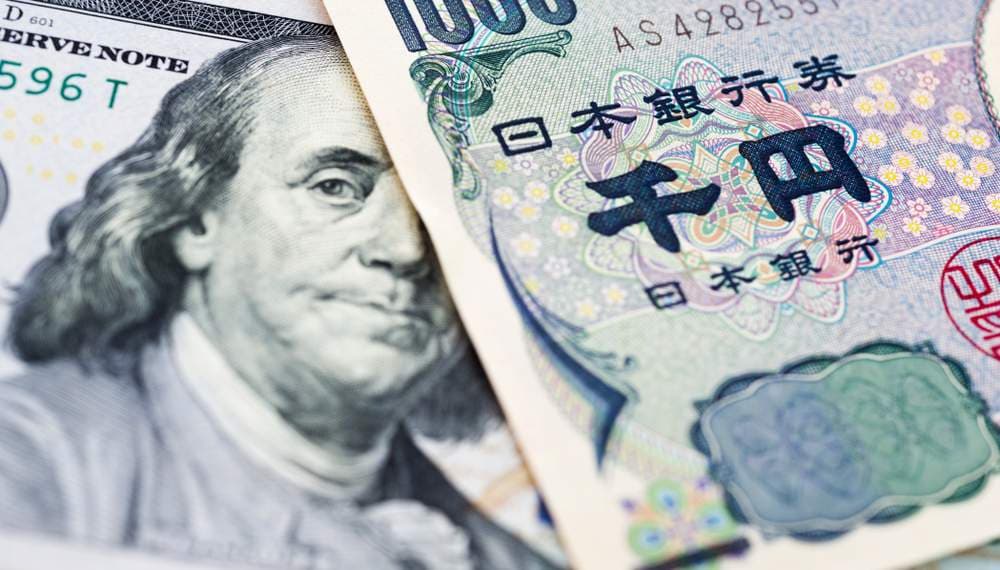
“Japan is back. Invest Japan.”
– Prime Minister Sanae Takaichi
December 5, 2025 — It started quietly. No fireworks. No headlines. Just a flicker on a trader’s screen in Tokyo: Japan’s 30-year bond yield surged to 3.38 percent.
In a country where interest rates had been pinned near zero for over a generation, this was the financial equivalent of an earthquake. And within hours, that tremor began sending shockwaves through every major financial market on Earth.
This isn’t just a story about Japanese bonds. It is a warning siren for every portfolio, every central bank, every retiree, and every debt-soaked government trying to survive in a world that is rapidly changing.
The End of the Widow-Maker Trade
For 30 years, Japan was the land where interest rates went to die.
The Bank of Japan used yield-curve control to keep long-term rates sedated. Traders joked that shorting Japanese bonds was the “widow-maker trade.”
Not anymore.
On November 20, 2025, everything changed. Quietly, but decisively.
The Bank of Japan finally pulled the plug on decades of easy money. Negative rates were removed. Yield-curve control was abandoned. The policy rate was lifted to a 17-year high.
Suddenly, global markets had to reprice something they had ignored for years.
What happens when the world’s largest creditor nation stops exporting cheap capital and starts pulling it back home?
The answer came fast. Bond yields in Europe and the United States began climbing. The Japanese yen strengthened sharply. Wall Street faltered.
And the so-called carry trade, where investors borrowed yen at low rates to invest in higher-yielding assets abroad, began to unravel in real time.
What had once been a quiet, stable corner of global finance was now a live wire sparking with danger.
Choose Your Pain
So here we are. Central banks have a choice to make. And so do you.
Do they keep rates high to maintain credibility and fight inflation, knowing it could crash their own governments’ finances?
Or do they quietly return to old habits and begin manipulating bond markets again, hoping to buy time?
Neither path is safe.
But the danger isn’t just for central banks. It is for every investor who still thinks the world is operating under the old rules.
The truth is, you cannot print your way out of a structural shift. You cannot pretend that 40 years of falling rates and benign inflation will magically return.
The tide has turned.
How You Can Prepare
This is not about panic. It is about preparation.
You need to reevaluate every assumption. The 60-40 portfolio strategy that worked for decades may no longer be effective. Long-duration bonds are more volatile now. The traditional “safe haven” playbook is being rewritten.
Now is the time to stagflation-proof your financial life.
Start by reducing exposure to long-term fixed-rate bonds. Consider Treasury Inflation-Protected Securities (TIPS), which rise with inflation.
Allocate more toward real assets like commodities, infrastructure, and real estate. These tend to hold their value when inflation is persistent.
Look for companies with pricing power and healthy balance sheets. Dividend growers with real earnings tend to outperform in higher-rate environments.
Stay away from overleveraged businesses or speculative tech that relies on low interest rates to survive.
Build cash reserves. Not because you expect a crash, but because flexibility is your greatest asset when volatility strikes.
Reconsider your debt. If you are sitting on adjustable-rate loans, think about locking in fixed rates now. Rising interest costs can erode your financial foundation fast.
And finally, recognize that this new era will reward those who stay informed and nimble.
The investors who thrived in the 2010s will not necessarily be the ones who thrive in the 2020s.
This Is the First Crack, Not the Last
Japan’s bondquake was not an isolated event. It was the first crack in a financial system that has relied on cheap money for too long.
The world is waking up to a new reality. One where inflation is sticky. Where capital is scarce. And where mistakes will be punished more severely than before.
You can ignore it and hope it goes away. Or you can adapt, prepare, and position yourself for the world as it is becoming, not the world as it once was.
Because the era of easy money is over, and Japan just rang the bell.
Gideon Ashwood
Geopolitical Alpha & Grey Swan Investment Fraternity
P.S. from Addison: Japan’s bond market woes pose the first substantial challenge for the “everything” rally we’ve been enjoying since the bear market of 2022 ended.
Unwinding a carry trade will likely mean more whipsawing asset prices, traders taking big gains off the table to offset losses, and a lot of unusual market moves. It’s wait and see for the holidays. This week’s fears may abate nicely, like the last time the carry-trade appeared to be in danger in the summer of 2024.
That said, it’s not going away – and if anything, it will expose mounting speculation across the geofinancial spectrum.
Paid-up Fraternity members can enjoy yesterday’s Grey Swan Live! with Dan Denning, during which we expose the yen carry trade in depth and with it the spectre looming in its unwind. Happy holidays!

If you have requests for new guests you’d like to see join us for Grey Swan Live!, or have any questions for our guests, send them here.