
“No experiment can be more interesting than that we are now trying, and which we trust will end in establishing the fact that man may be governed by reason and truth.”
–Thomas Jefferson
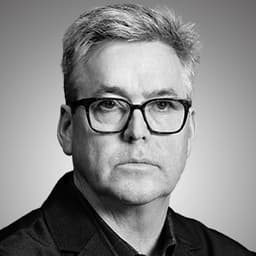
May 21, 2025 — “There may be 10,000 handshakes,” Mung Chiang said boldly with a slight tinge of his native Mandarin, “but each graduate gets only one. And each one is a little different: some firm, some light touch, some cold and some sweaty. For no two students are the same.”
Honestly, no one in the audience expected to be moved.
Most showed up thinking we’d hear another round of harmless commencement platitudes — some forgettable mix of “go forth,” “change the world,” and “don’t forget to call your mother.”
After all, that’s what these things usually are, right?
This past weekend, however, something rare happened at Purdue University in West Lafayette, Indiana.
Essential in its own small way.
President Mung Chiang — an engineer by training, not a speechwriter — stood metaphorically before the largest graduating class in the university’s history, more than 10,000 strong, and delivered a message that felt like it could only happen here, in this time and place, and only because the idea of America — flawed, noisy, unpredictable — is still alive.
What Chiang didn’t talk about was almost as important as what he did. And not because he promised to keep his speech the shortest in the university’s history.
No.
Chiang didn’t talk about “changing the world” or “the power of your dreams.” He didn’t exhort the students to protest the wars in Gaza and Ukraine. He didn’t tell graduates to resist, reform or relate. He didn’t mention Donald Trump or Kamala Harris. Not once.
He talked about freedom.
The freedom to think, to tinker, to speak your mind — even when it’s unpopular. He talked about responsibility-not as a slogan, but as something real, something earned.
He joked about the sweaty handshakes at the diploma line and then got serious: Purdue reads every graduate’s name, one by one.
Not to be quaint.
But because the individual matters.
The idea sounds obvious… or maybe old-fashioned.
But to hear it — stated clearly, with no buzzwords or hedges — was unexpectedly powerful.
Now consider this: Chiang was born in Tianjin, China. Immigrated here in the mid-90s. Became a U.S. citizen. Earned his Ph.D. from Stanford before most of us were out of grad school. Taught at Princeton. Advised the U.S. State Department.
He’s the president of a land-grant university at the top of its game — without raising tuition once over the past 14 years.
On the eve of the 250th anniversary of the American experiment, he gave a simple speech only to remind us — not with fireworks or chest-thumping, but with clarity — why this time and place, despite everything, still matters.
We live in a time where most institutions are chasing approval, crumbling in credibility, raising tuition, skimming off the system and scrambling to matter in an intentionally fractious political drama.
And yet, what’s this?
A refreshingly radical idea.
Chiang suggested to 10 different audiences over the course of 20 hours of solemn ceremony that Purdue isn’t a megaphone for one voice in unison or one complaint after another.
It’s a university. A gymnasium of thought. A place where you sweat. Not everyone gets a trophy. Not everyone agrees. But everyone thinks — or is expected to – for themselves.
Chiang wasn’t selling a model.
He chose this one for himself.
And standing there, under the Elliott Music Hall lights, it felt like something real — something we don’t see much anymore.
Not nostalgia.
Not ideology.
Just a calm, earned confidence in the idea that freedom works.
You can build a life, a career, or even a university that competes with the best of the best by trusting people to carry their own weight.
If anything, we had to smile.
Our son, who will graduate with a degree in animal science and then study how AI tools will dissect DNA to build new medical solutions (and other advanced technical functions) in graduate school, will also carry Chiang’s message.
And pass it on.
~ Addison Wiggin
Grey Swan
P.S. “I don’t usually do this,” writes Eric D., “but I find your insight and newsletters to be a notch above all the rest. That’s saying a lot when I skip right past literally 100s of emails a day.”
Mr. D continues:
It’s truthful without bias. It’s the cold, hard facts. None of this. “Well, I wear one badge, so I have to say this.”
That kind of information being broadcast from both sides in all directions really does nobody any good.
So, really, the only reason I wrote this email was to say thank you and express my appreciation for the way you conduct business and relay the message to others.
“Have a blessed day.”
Join us for Grey Swan Live! tomorrow, Thursday, May 22, at 11 a.m. EST.
Andrew Packer and I will examine the headlines and investment data to determine the impact tariffs, taxes, and political tumult are having on the Grey Swan model portfolio.
If you’re a paying member, you’ll receive your invitation email right before we go live. See you then.
Your thoughts? Please send them here: addison@greyswanfraternity.com