This morning gave investors another reminder of how quickly fear can turn to greed.
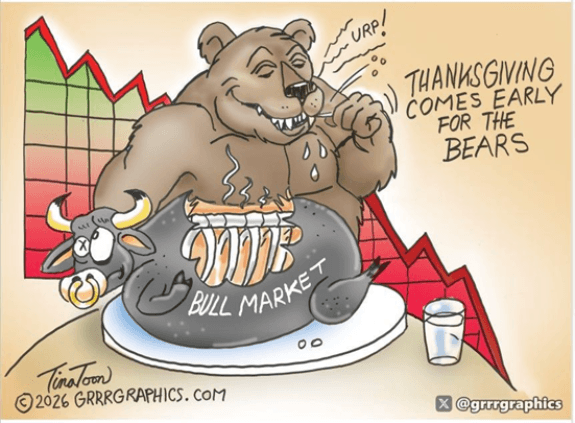
On Friday, Chicken Little saw the sky caving in on the AI trade. One of our August hedge trades, going long volatility via the iPath Series B S&P 500 VIX Short-Term Futures ETN (VXX), hit its 30% profit target at the height of the market sell-off.
Then this morning, an adroitly timed press release announced Jensen Huang’s reinstatement at Nvidia (NVDA) and a 6% surge in the Nasdaq 100 ETF (QQQ). Traders who had scrambled for protection were suddenly chasing technology shares again.
(Here we offer a minor “mea culpa.” You may recall I thought Andrew had recommended QQQ too soon on Friday. Well, turns out the man’s trader instinct paid off nicely this morning.)
During the 2008 financial crisis, we learned a hard life lesson about these episodes.
When a dominant speculative trade begins falling apart — subprime mortgages back then, potentially AI today — leveraged investors sell whatever they can to raise cash.
Stocks fall, gold falls and even sound investments get dumped to meet margin calls.
Gold’s recent slide toward $3,500 fits that pattern.
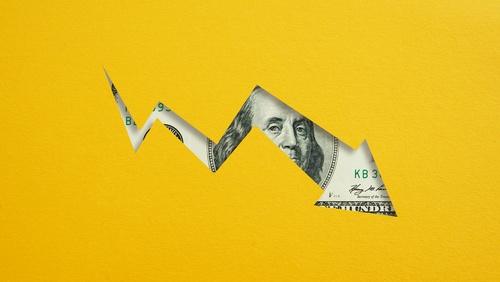
Meanwhile, investors buy dollars and seek refuge in U.S. Treasurys, testing their reputation as the world’s “risk-free” asset. Treasury prices rise as yields fall, while the Dollar Index rallies against other currencies.
The dollar has now advanced for four consecutive weeks, even as Washington continues borrowing roughly $2 trillion more than it collects annually:

The immediate demand for dollars reflects investors’ need for liquidity and safety. Over time, the government’s borrowing requirements and the purchasing power of those dollars remain legitimate concerns.
Gold – we will repeat ad nauseam – remains our preferred long-term monetary holding, although the experience of 2008 reminds us that even gold can suffer during a forced liquidation.
Andrew, God bless him, sees an opportunity in the currency market as investors begin reassessing that flight to safety. He’s identified a currency that will likely appreciate against the dollar as the panic subsides and Treasury yields retreat.
Today, we’re looking to establish the position while the dollar remains strong, with a defined exit if investors continue demanding dollars. Having collected 30% on our volatility hedge, we’re looking for the next opportunity created by the same market dislocation.
When the dollar is strong relative to other currencies, an ideal trade is with a currency that can gain when the dollar starts to weaken. Andrew recommends such an alternative currency – and an easy way to trade it — in today’s Pro.
~ Addison
P.S. Grey Swan Live! returned last week with Shad Marquitz.
Shad provided a timely review of what’s happening in the resource market. 2026 has been ugly for most commodities, but Shad’s extensive network of contacts reveals that mining company executives aren’t looking at just one year’s stock market performance.
Thanks to members who joined us and shared their questions. The replay is up on site.

P.P.S. Twenty-three days before Lehman Brothers collapsed in 2008, we warned publicly about the cracks in the financial system. Most people didn’t listen. Now I’m seeing something just as big.
Six financial giants that control roughly $24 trillion have signed on to fund a new “Federal Reserve.” Nobody voted for it, and almost nobody is reporting on it. And on November 30, its “chairman” gives his first big speech in Washington.
You won’t hear about this on the evening news, but this shift could help create 2.2 million new millionaires. The money will go to whoever is first in line, so click here to get the full details.