GSI Banner
  • Free Access
  • Contributors
  • Membership Levels
  • Video
  • Origins
  • Sponsors
  • My Account
  • Sign In
  • Join Now

  • Free Access
  • Contributors
  • Membership Levels
  • Video
  • Origins
  • Sponsors
  • Contact

© 2025 Grey Swan Investment Fraternity

  • Cookie Policy
  • Privacy Policy
  • Terms & Conditions
  • Do Not Sell or Share My Personal Information
  • Whitelist Us
Ripple Effect

Cisco Hits An All-Time High

Loading ...Addison Wiggin

December 15, 2025 • 2 minute, 37 second read


Cisco

Cisco Hits An All-Time High

Cisco hit an all-time high over the weekend.

That’s not a headline from December 15, 2000… but an actual print from this morning.

Cisco, the manufacturer of modems and routers, was the darling of the dot-com era. After 25 years in the woodshed, Cisco has regained some headline status:

Turn Your Images On

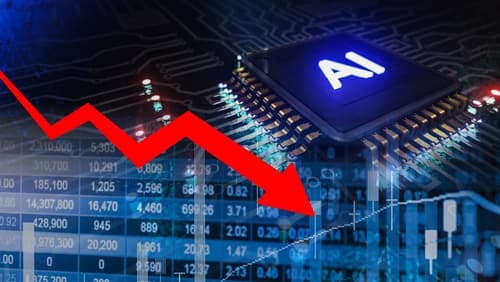
Dotcom-era darling Cisco is making new all-time highs, a quarter-century later. Good on them for staying in business. (Source: Morning Brew)

The Cisco-to-Nvidia comparison has been so thoroughly analyzed in the financial press that most people move on without paying attention at all. Another lazy dot-com analogy, they shrug, and scroll on.

That’s a mistake.

Here’s the detail that still ought to make you sit up a little straighter.

At the absolute peak of the dot-com boom — routers stacked to the ceiling and PowerPoint masquerading as profits — Cisco’s market capitalization topped out at roughly 4.4% of U.S. GDP.

Nvidia today? Roughly 16% of U.S. GDP.

That’s not a rounding error.

Measured against the size of the economy, Nvidia is in a category Cisco never visited. Which means that any serious disappointment in the AI build-out would scale 2000–01 – geometrically.

Back then, the tech bust was painful but containable. Today, with a single company representing that much economic weight, a similar air pocket would ripple far beyond stock charts — into capital spending, credit markets, pensions, and politics.

Add in the market share of Alphabet, Meta, Amazon… you’re starting to talk about real money. And real world impact, beyond the indexes into everyday American homes.

The technology may well change the world. No doubt in our view that it will.

The lesson here is that markets have a logic all their own, distinct from the innovation cycle.  And when valuation runs that far ahead of gravity, the reckoning comes quickly and lasts a long time.

~ Addison

P.S. Last week, we caught up with a good friend, Dan Amoss, who, as a forensic accountant, was way ahead of the tech bust and even more accurately the collapse in mortgage-backed securities in 2008. One trade he laid on – a short on the Lehman Bros – shot up 470% overnight on September 15, 2008. But that’s just one in a career of notable wins.

To the layman, Dan’s methods are similar to those of Michael Burry, of “The Big Short” fame, except that Dan had developed his own methods long before the financial world even knew Burry’s name or small details like “Burry’s a doctor with one glass eye.”

Over lunch, Mr. Amoss delved into the details of some of the trades he had made during the AI boom and the forensic reasons he believes 2026 will be even more challenging for individual investors than either 2000-01 or 2008-09. It was a lot. But clear and coherent.

I invited him to join us for  Grey Swan Live! this Thursday, December 18, 2025 @2pm EST. He agreed. More details will be shared as we finalize arrangements for him to present his findings. Stay tuned…

If you have requests for new guests you’d like to see join us for Grey Swan Live!,  or have any questions for our guests, send them here.

Frank Holmes: What Gold Reveals About America’s Affordability Crisis

December 15, 2025 • Addison Wiggin

A generation ago, a single income could support a family, buy a house and pay for a vehicle or two in the driveway.

Today, even two high earners are struggling to purchase a new home.

According to a recent report from Bankrate, a household earning $80,000 a year is now priced out of 75% of all new homes on the market. A family now needs to earn at least $113,000, and in some major metros, it’s closer to $200,000.

Meanwhile, the homeownership rate has slipped to a six-year low, with further declines expected next year. Families are being squeezed from every angle.

The point I want to make here is that the so-called affordability crisis isn’t just about the cost of homes or other assets. It’s about the cost of money.

Frank Holmes: What Gold Reveals About America’s Affordability Crisis
The Long-Term Cost of Denial

December 15, 2025 • Addison Wiggin

In just the first two months of Fiscal Year 2026, the deficit already totals $458 billion — the second-largest start on record.

More troubling still, the net interest expense hit $179 billion, outrunning Medicare, defense, and healthcare. At this pace, interest will again be the fastest-growing line item in the federal budget.

The Long-Term Cost of Denial
From Permission to Possession

December 12, 2025 • Addison Wiggin

America has consistently reinvented itself in times of crisis. The founders survived monarchy. Lincoln survived disunion. We’ve survived bank panics, oil shocks, stagflation, and disco. We’ll survive deplatforming, too.

The Second American Revolution won’t be fought with muskets or manifestos. It won’t be fought with petty violence and street demonstrations. It will be written into code. And available to those who wish to take advantage of it.

Russell Kirk called the first American Revolution “a revolution not made, but prevented.” The second will be the same. We’re not tearing down the house — we’re going to rewire it in code.

The result may not be utopia. But it will be freedom you can bank on.

From Permission to Possession
Debanking the Outsider

December 11, 2025 • Addison Wiggin

Treasury Secretary Scott Bessent has called stablecoins, including USDC, “a pillar of dollar strength,” estimating a $2 trillion market within five years. U.S. Treasuries back every coin.

Bessent’s formula even suggests that a broader, more efficient market for US dollars will help retain its best use case as the reserve currency of global finance… and, perhaps, help the current administration address the nation’s $37 trillion mountain of debt.

In trying to cancel a man, the establishment accidentally reinforced the dollar, and may add decades to its life as a useful currency.

Debanking the Outsider