“Experience has proved to us that a dollar of silver disappears for every dollar of paper emitted.”
– Thomas Jefferson
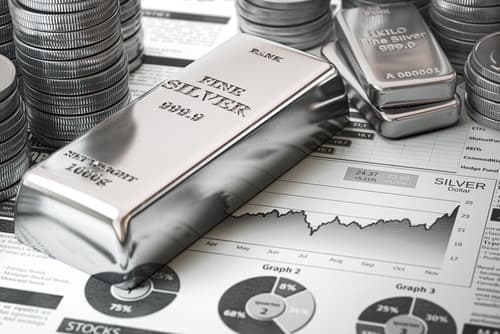
January 8, 2026 — On January 1st, 2026, China flipped the switch on silver export controls. The financial press barely mentioned it. And even if you did notice, you probably wondered why it wasn’t splashed across front pages everywhere. I know I did.
Either way, I want to spill a little more ink on what exactly happened—and why it matters.
And what happened was this: China reclassified silver under “dual-use export control rules”—meaning any material that can serve both civilian and military purposes now requires government approval to leave the country. On paper, Beijing insists this isn’t a ban. They’re just “regulating something strategically important.”
In practice, the rules sharply limit exports to a small, government-approved list—just 44 companies. And even for those firms, every shipment still requires case-by-case approval, entirely at the discretion of Chinese officials.
If this sounds familiar, it should.
China has been running a similar strategy with rare earth elements—the specialty metals critical to military systems, EV motors, and advanced electronics. As I wrote recently, Beijing imposed a series of export controls on rare earths in 2025, tightening global supply chains and forcing Western governments to scramble for alternatives.
But the approach was incremental. It began with export licensing and permits, which gradually expanded to cover more products and categories. Eventually, Beijing added extraterritorial provisions, demanding approval even for products made outside China if they used Chinese materials. Each step tested how far they could push without triggering an uncontrollable escalation.
With silver, China skipped the incrementalism entirely. They went straight to comprehensive export licensing on the first day of the new year, requiring government approval for every shipment and effectively gatekeeping 60-70% of global supply from day one. That tells you something about how serious Beijing is about this.
Hold on—60–70% of global supply?
That’s right. It’s not a typo.
China, you see, controls roughly 70% of global silver refining capacity. That means even if silver is mined in Mexico, Australia, or Peru, there’s a very good chance it still passes through Chinese infrastructure before it becomes usable metal. And starting January 1st, Beijing gets to decide whether that metal leaves—or stays.
Silver Is Different
Now, you might be thinking: why does China care more about silver than rare earths? After all, rare earths are critical for all kinds of high-tech applications, right?
True. But rare earths, for all their strategic importance, are still relatively niche. They’re used in specific, high-value areas—mostly defense and advanced tech.
Silver is fundamentally different.
Solar panels. Electric vehicles. AI data centers. Military electronics. Satellites. Consumer devices. Medical equipment. 5G infrastructure.
I could go on. The point is, silver is everywhere.
And that isn’t a coincidence.
Silver is one of the best electrical conductors on Earth. What’s more, there’s no easy substitute for most applications. You can’t just swap in copper or aluminum and expect the same performance. Silver’s unique properties—its conductivity, its reflectivity, its resistance to corrosion—make it nearly irreplaceable in high-performance applications.
All of this makes silver’s demand what economists call inelastic. Think of it this way: if coffee doubled in price, some people would drink less—that’s elastic. But if insulin doubled in price, diabetics would still buy it—that’s inelastic. The demand continues regardless of price.
As Frank Giustra pointed out, solar demand alone remains inelastic up to roughly $134 per ounce. I’ve seen estimates for other industrial uses that go even higher. Either way, we’re nowhere near those levels yet.
When the Physical Market Speaks
As I wrote in our latest Crisis Investing issue, silver had an extraordinary 2025—surging roughly 160%, from around $29 an ounce to nearly $75. It was silver’s strongest annual performance since 1979, driven by “a dramatic squeeze during the second half of the year, particularly in China, as exchange vaults were emptied and industrial demand from solar, EVs, and data centers collided with surging investment flows.”
Now it looks like the supply side is getting squeezed too.
On December 24—just days before China’s export controls kicked in—physical silver in Shanghai closed around $78 an ounce. At the very same time, silver on COMEX, the main Western futures market, closed closer to $72. That’s a $6 gap.
Historically, that’s highly unusual. Most of the time, the premium between Shanghai and COMEX stays under a dollar and rarely pushes past two. The reason is simple: arbitrage. Traders buy silver where it’s cheap and sell it where it’s expensive, quickly collapsing any meaningful price difference.
But when a $6 spread holds for hours—even during a thin, holiday trading period—it tells you something important. Arbitrage isn’t functioning the way it normally does. And when arbitrage breaks down, it usually means one thing: physical silver isn’t moving freely.
Remember, Shanghai pricing reflects actual deliverable physical metal inside China—the silver manufacturers need to make solar panels and electronics. COMEX, by contrast, is a heavily financialized paper market where most contracts never result in delivery at all. They’re cash-settled bets.
Under normal conditions, those two markets stay tightly linked. But when they start to diverge—and you get spreads like this—it’s a sign that physical supply is becoming constrained.
And that’s not the only signal. As Frank Giustra noted in his piece, the London over-the-counter (OTC) bullion market—where most physical trading actually takes place—is showing the deepest backwardation in decades (with spot silver trading above futures). In plain English, buyers are willing to pay a premium for metal now rather than trust they’ll be able to get it later.
Finally, there’s a structural issue many people overlook: roughly 70–80% of global silver supply comes as a byproduct of mining other metals—copper, lead, zinc, gold. This means that even if silver prices doubled tomorrow, production wouldn’t automatically increase unless mining of those other metals ramped up too. You can’t just “decide” to mine more silver.
Layer China’s export controls on top of all that, and you’re looking at a supply profile that’s unusually tight—and unusually vulnerable.
Now, mind you, I’m not making a short-term price call here. I don’t know if silver hits $100 next month or pulls back to $60 first. Nobody does.
What we do know is this: silver’s market is small, and when conditions line up, it can move very fast—and explosively.
After a 160% run last year, it’s tempting to assume silver’s best days are already behind us. But history suggests otherwise. In the late 1960s and 1970s—well before the Hunt Brothers’ attempted corner—silver went through multiple doubling cycles amid inflation and dollar weakness—conditions that rhyme with today, but without the industrial tailwinds from AI or the geopolitical wildcard of Chinese export controls.
Put it all together, and the silver story isn’t over.
If anything, 2026 may be the year we look back on as when it really got started.
Regards,
Lau Vegys
Doug Casey’s Crisis Investing & Grey Swan Investment Fraternity
P.S. from Addison: As we noted in yesterday’s Swan Dive, the silver story is getting interesting – and while it may be volatile, there’s likely more upside here
We just wrapped our first Grey Swan Live! of the year, with Matt Smith, publisher at Casey Research. Matt and co-author Doug Casey have just released a new book titled The Preparation.
Quick hit: Since 2021, Matt has been operating a “regenerative” cattle ranch in Uruguay.
The Preparation has some very strong opinions on the value of Western education and how to prepare the next generation to participate in a strong, thriving economy.
Matt broke down the ideas behind The Preparation – and how his own son is using those ideas to build valuable life skills around the globe. Paid-up members are highly encouraged to catch the replay, which we’ll have up on our site tomorrow.

If you have requests for new guests you’d like to see join us for Grey Swan Live!, or have any questions for our guests, send them here.