Beneath the Surface
A Look at Precious Metals As Prices Soar

January 14, 2026 • 4 minute, 36 second read
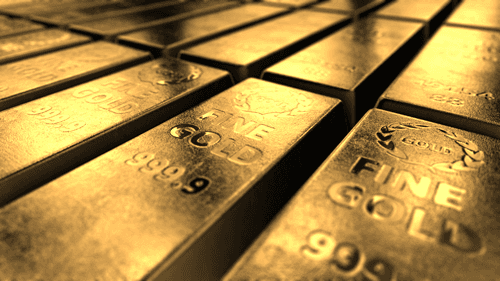
“Gold will store its value, and you’ll always be able to buy more food with your gold.”
– Peter Schiff
January 14, 2026 — Let’s peel back the layers of this precious metals bull market by analyzing the pricing action on the charts, which contains ALL the buying and selling.
Most people love a good narrative, and they use these stories to either reinforce their biased views or to explain away price action that they don’t agree with.
They are just stories, though, even if there are elements of truth embedded within them. We can utilize charts to remove this biased narrative and noise.
Over the longer term, the pricing that populates charts truly incorporates the total buying and selling from all central banks, financial institutions, ETFs, hedge funds, whale investors, and the rest of the retail investors.
The price data incorporates all reasons for the buying and selling, including all market narratives, all geopolitics, all monetary policy effects on interest rates, and even all manipulation of prices or lack thereof…
The charts don’t lie, and the price action is the only real truth that matters as investors, as we all ultimately buy any investment at a price and then sell it at a price.
Gold’s Phenomenal Chart and Epic Run
So, let’s start with a long-term chart of gold to put this bull market into perspective.

One could rightly argue that gold has been in a secular bull market for all of the 21st Century, ever since bottoming around $250 in early 2001.
Gold is up 16 times from $250 to $4,000 over the last 25 years, which is an amazing appreciation in U.S. dollar terms.
Almost everyone who has ever bought gold this century is up on their investment. That is a stunning statement about the currency of last resort.
We could have also gone back to when gold was fixed at $35 and unpegged from the U.S. dollar in 1971. From that perspective, gold is up (114X) over the last 54 years, and the whole move has all been part of a larger bull market…
It is worth reiterating that gold is on the elemental table and hasn’t changed for billions of years. It’s an inert metal rock after all.
An ounce of gold is merely a measuring stick that illustrates how much purchasing power a given fiat currency has lost over time.
Gold is up in every currency on the planet in a similar fashion because they’re all in a race to the bottom with regard to their loss of purchasing power.
So many investors get lost in the weeds trying to explain why gold is going up, but the only narrative that actually matters is that over time, fiat currencies become worth less and less until they become ‘worthless.’ It takes more fiat units to purchase that same ounce of gold over time, regardless of the currency.
Now, this is not a linear tick-for-tick phenomenon regarding the deflating purchasing power of fiat money. This gradual inflation in the value of gold, measured in fiat currencies, occurs over long periods of time.
Pricing action on the charts will demonstrate that there is always a series of cyclical bull and bear markets, which then make up larger secular bull and bear markets.
Gold’s Ten-Year Run in Context
Let’s now examine the start of the current secular bull market, which began when gold bottomed at $ 1,045.40 in December 2015.

This $1045.40 is the price point that the vast majority of technical analysts agree with and use as the Major Low that gold marked. It was at this low price point thatgold began a new bull market, where it has gone gradually higher, up 4X over the last decade.
Clearly, a 400% gain in an asset class over 10 years means we are no longer in the early stages of the bull market.
If history rhymes, then we’ve seen prior bull markets send gold up about (8X) or more, so it isn’t out of the realm of possibility that gold could still double from here up to $8,000 before the cycle ends. But again… nobody actually knows.
Now the big question: What does this mean for the precious metals (PM) stocks? Gold and silver producers have been runaway winners for 2025. But is it time to head for the exit?
We’ll get into the details on that tomorrow. Until next time…
Regards,
Shad Marquitz
Grey Swan Investment Fraternity
P.S. from Addison: Shad’s insights come from our December Grey Swan Bulletin.
Tomorrow in Grey Swan Live! we’ll be joined by Shad Marquitz and take a closer look at the precious metals market in 2026 and the advancements since then.

In a brief discussion last week, Shad let slip his interest in one particular company that has labeled itself a gold and silver miner because of regulations that have restricted their sale of existing copper and antimony (used in drones and other defense tech).
Those restrictions are being lifted this month, along with other regulations that the Trump administration is trimming.
The details of this one company alone are telling for investors interested in capitalizing on the new retail interest in both precious metals and critical minerals. Shad’s an encyclopedia on the entire resource market. Every conversation yields a wealth of new market insights. Tomorrow’s Grey Swan Live! promises the same. Don’t miss it!
If you have requests for new guests you’d like to see join us for Grey Swan Live!, or have any questions for our guests, send them here.