A new golden age for America… The decline is over.
—Donald J. Trump
The future of civilization is assured.
—Elon Musk
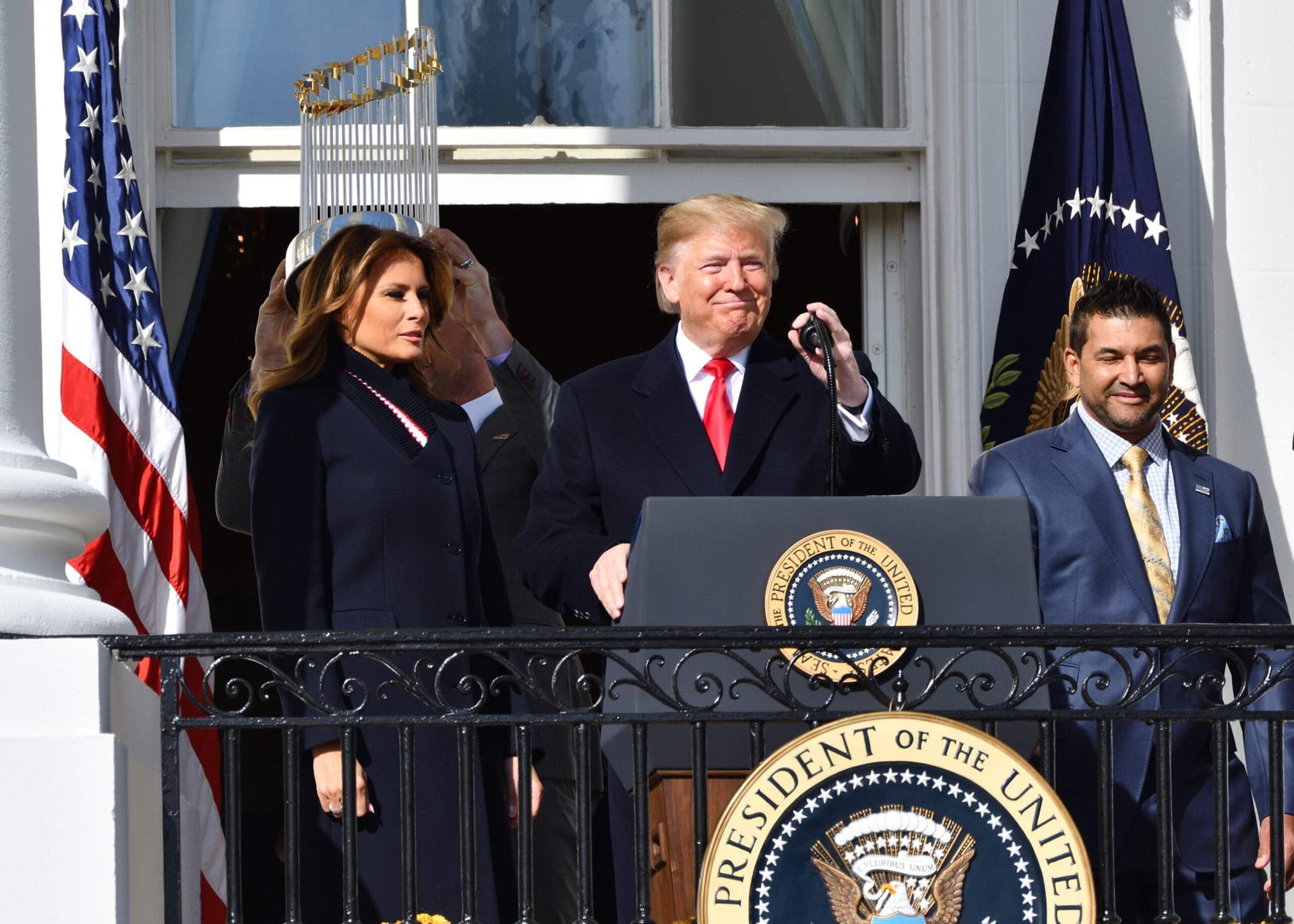
It was a winter wonderland here at the farm yesterday. We hunkered down in front of the fire to watch the inauguration. It was unlikely to produce anything really new… but you never know. At the very least, it would help us gauge the zeitgeist of our era.

As expected, the inauguration was a mixture of decent sentiments… with indecent proposals… fraudulent pomposity mixed with solemn deceit… and a few delightful zingers mixed with blah-blah.
“I was saved by God to make America great again,” said the new President.
We don’t know God’s mind any better than he does. But our guess is that he is precisely wrong about what his real historical mission is. He came to Washington yesterday to praise the American empire. His real role is to bury it.
America has been in noticeable decline for the last quarter of a century. The people most responsible for that decline were on display yesterday — George W. Bush, Barack Obama, Donald J. Trump, and Joe Biden.
And now, in electing Trump again, is it likely that he will radically change course? Will he do something different… something he didn’t dare to do during his first term?
Mr. Trump spoke about the challenges he sees ahead. Alas, he didn’t seem to notice the one that is most likely to trip him up. The Panamanians are apparently over-charging for the use of the canal. Foreigners don’t respect us. And there’s a flood of immigrants pouring across an unguarded border along the Rio Grande.
Are there just two genders? What if you’re ‘undecided?’
Should Mt. McKinley be named after one of America’s so-so presidents rather than by some ‘Indian handle?’ Does anyone really care if the Gulf of Mexico is called the Gulf of America?
Maybe they do. But changing names is not going to prevent the real calamity, now advancing on Team Trump. Nor will sending people to Mars. Janet Yellen:
Treasury currently expects to reach the new limit between January 14 and January 23, at which time it will be necessary for Treasury to start taking extraordinary measures.
What measures will be taken? None were mentioned, extraordinary or otherwise. Instead, Mr. Trump turned his attention elsewhere.
His first time at bat was marked by the ‘national emergency’ he declared in March 2020. He thought that the Covid virus threatened the whole country and decided to use the police power of the feds to try to stop it.
This time, he’s introducing two more national emergencies. The immigrant situation has brought forth one of them. The other involves the energy industry (see Dan’s note below). Why can’t they be handled in the regular course of calm and careful federal business? Where’s the fire? He didn’t say.
Federal finances, meanwhile, are aflame.
Last year’s deficit ran over $2 trillion, bringing the total since 2020 to over $11 trillion. The largest contribution to that total came from Mr. Trump himself, whose 2020 deficit bulged over $3.3 trillion.
So far this year, the deficit is running at a nearly $3 trillion annual rate (sure to slow down when tax revenue picks up in April.)
There is some loose talk in Washington about how higher growth — from tax cuts and ‘drill, baby, drill’ energy policies — will close some of the deficit gap. Tax cuts — at the margin — can increase GDP. But the math doesn’t work. If the tax take is 20% of GDP, the latter has to rise by 5 times as much to bring in the same revenue. Cut taxes by $1 trillion, for example, and GDP would have to increase by $5 trillion to recoup the lost income.
As for making it easier to drill for oil, the probable result will be lower oil prices…putting marginal producers, now producing oil, natural gas, coal, solar and other forms of energy at higher prices, out of business. Besides, fuel has been cheaper in the past; no big increase in GDP growth was observed.
The presumptive new Treasury secretary, Scott Bessent says that the feds don’t have an income problem; they have a ‘spending problem.’
Mr. Trump’s DOGE was supposed to do something about that. But the Musk part of the DOGE has already admitted that eliminating the deficit was merely ‘aspirational,’ not something you could count on.
And in yesterday’s news, we discovered that the other half of the DOGE leadership – Mr. Ramaswamy – is bailing out completely. Business Insider with the news:
Vivek Ramaswamy is leaving President Donald Trump’s Department of Government Efficiency. Instead of leading the group with Elon Musk, he’s expected to run for governor of Ohio, according to various media reports.
Unless we missed it, at yesterday’s inauguration there was no mention of the fiscal crisis now bearing down on the US. It will come like a thief in the night… unbidden, unexpected, and unwelcome…but completely foreseeable.
Regards,
Bill Bonner