GSI Banner
  • Free Access
  • Contributors
  • Membership Levels
  • Video
  • Origins
  • Sponsors
  • My Account
  • Sign In
  • Join Now

  • Free Access
  • Contributors
  • Membership Levels
  • Video
  • Origins
  • Sponsors
  • Contact

© 2025 Grey Swan Investment Fraternity

  • Cookie Policy
  • Privacy Policy
  • Terms & Conditions
  • Do Not Sell or Share My Personal Information
  • Whitelist Us
Ripple Effect

1998, Redux

Loading ...Addison Wiggin

October 31, 2025 • 54 second read


AI Boomdotcom boom

1998, Redux

In his press conference after lowering interest rates a quarter point this week, Federal Reserve Chairman Jerome Powell laid out the case that the AI boom was nothing like the dotcom bubble.

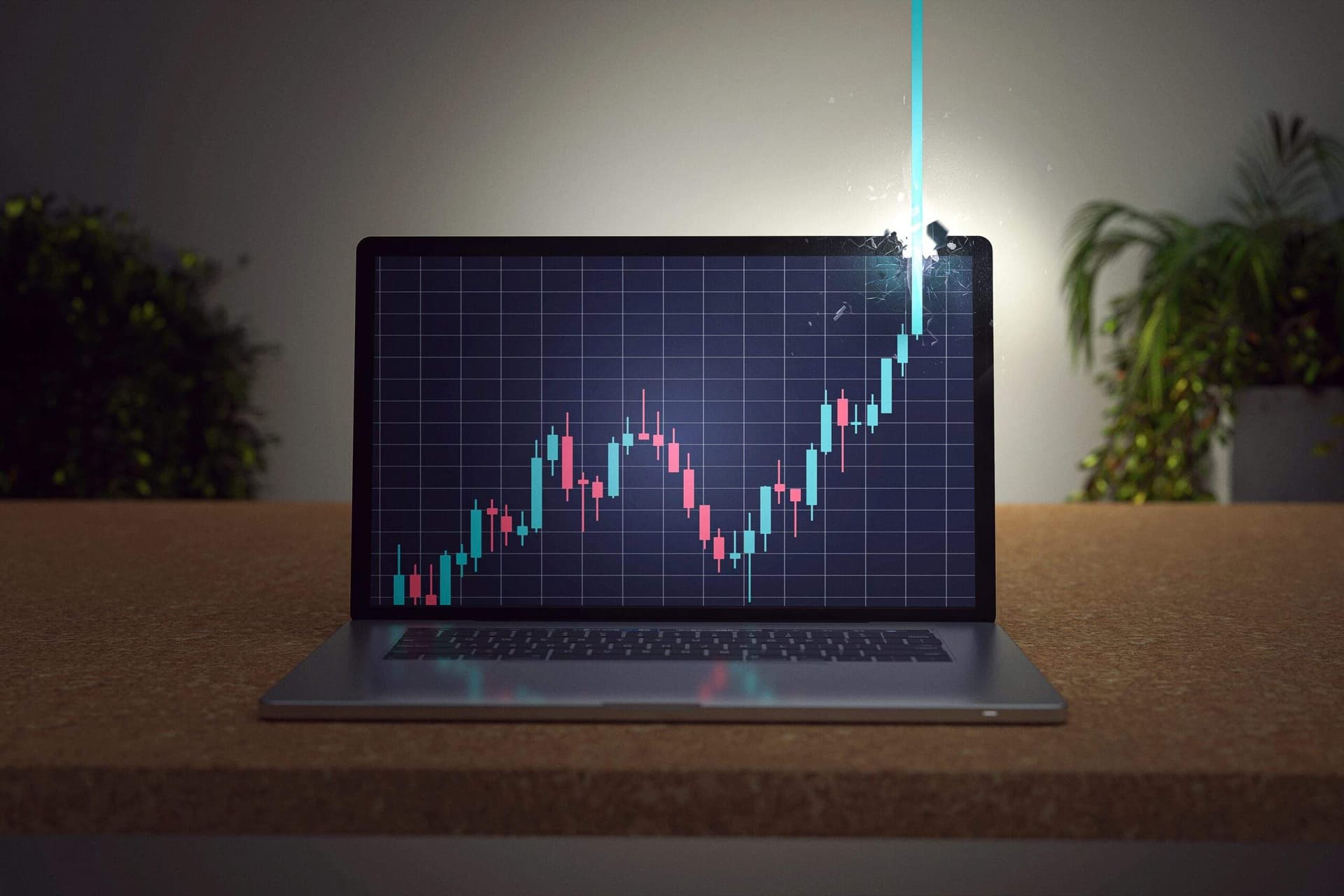
There’s just one problem. The market is following the dotcom boom nearly perfectly – with 2025 following closely to 1998:

Turn Your Images On

Stocks continue to rally like the middle stage of the dotcom boom. (Source: Mark_ungewitter via X)

If this trend continues, stocks are likely to peak late next year, possibly form a double top – then give back the bulk of their gains.

With today’s high valuations in stocks already, it may be a good time to move to more defensive and better-valued stocks.

~ Addison

P.S. Yesterday’s Grey Swan Live! with John Robb provided a rich discussion on AI, new defense technologies, and an overall picture of what the next few years could look like.

Sign up here if you haven’t become a Fraternity member yet to get our insights.

Turn Your Images On

If you have any questions for us about the market, send them our way now to: feedback@greyswanfraternity.com.


The Money Printer Is Coming Back—And Trump Is Taking Over the Fed

December 9, 2025 • Lau Vegys

Trump and Powell are no buddies. They’ve been fighting over rate cuts all year—Trump demanding more, Powell holding back. Even after cutting twice, Trump called him “grossly incompetent” and said he’d “love to fire” him. The tension has been building for months.

And Trump now seems ready to install someone who shares his appetite for lower rates and easier money.

Trump has been dropping hints for weeks—saying on November 18, “I think I already know my choice,” and then doubling down last Sunday aboard Air Force One with, “I know who I am going to pick… we’ll be announcing it.”

He was referring to one Kevin Hassett, who—according to a recent Bloomberg report—has emerged as the overwhelming favorite to become the next Fed chair.

The Money Printer Is Coming Back—And Trump Is Taking Over the Fed
Waiting for Jerome

December 9, 2025 • Addison Wiggin

Here we sit — investors, analysts, retirees, accountants, even a few masochistic economists — gathered beneath the leafless monetary tree, rehearsing our lines as we wait for Jerome Powell to step onstage and tell us what the future means.

Spoiler: he can’t. But that does not stop us from waiting.

Tomorrow, he is expected to deliver the December rate cut. Polymarket odds sit at 96% for a dainty 25-point cut.

Trump, Navarro and Lutnick pine for 50 points.

And somewhere in the wings smiles Kevin Hassett — at 74% odds this morning,  the presumed Powell successor — watching the last few snowflakes fall before his cue arrives.

Waiting for Jerome
Deep Value Going Global in 2026

December 9, 2025 • Addison Wiggin

With U.S. stocks trading at about 24 times forward earnings, plans for capital growth have to go off without a hitch. Given the billions of dollars in commitments by AI companies, financing to the hilt on debt, the most realistic outcome is a hitch.

On a valuation basis, global markets will likely show better returns than U.S. stocks in 2026.

America leads the world in innovation. A U.S. tech stock will naturally fetch a higher price than, say, a German brewery. But value matters, too.

Deep Value Going Global in 2026
Pablo Hill: An Unmistakable Pattern in Copper

December 8, 2025 • Addison Wiggin

As copper flowed into the United States, LME inventories thinned and backwardation steepened. Higher U.S. pricing, tariff protection, and lower political risk made American warehouses the most attractive destination for metal. Each new shipment strengthened the spread.

The arbitrage, once triggered, became self-reinforcing. Traders were not participating in theory; they were responding to the physical incentives in front of them.

The United States had quietly become the marginal buyer of the world’s most important industrial metal. China, long the gravitational center of global copper demand, found itself on the outside.

Pablo Hill: An Unmistakable Pattern in Copper