
“We do not have a debt crisis right now, but we see it coming. We know it’s irrefutably happening.”
–Paul Ryan
December 5, 2024 — It really comes down to one date… and one chart. The turning point in our nation’s monetary history.
Listen, we’ve just released our latest research.
While I’m working on a longer piece about the fall of the government in France and the brief stint of martial law declared in South Korea, both occurring this week, it occurs to me that a particular date will stand out in our minds as a turning point in the nation’s history… and we severely retard our ability to avert a crisis in the future.
I’ll let the presentation do the heavy lifting. But please take a look. What you’re about to learn will be hard for most Americans to hear. Maybe not you, but most… during a crisis, there are those who are prepared and those who get left behind.
The chart is one Washington and Wall Street have gone (and continue to go) to great lengths to suppress.
After all, it makes politicians and bankers look bad, the Federal Reserve Bank looks like a failure, and the current stock market boom is eerily similar to the 1999 runup in tech stocks before investors got creamed.
The event happened on Biden’s watch. And will go down with ignominy in the annals of United States history.
At the time, news outlets around the world should have covered the story.
But it came and went, with little fanfare…
The best way to explain what happened is with a picture of what I believe is the most important— and frightening— chart in economic history.
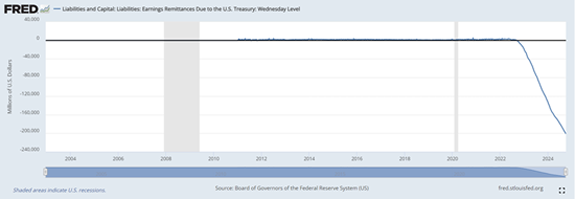
To me, this obscure little chart explains practically everything going on in the economy right now. Including…
- Why the wealth gap is getting wider — with the one percenters growing ever richer and ever more powerful, while the rest of America struggles to get ahead…
- Why we saw 3 of the 5 biggest bank failures of all time in 2023. Failures that were even bigger than 2008! And why 63 banks are currently on the brink of failure today (yet the press and the power elite are downplaying this)…
- And why corporate, private and public debt have now ALL reached never-before-seen heights.
Most importantly, and frighteningly, it explains a looming event that could soon devastate the U.S. economy. We expect to see the first rumblings in early 2025. From there, it’s only a question of how far a deeper crisis can be delayed, if at all.
In early 2023, when the second, third, and fourth-largest bank failures in U.S. history occurred, the Federal Reserve and Wall Street were able to create a firewall that stopped a full-blown meltdown of the financial system akin to the 2007-2008 crisis.
Next time, we may not be so lucky. Especially since over $3 trillion has been added to the national debt since then.
I urge you to watch our “controversial” new video outlining our latest research, and send it to everyone you know, before the Powers That Be wipe it from the internet.
CONTINUED BELOW…
The No. 1 Threat to the U.S. Economy Right Now
The rogue economist and New York Times bestselling financial author who has worked side-by-side figures like Warren Buffett, Alan Greenspan, Ron Paul, Jim Rickards, and Steve Forbes now warns: “A stock market crash, inflation and recession — are the least of our worries. There’s a $36 trillion bombshell buried in the economy that carries the power to destroy not just the dollar, but the entire U.S. financial system.” |
CONTINUED…
Warn them of the shocking event to come, and move quickly now to protect your assets and your loved ones.
Regards,

Addison Wiggin,
Grey Swan
P.S. After you review the presentation, which we’ve dubbed the Great Taking, you’ll have an opportunity to join or renew your membership to the Grey Swan Fraternity.
Also, please keep letting me know what you think, right here: addison@greyswanfraternity.com