
“We shall go on to the end, we shall fight in France, we shall fight on the seas and oceans, we shall fight with growing confidence and growing strength in the air, we shall defend our Island, whatever the cost may be, we shall fight on the beaches, we shall fight on the landing grounds, we shall fight in the fields and in the streets, we shall fight in the hills; we shall never surrender, and even if, which I do not for a moment believe, this Island or a large part of it were subjugated and starving, then our Empire beyond the seas, armed and guarded by the British Fleet, would carry on the struggle, until, in God’s good time, the New World, with all its power and might, steps forth to the rescue and the liberation of the old.”
– Winston Churchill, 1940
[Special Reminder: In case you missed our recent announcement, The Essential Investor has merged with legacy contributors to Agora Financial. The new, larger, more inclusive project is called The Grey Swan Investment Fraternity. If you’re interested in the scope and benefits of our new endeavor, please see what prompted us to merge here. If you’ve been a member of The Essential Investor, please keep an eye out for your new benefits.]
July 16, 2024 — Markets continue to move to all-time highs. This hardly seems the time to warn of potential dangers. But the same could have been said at the start of 2000, or 2008, or 2020, or even 2022. And that’s just in our lifetime.
Historically, the United States has not felt truly hard times since the Great Depression. That’s a period that few have a living memory of today.
So, when we do hit a once-in-a-century crisis, whether from a debt crisis, the rise of an anti-human AI, a solar flare that wipes out the power grid — we’ll finally have to learn, the hard way, what hard times really mean.
Our intrepid managing editor Andrew Packer explores that idea further in today’s daily, as he continues touring the charming (but internet-challenged) English countryside.
Enjoy ~~ Addison
CONTINUED BELOW…
>>>>>SPONSORED<<<<<
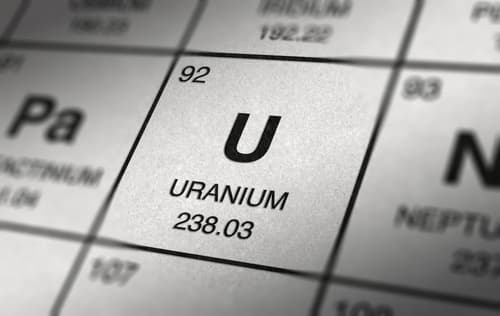
Is This The Most Valuable Material On EARTH?
NEW: The Most Valuable Material On EARTH 1200X more valuable than silver… 32X more valuable than platinum… And 16X more valuable than even gold! Today, anyone can tap into the extreme wealth about to be unleashed only if they know one special investment. Click Here Now.> |

CONTINUED…
We Don’t Know Hard Times
Andrew Packer, Grey Swan Investment Fraternity
Reporting from: Woodstock, United Kingdom
The Second World War was fought between 1939 and 1945.
But in the United Kingdom, wartime measures lasted through 1954, a full nine years later. That’s two years into the reign of Queen Elizabeth II.
All told, the nation endured some form of rationing for 15 years.
That’s hard times.
Evidence of the hardship endured is still visible in buildings throughout the UK today. Some buildings in London still sport damaged spots from the Blitz.
Today, the English cherish their role in World War II. And rightly so! For the first few years of the war, they stood up to the rise of Hitler alone.
Battle Proms, a summer concert series, celebrates Britain’s military history, in everything from cavalry to paratroopers, to a flyover from one of the country’s few remaining WWII-era Spitfighter planes.

I was able to join the festivities at Blenheim Palace this year, the ancestral home of Winston Churchill.
In the United States, our introduction to World War II occurred in December 1941. America lost thousands of lives in an instant at Pearl Harbor. And armed forces had a hard slog, notably in the Pacific against Japan.
But the U.S. was only in the fight for 3 and a half years.
Overall, America’s struggles in World War II paled compared to that of Britain … or our other allies, the Soviet Union, who had to fight street-by-street in Stalingrad.
America had one of the lowest ratios of deaths among the major powers fighting the war. That’s thanks to getting into the war later, but also a testament to American-manufactured products such as tanks and planes.
(I’ll admit I’m biased. My grandfather got an all-expense-paid trip to France with General Patton after graduating high school in 1942. Within three years, he was a sergeant and tank mechanic.)
The U.S. had rationing during the war. But by 1954, the economy was chugging along full-speed ahead. And there was little rationing at home during the Korean War.
Plus, Dwight Eisenhower, the first Republican president since Herbert Hoover, was pushing full-steam ahead to build infrastructure like the U.S. highway system.
Under the Marshall Plan, the United States helped to rebuild Europe. But we didn’t have anything to rebuild at home.
Hard Men Create Good Times
That’s why the baby boomers, born after the war, lived only in good times. The United States came out of World War II with about 80% of the world’s manufacturing capacity.
As the boomers grew up, even those with just a high school education could get a job that paid well enough to create a one-income household.
But those good times started to change.
In 1971, 26 years after the war ended, President Richard Nixon (also a WWII veteran) closed the “gold window.”
That prevented the dollar from being exchanged for gold overseas. Americans had been unable to own gold bullion themselves since 1932 –America’s prior experience with hard times.
This event created a great decoupling. It’s hiding hard times for some today, but it’s created great times for others.
That’s because the final nail in the straw of the gold standard made it easy to print money without any consequence.
The end result? Lower earners were most impacted by inflation. Higher earners, who tend to own more assets, actually tend to benefit from inflation.

Income trends show that median workers have had poor real returns over the past 50+ years. And those on the bottom have stagnated.
Compared that with the post-War, pre-1971 period. It was truly a rising tide that lifts all boats.
Today’s prosperity is being paid for with tomorrow’s claims. That debt is soaring.
We don’t know when the debt crisis will hit or what the first phase of it will look like.
But the United States is on track to hit a 130% debt-to-GDP ratio in the coming years. That’s always been a level that have been nearly impossible for countries to come back from.
Weak Men Create Hard Times
The phrase “weak mean create hard times” should be at the forefront of every American’s mind as the presidential election closes in.
We’ve seen, in real time, the mental decline of President Biden. His debate performance in June raises real questions about who is really running the country.
President Trump, meanwhile, is racking up numerous legal challenges. Many of them look too political to pass the smell test – especially any charge well past what should have been eliminated by a statute of limitations.
However, Trump’s personality dominated his presidency, and bounced from one idea to another like a pinball, rather than sit down and prioritize his 2016 campaign issues and work on them in collaboration with Congress.
That said, Trump’s decision to get up and yell out “fight!” after an assassin’s bullet just grazed his ear over the weekend gives us a hint that the American experiment may not go down without a fight.
Fight or not, no matter which of these two men is president next year, we’re still on track for hard times.
Even if one or both of them are replaced this late in the game, America’s structural issues are unlikely to change. It’s just a question of who gets to be in office and blame his predecessor.
Even if you replace every sitting member of Congress with a clean slate of elected officials who are prepared to stop increasing our national debt by $1 trillion every 100 days, we’re still on track for hard times.
We don’t know what our hard times will look like. The Great Depression was a massive shock coming after the 1920’s boom.
Much like today’s boom, it was driven by the big tech ideas of the day, namely radio. But there were also some regional land booms and busts.
Defending From the Unknown
Since we don’t know what the next period of hard times will look like, a myriad of tools, skills, and investments are needed.
Owning gold is an easy and obvious way to protect yourself, at least for now. That investment didn’t work during the Great Depression, given the confiscation at the time. That likely won’t happen again. Owning gold mining stocks also avoids that specific danger.
Investing in defensive stocks may or may not work. It depends on factors such as changes in taxes, inflation, and consumer spending trends. For now, however, defensive stocks have an added advantage in that they’re far underperforming tech right now.
Finally, it may be time to invest in skills. And to invest in your local community and network with others – as we’re already doing at the Grey Swan Investment Fraternity. A right network can be invaluable when the hard times hit.
~~ Andrew Packer, Grey Swan Investment Fraternity
So it goes,

Addison Wiggin
Founder, The Wiggin Sessions
P.S. How did we get here? An alternative view of the financial, economic, and political history of the United States from Demise of the Dollar through Financial Reckoning Day and on to Empire of Debt — all three books are available in their third post-pandemic editions.

(Or… simply pre-order Empire of Debt: We Came, We Saw, We Borrowed, now available at Amazon and Barnes & Noble or if you prefer one of these sites:Bookshop.org; Books-A-Million; or Target.)
Please send your comments, reactions, opprobrium, vitriol and praise to: addison@greyswanfraternity.com