The warning crossed the tape early this morning, the kind that lands before the second cup of coffee…
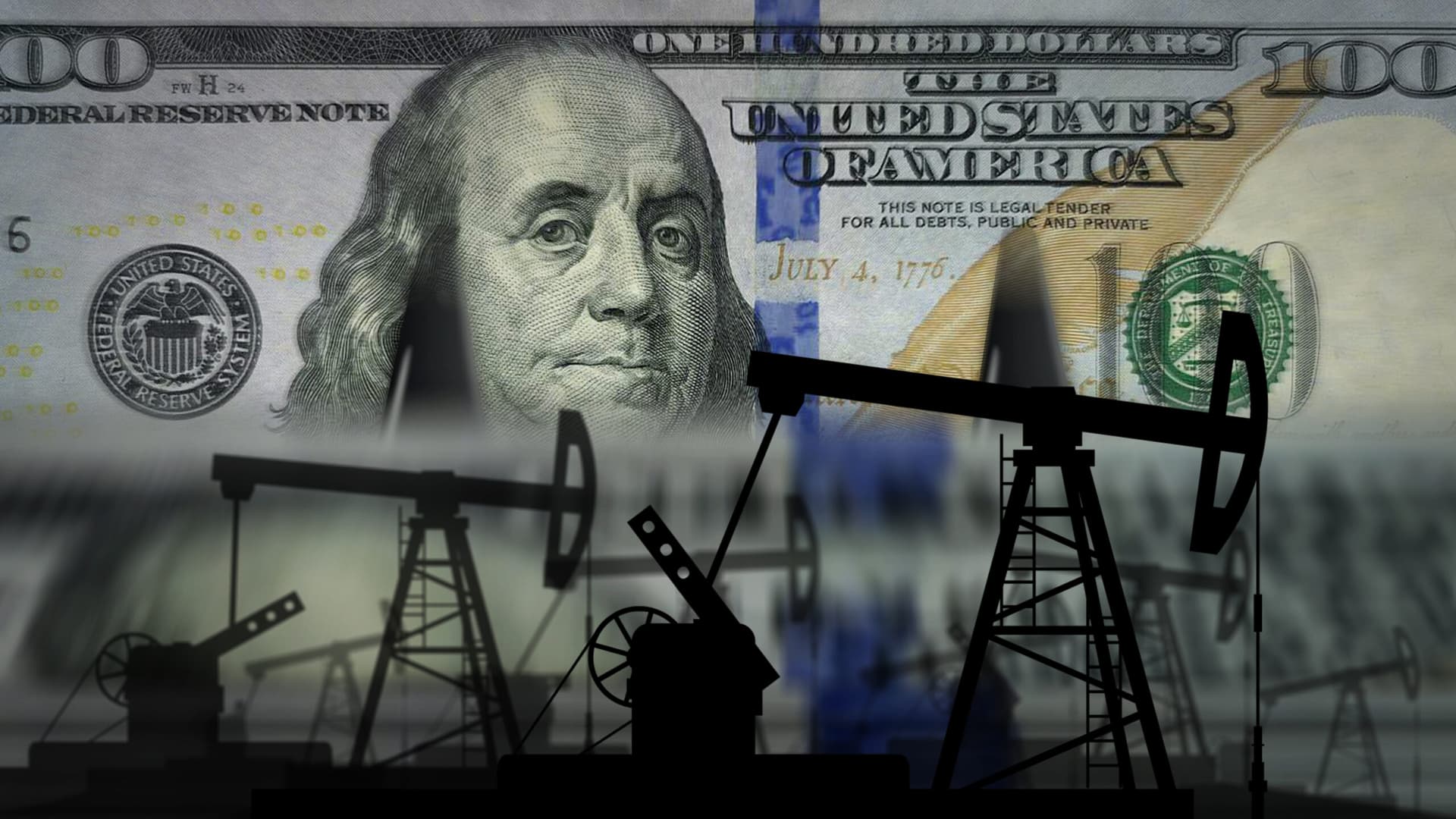
A Deutsche Bank report, picked up by MarketWatch, described the Iran conflict as a “perfect storm for the petrodollar.”
The language moved quickly because the system under discussion has operated in the background of global finance for decades, embedded in transactions that rarely require explanation until something bad happens. Like, say, a hot war in the Persian Gulf.
🛢️ How and Why the U.S. Dollar Reserve System Was Built
The petrodollar dates to a narrow window in the mid-1970s, when the United States needed a new anchor for its currency.
In 1971, President Richard Nixon ceremoniously closed the “gold window” and ended the convertibility of the U.S. dollar into gold, which had been in place for 27 years under the post-World War II Bretton Woods agreement.
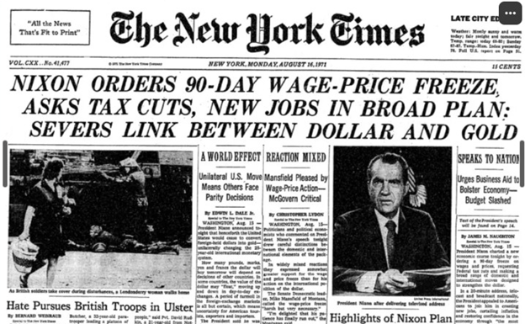 The headline from the New York Times on August 15, 1971, on the day the global financial sustained “The Nixon Shock”. Among other daft economic strategies, Nixon severed the link between the US dollar and gold. After that, the rate of demise of the dollar picked up speed and continues apace today. (Source: New York Times)
Two years later, in 1973, the Saudi oil embargo exposed how dependent the global economy had become on Middle Eastern energy flows.
By 1974 to 1975, a new arrangement took shape.
The United States provided military protection to the House of Saud, weapons systems and political backing. In return, Saudi Arabia priced its oil exclusively in U.S. dollars and invested surplus revenues into U.S. Treasury bonds.
Other OPEC members followed the pricing convention.
The petrodollar system ran on three parts.
Oil priced in dollars forced importing nations to hold dollar reserves. Surplus revenues were recycled into Treasurys to fund U.S. deficits. Security guarantees tied the arrangement together, ensuring the infrastructure that produced and shipped the oil remained protected.
The terms were never presented as a formal treaty. They were enforced through repetition, procurement contracts and capital flows. Ease of use, some latent inertia… a collegial environment among participating countries in the Western financial world.
🌍 Where the Oil Actually Goes Today
Then the geography of global energy demand migrated.
Petrodollar geography slouched toward China and Asia, beginning in the late 1990s and accelerating during the 2000s, driven by China’s manufacturing boom and its status as the world’s largest oil importer.
Without much fanfare, the transition moved from increased trade reliance in the 2000s to the 2018 launch of petroyuan futures in Shanghai, intensifying with recent BRICS-backed, non-dollar transactions.
In Washington, D.C., politicians asleep at the wheel barely noticed.
The marginal buyer of Middle Eastern oil now sits in Asia. Saudi Arabia sells roughly four times as much crude to China as it does to the United States, and cargo follows that demand along shipping routes redrawn over the past two decades.
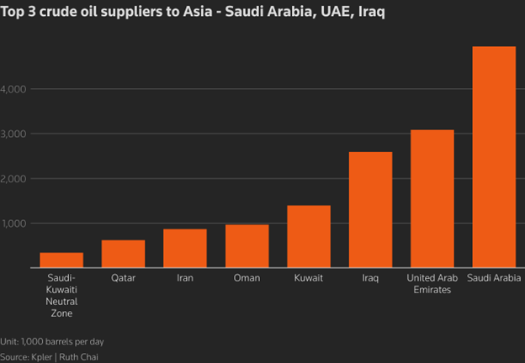
A ballpark estimate of barrels of the black goo exiting the Persian Gulf through the Strait of Hormuz each day prior to the hostilities beginning February 3, 2026 (Source: Reuters)
Trade settlement patterns have also adjusted alongside the trade routes.
Iranian and Russian barrels — roughly 13 million per day, about 14% of global consumption — have already been trading outside traditional dollar channels.
Those transactions established alternative settlement pathways before the current conflict intensified, including an annual meeting of the so-called BRICS nations, which would rather not be under the thumb of finance, held in London and New York, or bear the burden of an exploding U.S. deficit and debt.
The Strait of Hormuz, the chokepoint at the center of today’s news cycle, compresses the adjustment into a narrow corridor. As you’re no doubt aware, over the past fourweeks, roughly one-fifth of global oil moves through that passage, where shipping schedules, naval presence and insurance contracts intersect in a 20-mile-wide stretch at the mouth of the Persian Gulf.
Recent reports describe tankers securing passage, unmolested, under specific terms tied to yuan settlement. A refinery that needs crude secures the cargo using the currency required to clear transit.
Each shipment moving under those conditions adds volume to the settlement channel, a payments system that rubs bankers on Wall Street and President DonaldTrump’s administration the wrong way.
⚓ Security and Settlement, As Usual?
The original petrodollar arrangement relied on both pricing and protection.
The United States provided security guarantees. Gulf producers priced oil in dollars and recycled proceeds into U.S. assets.
The Iran conflict introduces pressure on both components.
Iranian unmanned “Kamikaze” drone attacks on infrastructure — including South Pars and facilities across Qatar, Kuwait and the UAE — extend defensive requirements across the entire region.
As a result, vital shipping routes have had to be lengthened to circumvent the violence. Insurance premiums are a major sticking point because they change depending on whether there’s movement on the diplomatic front. Thatsimply means it’s a slow, expensive process.
📉 What the Market Wants, The Market Needs
Oil continues to clear predominantly in dollars across benchmark markets. When you see “Brent” or “WTI” prices per barrel, they’re still priced in U.S. dollars. During the March bombardments, the dollar index has edged higher.
Foreign holdings of U.S. Treasurys remain substantial, with positions distributed across Japan, Europe and China.
At the same time, sanctioned barrels and bilateral agreements continue to expand settlement activity outside traditional dollar channels. In order to “win” the conflict, Trump needs to be confident that the West controls all factors related to oil: prices, shipping through the Strait, insurance premiums and the safety of the maritime navy.
🌴 Miami: The New Settlement Comes Into View
On Friday night, the conversation will be heavy in the room when Trump gives the keynote address at Saudi Arabia’s Future Investment Initiative at the Faena Forum in Miami Beach, Florida.
This event brings together sovereign wealth funds, ministers and major Wall Street capital.
When we filled out the application to attend, the app required a salutation that included “Lord” so and so and “His majesty” this and such. At this point, we’re simply assuming our invitation got lost in the mail.
Neither here nor there, two specific responses to the pressure on the petrodollar are already in motion.
🤝 The Grand Alliance, Written in Capital and Steel
The relationship between Trump and Crown Prince Mohammed bin Salman (MBS) has moved beyond the original oil-for-security understanding. The current framework now operates as a three-part exchange: capital, technology and security.
In a highly publicized visit to the White House on November 18, 2025, MBS committed to increasing Saudi investment in the United States to nearly $1 trillion.
The capital is directed into AI infrastructure, semiconductor ecosystems, advanced manufacturing and civilian nuclear energy projects. Agreements include access to advanced AI chips and a memorandum to build a regional technology base anchored in U.S. systems rather than Chinese supply chains.
Defense integration runs alongside those investments.
Saudi Arabia now holds Major Non-NATO Ally status, easing access to U.S. equipment and training. The agreement to purchase F-35 fighter jets places the Kingdom inside a limited group of operators tied to American aerospace systems. A Strategic Defense Agreement, also signed in November, reinforces the protection of Saudi infrastructure in the event of all-out war with Iran.
Reports in March indicate MBS has encouraged continued military pressure on Iran, viewing the campaign as an opportunity to reshape the regional balance.
Saudi Arabia has granted U.S. forces access to King Fahd Air Base, expanding operational reach. At the same time, discussions around normalization with Israel continue within the framework of the Abraham Accords, with conditions tied to Palestinian statehood still in play.
Each component — capital investment, defense procurement and base access — creates dependencies that bind both sides to the same system. And a renewed set of cojones for the petrodollar agreement, perhaps for the next 50 years.
💻 Dollar 2.0: Extending the System Into Code
The second response develops through financial infrastructure rather than oil flows.
Treasury Secretary Scott Bessent’s 3-3-3 plan targets 3% gross domestic product (GDP) growth for the U.S., requiring a 3% deficit and an additional 3 million barrels per day of domestic oil production.
Increased output expands export capacity and provides a buffer against disruptions in the Strait of Hormuz. Alongside energy policy, digital settlement systems are being constructed.
As you are well aware, if you’ve been following our coverage of Dollar 2.0, two acts of Congress have been necessary to provide the regulatory guidance that digital asset firms need to compete with the established Western banking system.
The GENIUS Act requires stablecoins to be backed one-to-one with dollars or Treasurys. Each token issued represents a direct claim on U.S. debt. Bessent has outlined a path toward a $3 trillion stablecoin market by 2030, in which settlement occurs continuously across global networks rather than during traditional banking hours.
The CLARITY Act, designed to define market structure and jurisdiction between regulators, remains stalled in the Senate over disagreements about stablecoin yield.
Right now, the Clarity Act is undergoing a regulatory proctology exam by the Senate Banking Committee.
As they are wont to do, the banking lobby has pushed back on features that could draw deposits away from traditional balance sheets. The U.S. banks want to protect their monopoly on your savings.
If and when it’s passed, the legislation will provide the legal framework for stablecoins to serve as a global settlement layer, extending the use of dollars into digital channels beyond the constraints of conventional finance.
It will also extend trading in stablecoins beyond the bankers’ hours currently held down by Wall Street’s biggest firms. Secretary Bessent’s on record stating that he believes once the rules are in place and everyone knows what’s what, a stable Dollar 2.0 ecosystem will take dramatic shape to the tune of $2 to $3 trillion in four short years.
At the same time, streamlining domestic oil regulations will allow production targets to be increased. All told, it’s a nice diplomatic package, sovereign capital committing to U.S. assets and digital systems, expanding the reach of dollar-denominated transactions. Both the increasing demand for U.S. dollars and U.S. Treasury Debt.
Et voila.
The U.S. dollar lives on as the West’s reserve currency for another day… on digital rails.
We’re expecting a nod from the president to the grand alliance between Trump and MBS on Friday night in Miami… and have placed our bets accordingly in the Grey Swan Trading Fraternity. See: Watch Before Trump’s Saudi Meeting for more details and your chance to become a member.
🔥 The Triangle Shirtwaist Fire
History is fraught with risk and disaster in the U.S. capitalist system.
On a Saturday afternoon, March 25, 1911, in lower Manhattan, 600 workers filled the upper floors of the Asch Building, where the Triangle Shirtwaist Company operated.
The factory floor was crowded with workstations, staffed largely by immigrant workers who worked long hours for low wages.
Access points were limited. One stairway was locked from the outside. Another opened inward. Elevators operated with restricted capacity. The fire escape structure could not support sustained weight.
A fire began in a rag bin on the eighth floor. The hose failed to deliver water. Workers moved toward exits. The elevator ceased operation after several trips. Some workers descended the shaft. Others reached locked doors.
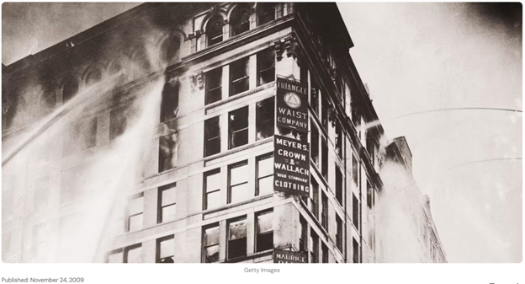
Firefighters arrived with ladders that extended to the seventh floor. Workers began jumping from upper floors. Nets failed under impact. The Triangle Shirtwaist Factory fire claimed the lives of 146 employees in a matter of minutes, March 25, 1911. (Source: Getty and The History Channel)
The fire burned for less than 30minutes. One hundred forty-six workers died.
A march organized on April 5 drew approximately 80,000 participants. Subsequent legislation addressed fire safety, building access and workplace conditions.
~Addison
P.S. For Grey Swan Live! tomorrow, we’ll dive into international real estate with the piece I filmed in Panama. I attended The Gathering, hosted by our friends at Real Estate Trend Alert (RETA).
RETA members are able to get massive discounts on real estate projects in top destinations like Panama, Mexico, Portugal and more.