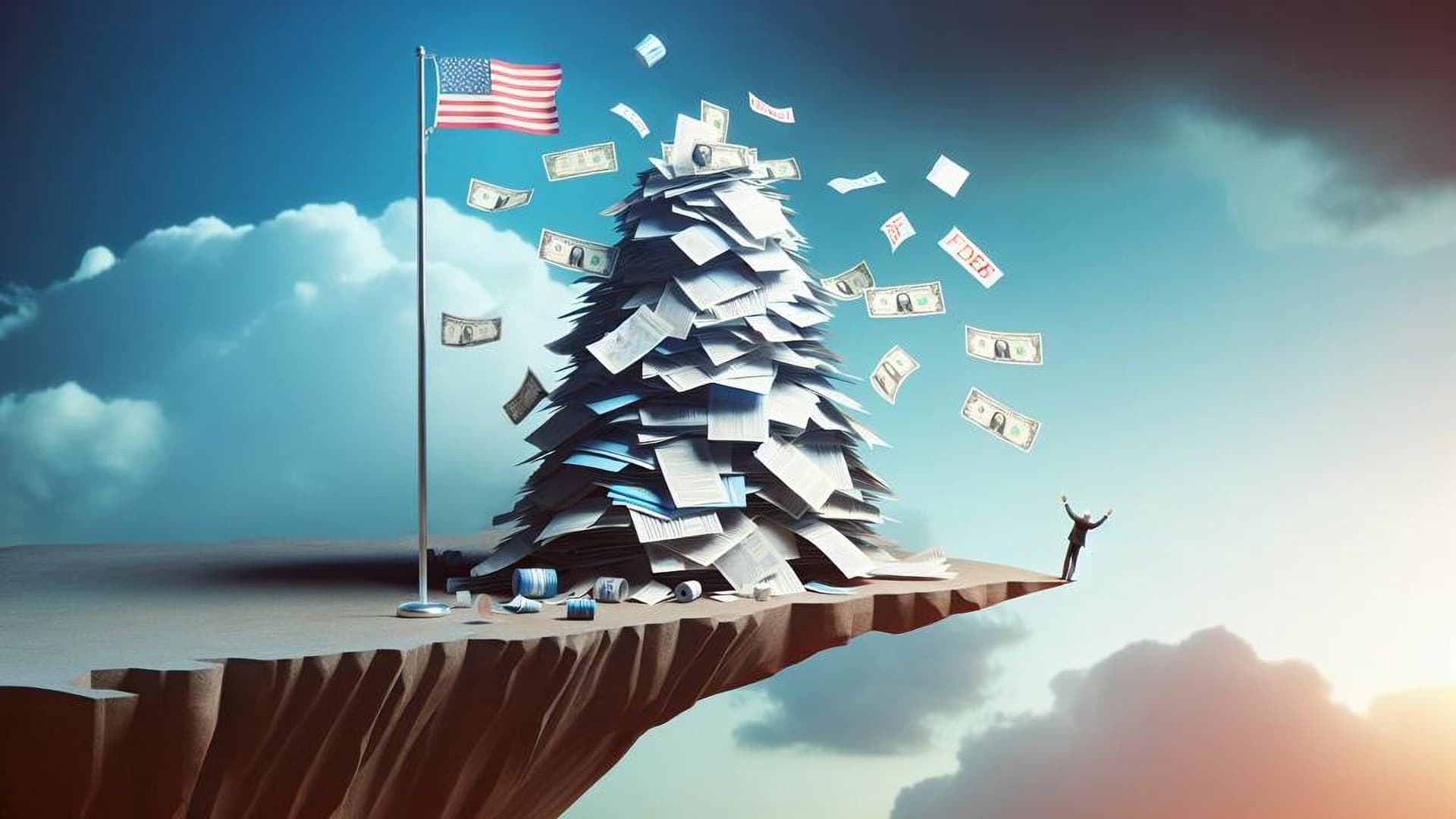
The war in Iran is expensive… in more ways than one. With the price of oil and natural resources rising because of Gulf disruptions, President Donald Trump’s target of 1% interest rates in 2026 is looking scant.
Among the legitimate reasons for targeting lower short-term rates is the high price debt forces on the U.S. budget. Of America’s massive $39 trillion debt pile, $8 trillion comes due and needs to be rolled over this year alone:
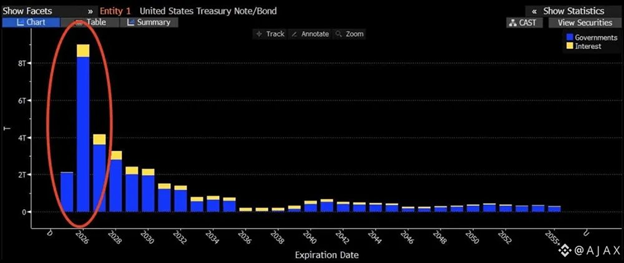
Over $8 trillion in U.S. debt is rolling over this year. What happens if Treasury throws a debt auction and the bond vigilantes don’t show up? We may find out… soon. (Source:Ajax)
Since the Yellen ZIRP and QE programs of the mid 2010s, most U.S. debt has been issued in the form of short-term T-bills. A spike in short-term rates, even if the war itself is transitory, comes at a very high price.
As early as 2024, when the Federal Reserve started cutting rates to help employment numbers, the market continued to force long rates higher.
While higher oil prices work their way through the economy, forcing rates lower to unlock residential real estate and accommodate the AI infrastructure boom – both stated objectives of Trump Fed appointee Kevin Warsh – will be a tall order.
The perennial question abides: “What if Treasury threw a bond auction and nobody showed up?”
Ironically, short-term T-bills are paying higher yields than the official inflation rate. Until concerns over the war abate, and Warsh is at the helm of the Fed, short rates are going to remain high. And long rates? Forggetabouutitt!
Yesterday, during our Grey Swan Live! trading session with Andrew Packer, reader Greg A. asked if we are still aggressively long gold. Our answer: Until the US gets its deficit spending and long-term debt financing under control… gold is a good store of value… and a speculative hedge against government dysfunction and colossal misdeeds.
~ Addison
P.S. Don’t miss Grey Swan Live! today wih Dr. Mark Skousesn. Mark, known as “America’s economist,” is a life-long and die-hard advocate of free-market capitalism. He’s a market historian and, curiously, a descendant of Ben Franklin.
As America celebrates its 250th anniversary this year, Mark will help put the US current global challenges into context of its historical origins… and use that as a springboard to look ahead at some of today’s top growth. Mark’s hot on the impending IPO of SpaceX.
Don’t miss Grey Swan Live! If you’re not already a member, click here to join our latest livestream. Bring your questions for Mark Skousen.