Beneath the Surface
The Chainsaw and the Swamp: A Tale of Two Economies

December 11, 2024 • 5 minute, 54 second read
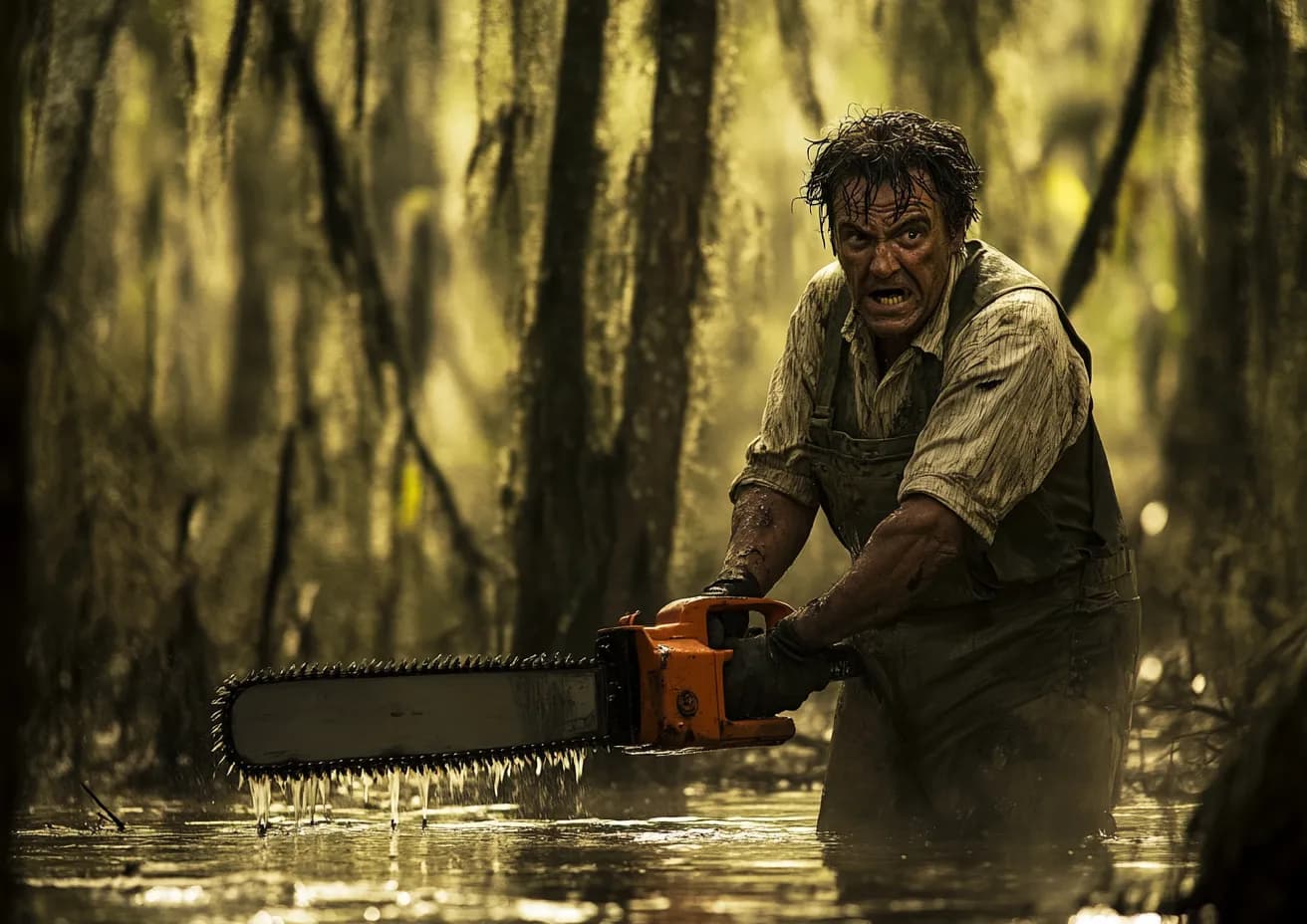
Here is the world I think we are heading into over the next couple of years.
On one side of the Atlantic, we have Argentina and its new president, Javier Milei, taking a chainsaw to the state in every conceivable way. I was there last month and I fell head over heels in love with the place. Every day it seems another state body is having its budget cut.
It’s like everything I argued for all those years ago in Life After the State – Why We Don’t Need Government is suddenly happening in the real world, and it is wonderful.
The result of all this is an economic boom that is starting to take everyone’s breath away – even free market acolytes are surprised.
You must invest in Argentina. You must have a position. What is happening there is equivalent to Eastern Europe after the fall of Communism, China at the turn of the 21st century, or the UK and US at the beginning of the Reagan-Thatcher era.
With libertarianism being the dominant belief system of the Internet, and Milei, the poster boy for anarcho-capitalism, an internet sensation, you can rest assured that Argentina’s success story is not going to be kept a secret. The Internet is going to let everyone know about it.
Then to the north, we have the USA. Who was the first foreign leader to be invited to meet President-elect Donald Trump? You betcha. It was Javier Milei. That tells us where things are going.
We have passionate libertarians Elon Musk and Vivek Ramaswamy taking the knife to government and the deep state – I cannot emphasise enough how gripping a belief system libertarianism is once it takes hold – look what it’s done to me – and it has clearly taken hold of these two.
We also have a Trump administration that is much more organised and wiser than the previous incarnation, as well as more state shrinking. It knows who its enemies are and it seems ready for them.
The US may be “minarchist-light” compared to Argentina, but even so, an economic boom is coming to this most entrepreneurial of countries. A lot of people are going make a lot of money.
So you must also have a position in the US. It is already the world’s biggest economy. How much is it going to grow with so many bureaucratic barriers of state removed?
The Stagnant Side of the Street
Then we turn to the other side of the Atlantic. “The stagnant side of the street” to misquote the song.
Here in the UK, we have gone the other way. We are increasing taxes. We are increasing state spending. We are growing government, and, in doing so, creating more barriers to innovation, invention, and entrepreneurship. Most of Western Europe is the same. These are countries run by blobs, by regulators and planners for regulators and planners, by technocrats who know better than you.
Here’s an example of the government helping. On 6 October 2020, when the FCA announced it was clamping down, bitcoin was $10,000. Today it’s $97,500. I make that $87,500 per coin of gain that the UK citizen has been protected from. Great job guys. The UK was once at the vanguard of this breakthrough technology. Satoshi used English spelling, he quoted the Times. He may well have been British. Now we are bringing up the rear.
It is just so much harder and more expensive to do anything entrepreneurial in the UK, whether it’s setting up a business in the first place, hiring, the taxes you have to pay, the cost of regulation and compliance, or the exorbitant cost of housing and property, which drains capital that could be better invested elsewhere.
Buying gold to protect yourself in these uncertain times? I urge you to. My recommended bullion dealer is The Pure Gold Company. Pricing is competitive, quality of service is high. They deliver to the UK, the US, Canada and Europe or you can store your gold with them. More here.
Prime Minister Keir Starmer is currently in the Gulf trying, as he says, to secure investment for the UK. “This government will build on partnerships that drive our mission to kickstart economic growth and put money back in working people’s pockets,” he said yesterday. It’s obvious that he thinks economic growth comes from government rather than the private sector. He actually thinks government spending is going to help. He does not realize because spending inevitably leads to higher taxes, and taxes stifle growth.
I bet if you listed ten businesses and said which of these are wealth-creating and which are just wealth-extracting, he would not know the difference: it is not a thought process his mind would ever entertain. Yet the difference between the two is everything. Subsidised green energy is wealth extracting, compliance is wealth extracting, manufacturing (as long as it’s not wind farms) and tech are mostly wealth creating. One builds wealth that did not previously exist – everybody wins – making stuff, growing stuff – the other is zero sum: it extracts wealth that already exists and sends it somewhere else – only the extractor and the recipient win. The guy who built the wealth in the first place loses.
The most basic rule of taxation – you really should read Daylight Robbery – is that higher taxes and higher tax rates do not lead to greater government revenue. This administration does not get that most basic concept, which has existed for as long as there have been taxes (ie all of civilization). How can they be so stupid I’ve no idea, but they lead us.
To invest in the UK is to invest in stagnation and regulation. That is not proper investment or wealth creation.
The rest of Western Europe is no better.
In addition, we are experiencing colossal levels of discontent, unprecedented migration, two-tiered justice, two-tiered welfare, rising crime, the disappearance of previously high-trust societies, and rising social tension.
But thanks to the Internet, the stupidities of UK and European policies will continue to be laid bare to all. No amount of censorship is going to hide it. In any case, X has already killed censorship. Other platforms must now stop censoring, if they want to stay relevant. On the Internet people gravitate where speech is free-est.
Meanwhile, such is the nature of memes, people are going to relentlessly take the piss, especially from the other side of the pond. Comedy is a powerful tool. Day after day, the meme-makers, led by Elon Musk himself, are going to expose Keir Starmer and his deluded team, never mind the EU and other technocrats, for the fools they are.
The exposure the Internet brings will cause this technocratic left to backpedal a little – Starmer, as we saw from his 19th relaunch speech last week, has already started – though it will not be anywhere near enough. We need our own Javier Milei.
But it is all is only going to exacerbate the current trend: long America, short the UK and Europe.
~~Dominic Frisby, The Flying Frisby