The jobs numbers arrived with ALL CAPS.
Whoever’s posting on the President’s behalf on Truth Social could use a grammar lesson in addition to cultural sensitivity.
From Truth Social: “GREAT JOBS NUMBERS, FAR GREATER THAN EXPECTED!” He followed with a familiar argument: if America leads the world, it should borrow more cheaply than anyone else. Lower rates, he wrote, could save “AT LEAST ONE TRILLION DOLLARS PER YEAR.”
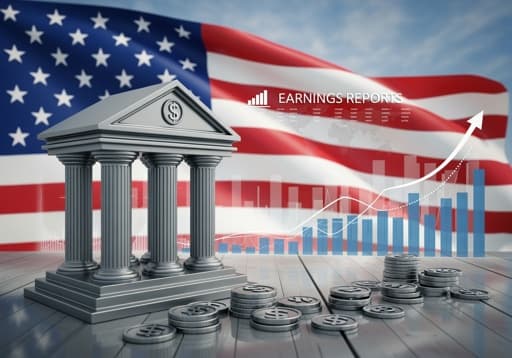
What’s he shouting about? Headline January payrolls rose by 130,000. One of the stronger prints in recent memory.
Traders noticed.
They also read footnotes.
 Payroll Strength, Narrow Base
Moody’s Mark Zandi urged restraint. “I wouldn’t exhale,” he wrote. The data coming out of the Bureau of (be)Labor(ed) Statistics (BLS) is still undergoing an overhaul from years of wonky miscalculations.
Downward revisions erased much of last year’s gains. Since April, aggregate job growth has barely moved.
Over the past twelve months, private education and health services added roughly 780,000 jobs. Remove those gains, and the broader economy shed about 350,000 positions.

Manufacturing lost roughly 100,000 jobs. Transportation and warehousing declined by more than 100,000. Professional services, information, and finance contracted. Federal payrolls dropped another 34,000 in January.
The civilian federal workforce now stands nearly 11% below its October 2024 peak.
One stat our jobs guru, Andrew Zatlin, has been harping on this morning:

One bright spot in the BLS report?
Government payrolls are shrinking.
Roughly 327,000 former federal workers now seek private-sector footing.
 Corporate Bankruptcies Accelerate
Nine large U.S. companies filed for bankruptcy last week.
The three-week average climbed to six — the fastest pace since the pandemic year of 2020. At least eighteen firms with liabilities above $50 million entered restructuring during the past three weeks.
Only three modern stretches ran hotter: the brief post-2001 recession, the 2008 financial crisis, and the 2020 shutdown shock.
Large corporate bankruptcies rose 61% year over year in 2025, reaching 749 filings — the highest tally in fifteen years. Since the 2022 low, filings more than doubled.
Non-private equity bankruptcies surged 76%, while private equity-backed failures declined modestly.
These bankruptcy numbers reflect a real economy already in recession. But, as per usual, the National Bureau of Economic Research (NBER), typically declares the start and end dates of a recession months after they occur… to ensure the data is accurate.
In their official view, a “recession” is a trailing indicator. Unfortunately, bankruptcies and falling employment happen in real time.
 Tariffs Move From Procedure to Public Vote
Trade policy returned to the House floor yesterday.
Representatives Thomas Massie, Don Bacon, and Kevin Kiley joined Democrats to block a procedural shield that would have delayed tariff votes until late summer. GOP leadership had insulated members while awaiting Supreme Court review. That insulation fell.
A House Republican told Semafor the vote carries political weight even if a veto awaits.
The vote represents an early challenge to Trump’s grand realignment strategy ahead of this year’s midterm elections. And will have global ramifications.
 Warsh Would Like to Recode the Bond Market
Kevin Warsh’s proposed Fed–Treasury Accord reaches back to 1951, when the Federal Reserve reclaimed independence after capping yields to finance wartime debt.
Warsh argues that post-2008 quantitative easing blurred that boundary again.
Not to get too far into the weeds here… but.
The Fed holds roughly $6.6 trillion in assets, including long-dated Treasurys and mortgage-backed securities. Those holdings remove duration from private markets. When the Fed absorbs long bonds, supply tightens and long-term yields compress.
If the Fed sells long-dated securities and shifts toward short-term Treasury bills, private investors will be asked to absorb duration risk.
Those transactions happen during bond auctions. And is the exact mechanism the government uses to roll over its $38 trillion in debt.
Prompting the wise-ass question: “What if Treasury went through an auction and nobody showed up?”
No matter how many ALL CAPS the president uses on Truth Social, interest rates go up. Including mortgage rates.
Trump seeks lower borrowing costs. Warsh contends that shrinking the Fed’s balance sheet restores credibility and anchors inflation expectations, creating conditions for steadier rate behavior over time.
Bloomberg’s bond desk noted traders already debate how quickly private markets could absorb returning supply.
These are the wonky conversations happening behind the scenes while Trump publicly berates Jerome Powell in the headlines. None of the technical aspects of Fed operations will be aired during Warsh’s confirmation hearings.
To quote a friend of ours blog: welcome to ClusterF&ck Nation.
 Silicon Valley Moves Closer to Defense
OpenAI granted the Pentagon access to ChatGPT for unclassified workloads through genai.mil. Consumer guardrails remain intact. Anthropic previously resisted broader deployment language.
Defense technology capital expands. Internal debate continues.
Jamie Dimon’s remarks at the Institute of International Finance resurfaced this week. He warned that geopolitical tensions pose an extraordinary risk and that JPMorgan runs war-scenario simulations accordingly.
While the Trump administration pursues its aggressive agenda, geopolitics and capital markets increasingly share the same whiteboard.
₿ Stablecoin Yields Stall in Washington
Yesterday’s White House meeting on the Digital Asset Market Clarity Act ended without agreement. Senior advisor Patrick Witt convened JPMorgan, Bank of America, Goldman Sachs, Coinbase, Ripple, Circle, and major trade associations.
Banks presented draft language prohibiting financial or non-financial rewards for stablecoin holders, citing deposit migration concerns. Crypto firms rejected a blanket ban, arguing yield functionality drives innovation and global competitiveness. Ripple’s Stuart Alderoty posted that “compromise is in the air,” though no formal text emerged.
Treasury Secretary Scott Bessent and CFTC Chairman Michael Selig encouraged resolution. A March 1 working deadline now frames negotiations.
The question beneath the debate: where digital dollars sit — inside regulated deposits or on tokenized rails that distribute yield.
 Crypto Liquidates While Infrastructure Advances
Since October’s peak, roughly $2 trillion exited crypto markets. Bitcoin declined nearly 50%. Reuters described “fear and fatigue.” Forbes cited “panic mode.” In the Financial Times, Jemima Kelly argued bitcoin is “doomed to disappear.”
Frequent Grey Swan Live! guest, Ian King, acknowledging the “blood bath”, sees enormous opportunity for individual investors in the downturn.
The crypto market has lost more than $2 trillion in four months. And Bitcoin has crashed nearly 50% from its all-time high. Over $5 billion in leveraged positions have been liquidated. The Fear & Greed Index is at levels we haven’t seen since the COVID crash.
~ Addison
P.S. On a macro level, U.S. debt, foreign ownership of stocks, and gold reserves all hit inflection points in late 2025. There’s a regime shift underway that will benefit individual investors who can spot the trends.
On Grey Swan Live! at 2 p.m. on Thursday, February 12, 2026, U.S. Global Investors Frank Holmes will show how those trends are playing out in his portfolio of global ETFs.
Here’s what’s driving the conversation:
- Foreign holders were paid a record $292 billion in interest on U.S. Treasurys in Q3 2025 — more than double 2020 levels.
- Foreign investors now hold $9.1 trillion in U.S. debt, four times the amount held just two decades ago.
- Central banks are quietly rebalancing reserves — gold’s share has surged from 13% to 24% since 2021, overtaking the dollar for the first time.
Meanwhile, Washington is betting that crypto assets and stablecoins can create a bigger, more efficient market for U.S. debt, extending the dollar’s reserve-currency status.
But there’s a catch.
As Frank will explain, the banking lobby is pushing hard to lock its monopoly on the U.S. national savings and restrict Dollar 2.0 assets through new regulation.