

Odds at the betting site Kalshi are 84% to 16% that Democrats will win the majority of seats in the U.S. House of Representatives on November 3.
Those odds fit the historical norm. In the 2018 midterms, the House also flipped to the blue tribe. President Donald Trump sat out the second half of his first term, challenged by a hostile and aggressive legislative mob.
“Eat the rich” is a common refrain in American politics historically, dating back to the industrial era and Gilded Age.
Last week, Washington state passed a 9.9 % “Millionaires Tax” and raised its capital gains to 7%.
Within hours, Howard Schultz, the driving force behind Seattle icon Starbucks and frequent outspoken Democrat, announced he was moving to Florida, joining former Seattleite Jeff Bezos.
But it’s not just billionaires:
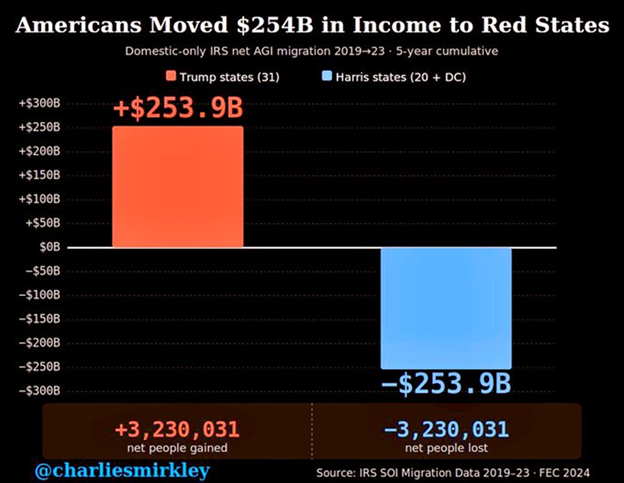 Over three million Americans have left “Blue States” for “Red States,” largely due to better job opportunities and a lower tax burden. (Source: @charliesmirkley via X)
In the past five years, 3.2 million people – 1% of the population – fled blue states to red favoring lower taxes, fewer regulations and a friendly business climate; states where legislatures spend their time on projects rather than pursuing social justice and redistributing wealth. The migrants packed $254 billion in their suitcases when they left.
California, the Golden State, set the pace. In 2020, the number of congressional seats, determined by population size, shrank for the first time in its 185-year history.
~ Addison
P.S. If you’re also looking to pack your bags and set off for new horizons, you’re in luck.
Today on Grey Swan Live, we’ll dive into international real estate with the piece we filmed in Panama. We sat down with Ronan McMahon at The Gathering, hosted by Ronan and our friends at Real Estate Trend Alert (RETA).
RETA members are able to get exclusive discounts on real estate projects in top destinations like Panama, Mexico, Portugal and more.
We’ll be publishing the 2026 RETA Index report with Ronan’s top destinations to buy in 2026, along with the replay.
Ronan and his team will also make their masterclass in international real estate available to paid-up members of the Grey Swan Investment Fraternity.
This masterclass is your complete roadmap to owning overseas in 2026. In six videos, they will take you through everything you need to know, starting right at the beginning.
They aren’t holding anything back. Ronan is sharing all the key lessons he’s learned in two and a half decades of buying and scouting real estate overseas.