Beneath the Surface
The Election Changes Nothing About the National Debt

November 4, 2026 • 4 minute, 57 second read

“What is a debt, anyway? A debt is just the perversion of a promise. It is a promise corrupted by both math and violence.”
~ David Graeber
Johnny Moon was homeless and unemployed in the early 2000s. A high school dropout with a bad drug habit, Moon was hardly someone that banks would consider creditworthy.
And yet, over the course of a single year, he was able to borrow more than $600,000 to buy five different investment properties.
This wasn’t some heartwarming “only in America” story of bankers helping a homeless guy turn his life around. This was just sloppy, risky lending. And Moon was not an isolated case.
In those days, lending rules were so relaxed that banks threw money at even the biggest credit risks. And no one cared because everyone was making a fortune.
Mortgage brokers raked in handsome commissions. Home appraisers, real estate attorneys, and title companies generated tremendous fees. Investment banks posted record profits packaging up risky loans into special bonds. And ratings agencies minted money slapping pristine AAA ratings on those bonds.
Everyone knew what they were doing was risky. But they were making so much money, they were happy to ignore it.
Another risky hallmark of this era was the popularity of adjustable-rate mortgages (ARMs).
Rather than borrow at a fixed rate for 30 years (which is typical in most residential mortgages), banks made loans that carried a super-low introductory teaser rate, often just 0.9%.
But that teaser rate was adjustable; after 6, 12, or 24 months, the mortgage rate would reset to the current market rate… which ended up being MUCH higher. And once the interest rate adjusted higher, the monthly payment adjusted higher as well.
Do the math: at 0.9%, a $1 million loan only costs around $750 a month in interest. But if the teaser rate resets to 4%, the monthly payment hits $3,333, more than 4x higher.
At its peak, roughly one-third of all new mortgages in America were adjustable with low teaser rates. And this is what nearly brought down the global economy: borrowers could no longer afford their mortgages once the teaser rates reset.
It should have been one of the most predictable crises of all time. When heavily indebted borrowers suddenly see their monthly interest payments skyrocket, bad things happen.
But very few ‘experts’ saw it coming, and everyone acted surprised that it almost destroyed the global economy.
The United States government is in a similar position today.
For decades, the US Treasury borrowed money across the entire ‘yield curve’, i.e. the government issued 30-year bonds, 20-year bonds, 10-year notes, etc. all the way down to 28-day T-bills.
But it’s a much more difficult environment these days; with the national debt at $40 trillion and annual deficits at $2 trillion, fewer investors are willing to buy 30-year US government bonds whose rate is fixed for THREE DECADES.
That’s simply too much duration risk given America’s current fiscal trajectory.
So the Treasury Department has started borrowing more and more via short-term bonds, like the 2-year note.
Similar to adjustable-rate mortgages from the early 2000s, rates on short-term bonds are much lower. But it creates the same risk when the interest rate essentially ‘resets’ in the future.
Right now, there’s $7 trillion worth of Treasury bills which mature in 12 months or less. That means $7 trillion of debt will have to be refinanced over the next year, potentially at a significantly higher rate.
And that’s on top of any NEW debt that the Treasury Department issues.
This means that if interest rates continue to rise, the Treasury Department could have a serious (and yet completely predictable) catastrophe on its hands over the next couple of years.
Every 1% increase in the Treasury’s average interest rate costs taxpayers more than $400 billion PER YEAR. Given that the annual budget deficit is already $2 trillion, this extra $400 billion in interest expense will have to be borrowed as well, which only makes the problem worse.
In short, the government will borrow more money to pay the extra interest on money they’ve already borrowed.
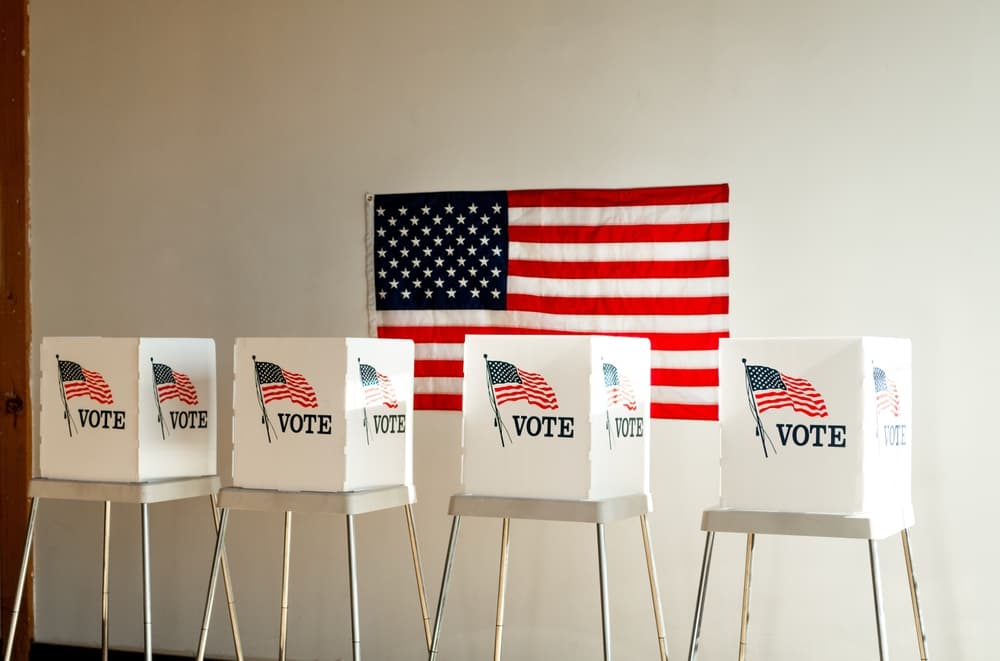
America went to the voting booth yesterday and handed Democrats control of both the House and Senate.
Sadly, it doesn’t seem to matter; neither party has any genuine desire to reduce the deficit. Hardly anyone is talking about cutting spending, cracking down on fraud, and trimming waste.
Ironically, all these politicians know it’s a disaster in the making, just like the banks knew their housing loans were super risky 20 years ago. But the political class is benefiting too much from the waste, making it virtually impossible to stop.
The housing bubble in the early 2000s destroyed a lot of lives; Johnny Moon died on a dirty mattress on the floor of one of his houses right before it went into foreclosure; his wallet was found to have just $1 inside… and he was just one of millions of other stories.
When the ‘adjustable rate’ on the national debt resets over the next few years, there’s also going to be a lot of damage. And opportunity as well.
Don’t pin your hopes on election results. Politicians aren’t going to fix this. The incentive structure just isn’t there.
Focus on the truth. Do the debt arithmetic yourself. And make sure you have a Plan B.
~ James Hickman
Schiff Sovereign and Grey Swan
P.S. A major Wall Street rule is keeping institutional giants on the sidelines of one potentially explosive stock. But that changes November 10, when a Nasdaq listing could open the floodgates to as much as $42 billion in institutional buying.
Grey Swan founder Addison Wiggin believes this could be a rare chance to get in before the crowd — potentially turning $10,000 into $200,000 by 2028.
He called the dot-com bust and the housing crisis before Wall Street caught on. Now, he sees another opportunity taking shape.

And he just recorded a special presentation explaining how to position yourself before the window closes. Click here to catch up on the full details.