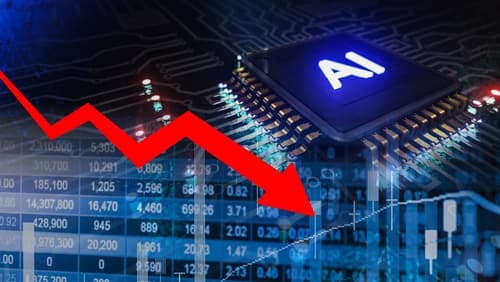

The S&P 500 now pays shareholders less cash income than it did at the peak of the dot-com bubble.
Current market data shows that, in aggregate, S&P 500 companies paid about $665 billion in dividends over the 12 months through September 2025, while buybacks ran near $1 trillion for 2025.
S&P Dow Jones Indices reported that third-quarter 2025 dividends rose to $168.1 billion, up from $165.2 billion in the prior quarter.
The index dividend yield has fallen to roughly 1.06%, below the previous extremes seen in 2000 and 2021.
Companies have not stopped paying dividends, but what they’re paying is a pittance.
One of Wall Street’s greatest wealth-building tools for individual investors is on the fritz:

So, what gives?
Jeremy Siegel’s Stocks for the Long Run (1994) work showed how dividends compounded wealth across generations.
A railroad, manufacturer, utility, or consumer staples company sent shareholders cash. Shareholders reinvested that cash. The new shares produced more dividends. Over time, the income stream compounded, doing the heavy lifting quietly, in the background.
Today’s market gives investors historically low fuel for the old wealth accumulation engine.
Large technology and AI companies want to keep more cash inside the business. Executives need chips, data centers, power contracts, networking equipment, engineers, cooling systems and long-term cloud capacity.
Goldman Sachs expects the largest U.S. hyperscalers to spend about $800 billion on capex in 2026 and roughly $1.1 trillion in 2027.
Some of that money will come from operating cash flow.
Some will come from debt.
Some will come from opaque financing arrangements that look clever until investors eventually ask: who pays the return?
Microsoft, Alphabet, Amazon, Meta and Oracle are on track to spend more on capex than they generate in free cash flow by 2027, with capex rising about $534 billion versus an expected $340 billion increase in annual operating cash flow from 2025 to 2027.
Corporate America still has cash. Investors are paying far more for each dollar of it because cash itself has lost status.
That is one feature of a crack-up boom. Investors do not stop wanting earnings. They stop wanting the currency in which those earnings are measured. They bid up claims on businesses, data centers, chips, power contracts, gold, energy, land and anything else they think can outrun the dollar.
The S&P 500’s 1.06% dividend yield shows the trade-off.
Shareholders are accepting less cash income today in exchange for a higher-priced claim on future nominal growth. That can work while prices keep rising. It becomes more dangerous when investors mistake rising asset prices for rising real wealth.
In 2000, investors accepted a very low dividend yield because they believed the internet had changed the rules. The internet did change the rules. Many of the stocks still collapsed.
In 2021, investors accepted low yields again because cheap money made future growth look almost free. That ended when interest rates rose.
In 2026, investors are accepting even less income because AI appears capable of reshaping the economy.
AI may do exactly that. But shareholders still need to ask the old question: how much cash comes back to the owner, and when?
During the remainder of the AI buildout, investors should expect the market to reward companies that can fund growth while still returning capital. Companies that spend aggressively without showing a credible path to cash returns will have to keep asking investors for patience.
Patience gets more expensive when Treasury yields stay high and dividend yields sit near record lows.
The old market paid investors while they waited. The AI market asks investors to fund the wait. Andrew’s Pro recommendation today? Read the room. Be selective.
~ Addison
P.S. Yesterday’s Grey Swan Live! with Shad Marquitz was a masterclass in what to look for in resource investing.
We shared our insights from last week’s trip to Colorado to interview mining executives, as well as what we’re seeing in the resource space now. The replay is up on site now. Whether you’re a seasoned resource investor or not, you’ll get some valuable information out of this week’s livestream.

Plus, this afternoon on the Grey Swan Trading Fraternity, Andrew and I will cover what to expect in markets in the fourth quarter of the year. Some sectors perform much better than others – and stocks tend to set up for a year-end rally. We’ll look at the bull and bear case.
Again, we’re at a special time this week: Friday at 3 p.m. ET