
Three market indicators are converging six days before Americans vote.
The first comes from the election calendar. J.P. Morgan Asset Management recently went back through every midterm election since 1950. The S&P 500 finished higher 12 months later every time, with an average gain of about 15%. The fourth quarter of midterm years alone has produced an average return of 6.6%.

Every election year, investors get treated to the same spectacle: politicians promising to save the country, pundits predicting economic doom and talking heads insisting this time is different. (Source: US Bank)
GW&K Investment Management widened the lens to 15 months, beginning at the end of September in each midterm year. All 19 periods finished higher, producing an average total return of 29.9%. Comparable 15-month periods beginning in the other three years of the presidential cycle averaged 14.7%.
The second indicator comes from the stock market itself.
Reuters reports that the S&P 500 has gained roughly 14% this year and recently reached record highs. More than 200 stocks in the index, however, have lost money in 2026. More than a quarter have fallen at least 11%. The median S&P 500 stock has gained only about 4%, while technology has accounted for more than 10 percentage points of the index’s advance.
The troops are thinning while the generals march ahead.
The third indicator comes from the capital markets feeding the AI boom.
Hyperscalers are pouring money into chips, data centers and power while bond investors demand more compensation for supplying the money. Reuters reported this month that rising rates have forced some companies behind the AI data-center boom to delay fundraising or accept more expensive financing. CoreWeave has become a particularly visible example as investors scrutinize the debt supporting its expansion.

When the biggest businesses in the world are scrambling to build the future, you don’t necessarily need to know which chatbot wins. You just need to know who’s getting paid to make it all possible. (Source: Precedence Research)
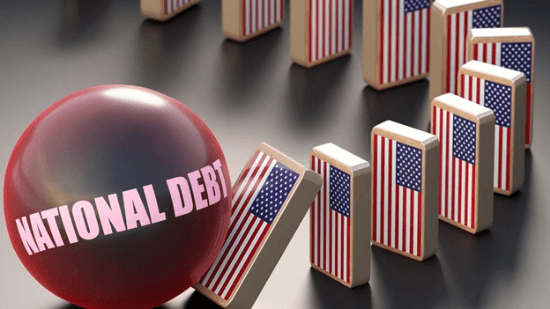
That’s the pressure point worth watching. A boom financed increasingly through borrowed money becomes more sensitive to the price and availability of credit. The question isn’t merely how much gets built, but whether the assets being built can generate enough cash to justify their cost before the financing has to be rolled over.
Those three currents meet on Nov. 3.
Our “$10.5 Trillion Midterm Shock” research looks at the enormous amount of market value exposed to changes in taxes, spending, regulation, energy policy, defense procurement and the AI buildout after the election.
The election won’t create those forces. Investors are already dealing with them.
AI companies need electricity. Utilities need transformers, cables, turbines and transmission lines. Data-center developers need financing and local approval. Treasury Secretary Scott Bessent needs bond buyers at a time when the 10-year Treasury has traded around levels investors haven’t seen since the early 2000s. Reuters reports that government borrowing costs across several major economies have reached multi-decade highs.
That puts Washington and the AI buildout in competition for the same thing: capital. Government can borrow without first demonstrating a commercial return. Private investment eventually cannot. The higher the cost of capital climbs, the more ruthlessly markets will distinguish between projects that create productive capacity and projects that merely create spending.
Financial Reckoning Day began with a simple habit: follow the money before accepting the story attached to it. Empire of Debt followed the credit underneath the boom. Demise of the Dollar followed the monetary system underneath the credit.
We’re doing the same thing here.
The midterm election gives us a known date. The historical cycle gives us a favorable setup. The AI boom gives us enormous capital flows to follow.
Andrew and I have narrowed those flows to three trades we want in front of members before the votes are counted.
~ Addison