
There’s something eerie about markets at all-time highs just as the institutions that underwrite them — central banks, treaties, even immigration rules — are buckling.
All bets are off. The markets are calling the shots.
As we take stock this morning, the question for investors remains: is this irrational exuberance or simply the music playing while the deck chairs are quietly removed from the ship?
The S&P 500 and Nasdaq sit at record highs. Yet the concentration is breathtaking: the “Magnificent Seven” now account for 35% of the entire index.
Apple, a laggard this year, even got a 3% bump last week thanks to a quick frenzy over the iPhone 17 release. While 3% may not sound like much, it’s one of the best responses to an Apple event in years.
“Never before has so much depended on so few,” Bloomberg sighed.

The top 10 stocks in the S&P 500 open the week commanding 41% of the market cap of the entire index.
(Source: S&P 500, Nasdaq, Ecovisuals)
Market concentration is entertaining all by itself.
Right now, the market is less like a diversified portfolio and more like a rock band with one guitarist holding the entire tune together. Be wary if you’re a buy-the-index kind of investor.
 The Trumps’ Billions
The Trumps aren’t complaining.
Crypto profits have nearly doubled the Trumps’ fortune since last year’s election, pushing their collective net worth to $10 billion.
Another bet, which has yet to be announced publicly, was rumored to have earned Eric Trump $100 million if the Fed cut rates on Wednesday.
No U.S. president has ever monetized the office quite like this. The Financial Times this morning called it, “an unprecedented entanglement of political power and speculative finance.”
While you consider your own investments, it’s best to keep in mind that fortunes this big don’t usually signal the beginning of a cycle but the end of one.
 Visas for Sale
In his role as President of the United States, Trump also unveiled his “gold card” for immigrants — $1 million for residency, $2 million for companies, plus a $100,000 annual fee slapped on H-1B visas.
“The company needs to decide,” Commerce Secretary Howard Lutnick commented bluntly, “is the person valuable enough…or they should go hire an American.”
Markets reacted swiftly.
Indian tech giants tumbled; U.S. sponsors like Google and Microsoft wobbled.
It’s clever politics, but for medicine — where a quarter of U.S. doctors are foreign-born — it could spell shortages.

Like many of Trump’s policies, we’ll have to keep an eye on this one.
Investors may see companies quietly offshoring more jobs, just as they did the last time America shut its golden door. But the data will not be headline news…
 CoreWeave’s Big Bet
CoreWeave, once a crypto footnote, now boasts a $50 billion market cap, renting out Nvidia GPUs to AI hopefuls.
Revenue is soaring — $2.2 billion in the first half of the year — but so are losses. CEO Michael Intrator, “relied heavily on debt,” noted Forbes in an analysis this morning, “backed by GPUs that are depreciating a lot faster today.”
It’s an audacious gamble. Remember the dot-com darlings with more users than profits? This feels uncomfortably familiar.
 Musk’s AI Rocket
Elon Musk’s xAI is about to raise $10 billion at a $200 billion valuation. Commentators on CNBC say the deal shows “a funding race that shows no signs of cooling.”
Our eye on private equity, Matt Milner, echoes the excitement.
Musk has always been able to sell a vision — rockets, cars, tunnels, now AI.
Even if you don’t buy his stock, pay attention: his ventures often mark the temperature of the speculative fever.
 Gold Fever, Silver Lining
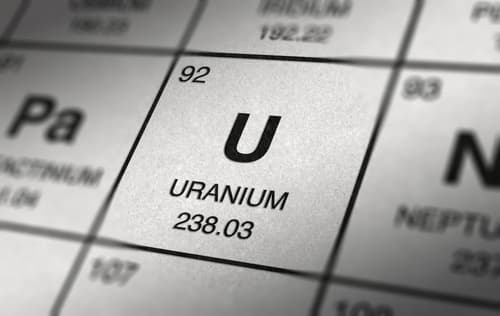
Gold has blown past $3,700 an ounce this month. Silver is over $43, eyeing a retest of its 2011 highs near $48. Copper clings near all-time highs. Even uranium, the sleeper, is breaking out after a summer of consolidation.
This is not a coincidence. As the Fed nudges rates lower, hard assets are doing the heavy lifting. “Investors have ample reason in 2025,” writes the Markets Insider, “to take the recommendation more seriously than in previous years.”
For the wary investor, the question is less whether to own commodities and more how much exposure is prudent when prices already look frothy. Shad Marquitz will highlight the opportunities on Thursday in Grey Swan Live! (More details in the P.S. below.)
 A Diplomatic Break
Despite Trump’s visit to London amid all the pomp last week, Canada, the UK, and Australia formally recognized a Palestinian state, breaking with the U.S. and joining 147 UN members.
Washington criticized the move; Netanyahu flatly declared, “It’s not going to happen.”
The symbolism matters: even America’s closest allies are charting their own course. That’s worth remembering when you invest in “safe” assumptions about U.S. dominance.
Tomorrow, Trump will meet with Argentina’s Javier Milei.
Buenos Aires faces $9.5 billion in debt payments next year and a peso in free fall. Bloomberg described Milei’s effort as “an attempt to halt a market rout before it spirals into crisis.” Argentina has defaulted nine times in the past century. Ten would hardly surprise.
This week also offers more than Fed tea leaves: Inflation data, consumer sentiment, Milei’s tango with Trump, and the UN stagecraft all jostle for attention.
Markets remain buoyant, but the ballast — trust in institutions, trade alliances, even free movement of labor — looks thin. If you’d rather hedge your portfolio than your faith in politics, hard assets may be the best ballast of all.
 Escape by Sea
Or…. if it all feels too much? Consider this: Villa Vie Residences is selling four-year world cruises, starting at $159,999 per person.
The ship will circle the globe continuously, letting you swap your mortgage for a cabin, your local grocer for port markets from Lisbon to Singapore.
The math? A do-it-yourself, around-the-world trip might run $25,000–$35,000 a year.
The cruise option is pricier, starting at $40,000 per year, but it includes housing, meals, and the odd shuffleboard tournament. Is it a prudent retirement plan or just a way to gild your escapist fantasies?
“It’s not running away,” a travel critic offers helpfully, “if the ship’s itinerary is published months in advance.”
Bon voyage?
~Addison
P.S. Grey Swan Live! this Thursday at 2 p.m. ET — Portfolio Director Andrew Packer will host Shad Marquitz, our resident commodities expert. With gold, silver, copper, and even uranium breaking higher, he’ll walk through the setups, the macro drivers, and 1–2 stocks in each category to watch. You won’t want to miss it.

If you have any questions for us about the market, send them our way now to: Feedback@GreySwanFraternity.