Beneath the Surface
It’s Time to Buy the Most Hated Industry In the World
May 2, 2025 • 9 minute, 29 second read
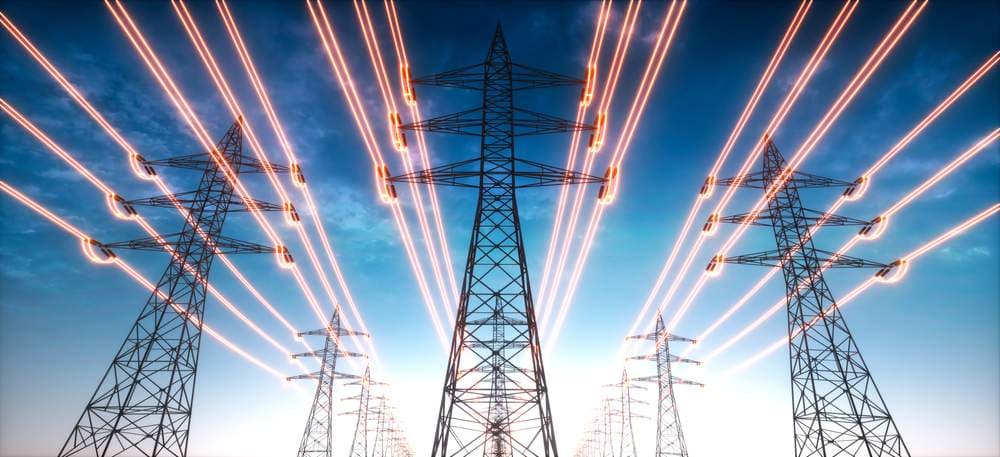
“While it’s no mystery that climate-centric motivations drive the EU’s policy choices, it is indisputable that energy inflation in Europe is rampant and that the trends are destructive, economically, socially, and politically.”
–Dr. Scott Tinker, Switch Energy Alliance
May 2, 2025 — It’s Monday, April 28, 12:32 PM, Central European time.
An unseen fault ripples across Spain’s fragile, renewables-heavy grid.
The system begins to unravel — and within five seconds, fifteen gigawatts — 60% of all the power Spain was generating at that moment — vanish.
With Spain’s grid collapsing, neighboring Portugal — heavily reliant on interconnected flows — is dragged down too.
The entire Iberian Peninsula plunges into darkness.
Cities go dark.
Hospitals lose power.
Trains grind to a halt.
Planes are grounded.
Payment systems crash.
Mobile networks fail.
This was the scene tens of millions of Spaniards and Portuguese lived through just two days ago.
A friend of mine, who lives in Spain — and whom I’ll be visiting this summer with my family — described it to me bluntly:
It felt like one of those zombie apocalypse movies. Only the zombies were missing.
The eerie silence, the paralyzed cities, the confusion — it was a stark reminder of how quickly modern life unravels when the grid goes down.
Hours after the blackout, much of Spain and Portugal — and even parts of France — remained crippled.
Millions were still trapped in traffic at dead intersections. Others were stranded underground in powerless subways or climbing out of elevators frozen between floors.
Here’s a satellite image, captured in the evening, showing the Iberian Peninsula — completely wiped off the map of lights.

Source: Google
Apparently, officials were more concerned with explaining away the failure than actually fixing it. Even after nearly 10 hours, only 35–40% of national power supply had been restored.
Authorities floated ideas of sabotage, cyberattacks, electromagnetic events, or faulty maintenance.
Eventually, Spain’s socialist Prime Minister Pedro Sánchez blamed a “strong oscillation.”
Sure. But that doesn’t explain how a modern, industrial nation blacks itself out — at midday.
I mean… how do you even “lose” 15 gigawatts of electricity?
Turns out, it’s not that hard — you just need to buy into the Net Zero scam.
The Sun Doesn’t Always Shine, Wind Doesn’t Always Blow
For years, the Spanish and Portuguese governments — like nearly all European governments — tirelessly promoted the virtues of green energy. Fossil fuels were vilified, and the public was told to embrace the bright, clean, wind-and-solar-powered future.
And they poured billions into the transition.
The numbers tell the story.
In 2008, renewables made up just 20% of Spain’s electricity generation. By 2013, that figure had doubled to 40%. And by the end of 2024, renewables accounted for 64% of Spain’s total installed capacity — with over half of that coming from just two sources: solar (26%) and wind (25%). These far outweighed more stable sources like gas, hydro, or coal.
Meanwhile, the government moved to shut down dozens of coal and nuclear plants — long before replacements were ready. Coal was demonized. Nuclear was branded unsafe.
At the same time, the public was sold on the idea that all electricity is created equal. And in Spain — a country where the word “equality” carries almost sacred weight — that idea was easy to embrace.
So when Spain launched what I can only call an experiment on April 16 — attempting to power the entire Iberian Peninsula with nothing but renewables — most people cheered.

Source: pv magazine
Yet in under two weeks, the celebration gave way to crisis.

Source: The Sun
It was a harsh jolt from the renewable-induced siesta. Turns out, the “all power is equal” mantra Spaniards — and much of Europe — were sold was a flat-out lie.
Because for modern civilization to function, you need something called baseload power.
That’s the steady, reliable kind — always on, always available. The kind of power the grid can count on to meet guaranteed demand at any given time.
And to produce it, you need dense, abundant energy sources that are cheap and easy to access.
Solar and wind simply don’t cut it. As the old saying goes: the sun doesn’t always shine, and the wind doesn’t always blow. So, when you build your grid around intermittent sources like these, you introduce a whole new set of problems — even our overlords at the World Economic Forum (WEF) have had to admit as much (emphasis mine):
An energy system based on clean electricity would reduce the security risks presented by fossil fuels, but also present risks of its own. Because wind and solar power are intermittent, the need for flexibility of other sources of electricity to pick up the slack becomes greater than today’s system can deliver. Moreover, a decarbonized system requires far more electricity for cars, heat, and other needs met by oil and gas today. For countries that depend on trade across borders for those sources of zero-carbon electricity, new energy security risks may arise, as electricity is harder to store or buy from other suppliers than oil and gas. A more electrified, digitalized, and connected smart grid may also be more vulnerable to cyberattacks.
Baseload power plants — coal, gas, hydro, nuclear — do something no other type of generation (like peaking or load-following plants) can do: they anchor the grid.
That’s because they’re the exact opposite of intermittent sources like wind and solar. They’re reliable. They’re always on. They provide steady, around-the-clock power you can count on.
And crucially — they provide something else that’s vital for grid stability: inertia.
You see, electricity grids need inertia to stay balanced and maintain a stable frequency. Inertia comes from spinning generators — like turbines in coal, gas, or hydro plants — whose momentum helps absorb shocks and smooth out fluctuations. Think of it like the shock absorbers on your car: when you hit a bump, they keep everything from falling apart.
Wind and solar simply don’t do that.
Note: Wind turbines do spin, obviously. But most modern wind farms — especially large ones connected through inverters — don’t contribute much real inertia. Coal, gas, and hydro plants use synchronous generators, physically tied to the grid’s frequency. Their mechanical rotation directly stabilizes the system.
Experts have warned for years that grids overloaded with renewables lack the inertia to handle disturbances. But energy has become so politicized — especially in Europe — that few wanted to hear it.
In hindsight, it was all too predictable.
I remember tracking Spain’s electricity prices a few weeks ago — yes, ever since the war in Ukraine, I’ve been a little obsessed with European energy markets — and watching as, on many spring days in 2025, Spain’s midday solar generation actually exceeded total afternoon demand.
The result? Frequent negative electricity prices.
That might sound like a good thing — cheap power for consumers — but in reality, it’s a red flag. These prices only exist because subsidized renewables keep pumping out power even when the grid doesn’t need it.
This dynamic has been playing out in Spain for years — especially during spring, when solar output spikes and demand stays low. The grid floods, prices crash, and reliable baseload plants go out of business.
And so a bad situation gets worse.
Rude Awakening
Okay, so with all that context in mind—what exactly happened on Monday? How does a modern country, go dark in just five seconds?
It started with a violent disturbance on one of Spain’s key electrical highways: the Aragón–Catalonia corridor.
This corridor wasn’t just carrying power from Spain’s vast solar and wind farms — it was also importing critical backup electricity from France.
The problem? Spain’s grid was saturated with fragile, inverter-driven renewable energy. So when even a small disturbance hit, it triggered a violent oscillation across the system.
The connection to France snapped.
And the rest of the grid — without real baseload support — simply couldn’t absorb the shock.
The frequency collapsed.
Solar and wind farms, extremely sensitive to instability, shut off almost instantly.
And it got worse.
Spain didn’t have enough backup plants to restart the grid. Three out of five black-start-capable hydroelectric plants were offline for scheduled maintenance — an astonishing failure of foresight.
In short:
- Too much reliance on intermittent renewables.
- Not enough baseload power.
- Not enough inertia to absorb shocks.
- Not enough backup capacity to recover.
Ironically, on that Monday, Spain and Portugal did reach net zero — just not the way anyone (except maybe the most unhinged environmental radicals) would have wanted: by sending their entire societies back to cavepeople times.
Now, this isn’t the version the Spanish government wants the Spanish people to hear — certainly not in these terms. In fact, with investigations now opened into potential sabotage or cyberattacks — despite earlier denials from both Madrid and Brussels — there’s every chance this ends up swept under the rug.
But here’s the thing: this isn’t just a Spanish or Portuguese problem. It’s a Western problem — and just like in Spain, it’s a self-inflicted one.
Lau Vegys
Doug Casey’s Crisis Investing and Grey Swan
P.S. from Addison: “I do not want to seem like a Pollyanna,’ writes Gerry C. in response to a conversation we’ve been having regarding Glintpay.com and Mark Jeftociv on Grey Swan Live! yesterday, “but I do not think that at any time in my lifetime have we been better positioned to see a shift in the Fiat Currency debacle — meaning we may be closer to shutting down the out-of-control printing press.”
The inbox was a grab bag of comments, otherwise. Regarding Carol D.’s comment that the AI revolution will lead us to neo-feudalism, Nathan B. writes:
While she may be right about neo-feudalism, she does not fully understand that the feudal system will be a lot different this time around.
Serfs? Hardly. While some workers will no longer be needed, the need for highly skilled, highly prized, technically savvy workers will instead increase. While we may have machines that can fix other machines and do serf-labor, we will find ever more need for people who can fix the machines that fix the machines and do a myriad of other tasks requiring hands-on, intelligence, and reasoning.
Philip Nolan also predicted this in his novel Armageddon AD 2019, where the Han techs were essential and treated accordingly.
The collapse may be sped up!
Bill’s essay from yesterday was met with the customary love-em or hate-em response his writing customarily evokes. One response stands out.
“He is good at reminding us he is one of those billionaires,” Ken C. writes rather ascerbically, “having mansions scattered around the world, only to criticize others in the same position. To him, no one in Congress can do right. He could consider being a consultant to the president, as other billionaires are doing. After all, when China wins, he also loses.”
Heh. I won’t speak for the man, but having worked with him for over 30 years, I’d say he’d sooner eat the rubber soles of his workboots than consult with this or any president.
Indeed, he’s much more concerned with the West’s fetid, spendthrift political quagmire than with trying to figure out what China is up to.
In one fateful episode, over a decade-long effort, we tried to open an office in Beijing. Their business practices proved to be even more opaque than Biden-era economic data.
Your thoughts? Add them to the mix here: addison@greyswanfraternity.com