

After the Epic Fury bombing campaign in Iran concluded, there have been months of talk about a peace deal.
Each ceasefire headline has given markets a little boost. Every strong earnings report from AI tech companies has moved stocks higher. The result has been a historic anomaly, a massive rally during a midterm election year.
In the real world, the Great Race for resources is getting magnified. The Strait of Hormuz has now been closed for nearly 100 days, with crude, LNG, helium and fertilizer stuck on ships floating in the Persian Gulf or sitting in warehouses, waiting:
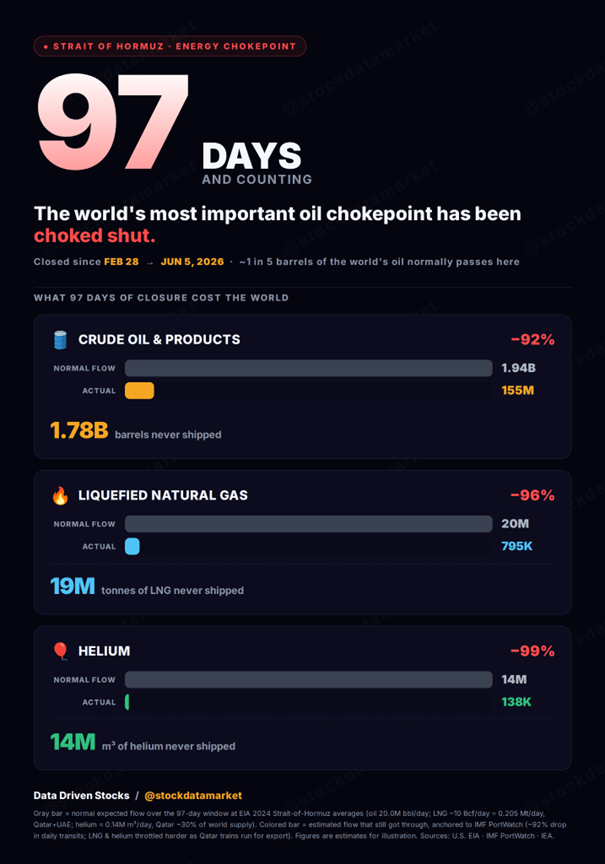
With the Strait of Hormuz closed for nearly 100 days, global disruptions in oil, fertilizer and helium will have a lasting impact on heating and cooling, consumer goods, data centers and food supplies. (Source: Data Driven Stocks)
The longer the Strait remains closed, the more global logistics strategists seek permanent alternatives immune to geopolitical risk.
Globally, the length and scale of maritime traffic have increased. Ships are being diverted to the United States’ Southern ports, goosing oil and liquefied natural gas (LNG) exports.
The disruption caused by the Strait closure is also showcasing underinvestment in global shipping. New cargo ships better suited to new routes are needed.
But those ships take years from design to launch.
Until then, existing inventory, including what are known as Very Large Crude Carriers (VLCCs), is in short supply. Shipping companies that can already facilitate the new supply routes are renting cargo space at a premium.
Industry-wide, we’re witnessing a surge in shipping stocks, similar to the supply-chain buildout during the first wave of intense globalization from 2004 to 2007. Structurally, the new supply routes will only be fitted once, so there is a unique, limited-window opportunity in shipping stocks is taking shape as we speak.
For a specific way to play this limited-time imbalance in global shipping, with an industry-leading stock paying a double-digit dividend yield, become a member of Grey Swan Pro — details here.
~ Andrew
P.S. Yesterday on Grey Swan Live!, Mark Jeftovic joined us to cover the latest developments in the crypto space – including the Clarity Act and the Fate of Dollar 2.0.
Crypto has taken a back seat to the AI trade in recent weeks, but those lamenting crypto’s poor performance may not have much longer to wait, with so many positive catalysts on the horizon.
Mark’s conversation revealed when this crypto bear market is likely to end, the positive catalyst potential from the Clarity Act and how to set up your business so you can get paid in crypto during this bear market.
The replay is up on site for our members who weren’t able to join live.

If you have any questions for us, send them to Feedback@GreySwanFraternity.com.