
The late economist Ludwig von Mises once described what happens when inflation escapes the laboratory and enters everyday life.
At first, people barely notice. Prices rise. Wages eventually catch up. Markets continue climbing. Politicians reassure voters that everything remains under control.
Under extreme circumstances, something else happens.
People stop thinking of money as something to save and begin thinking of it as something to spend before it buys less. Businesses accelerate projects. Investors chase assets. Consumers pull purchases forward. The future starts looking more expensive than the present.
Mises called it a “crack-up boom.”
The phrase sounds dramatic today because most Americans associate economic instability with recessions, layoffs and falling asset prices.
A crack-up boom is different. It can unfold during periods of rising markets, strong corporate spending and technological optimism. The danger comes when nominal wealth expands while the purchasing power in your own wallet erodes, quickly.
We spent the better part of the last week on a semi-annual driving trip up the Eastern seaboard… from Baltimore to Burlington, back to Brooklyn, and beyond. For multiple family reasons, we drove more than 1500 miles across 8 states.
We saw gas prices range from $3.99 a gallon (with the right debit card) to $5.59. The expanse encompasses a mere 2% of the world’s total population… but it’s bumper to bumper cars, trucks and buses, all the same.
Long hours in the driver’s seat give one ample time to ponder the state of humanity and the economy. Sometimes we even have positive insights.
Today’s profound observation: Through the “crack-up boom” lens, much of what we are watching today—from the artificial-intelligence spending frenzy to the coming SpaceX IPO to the Treasury Department’s stablecoin strategy—makes more sense.
🔥 Inflation Refuses to Stay Buried
For most of the past two years, Wall Street has treated inflation like an unpleasant houseguest finally preparing to leave.
The latest economic data suggest the guest may be settling in for a longer stay.
The Institute of Supply Management (ISM) Services Prices Index climbed to over 71 in May, its highest reading since August 2022.
Manufacturing prices remain elevated at levels not seen since the inflation surge that followed the pandemic. Energy products continue to appear near the top of lists tracking rising costs across the economy.
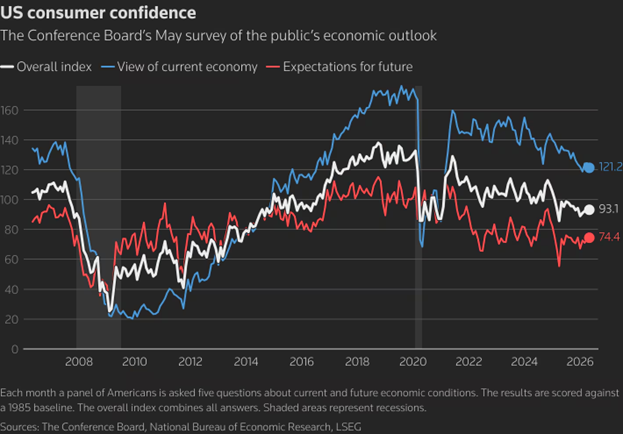
Despite persistent concerns about inflation, interest rates and global uncertainty, the U.S. consumer continues to show surprising resilience—a key reason the economy keeps defying recession forecasts. (Source: National Bureau of Economic Research)
Meanwhile, many Americans find themselves living through a contradiction that rarely shows up cleanly inside economic models. They are working. They are earning. Their retirement accounts often look healthy.
Yet the monthly bills are rising faster than anyone is prepared for… still.
Insurance renewals arrive with uncomfortable surprises. Restaurant tabs feel larger. Utility costs drift upward. Families helping adult children navigate housing markets discover that salaries no longer stretch as far as they once did.
Inflation is not merely a statistic reported by economists, but a behavioral characteristic. Rising prices change the way people think about saving, investing and spending.
🧠 Who Is Paying for the AI Revolution?
One of the more revealing features of the crack-up boom came from Alphabet this week.
For years, the company used its immense cash flow to repurchase shares. Investors grew accustomed to those buybacks as though they were a permanent feature of the corporate landscape. Then Alphabet announced plans to raise roughly $85 billion through its first major equity offering since its early public years.
The market barely flinched, a reaction that will raise eyebrows for the careful investor.
Investors increasingly understand that the artificial-intelligence race now underway requires levels of spending that would have seemed extraordinary only a few years ago.
Meta, Microsoft, Alphabet and Amazon collectively poured hundreds of billions of dollars into AI infrastructure during 2025. Analysts expect the spending to continue accelerating as companies race to secure computing capacity, construct data centers and expand the electrical infrastructure required to support increasingly powerful models.
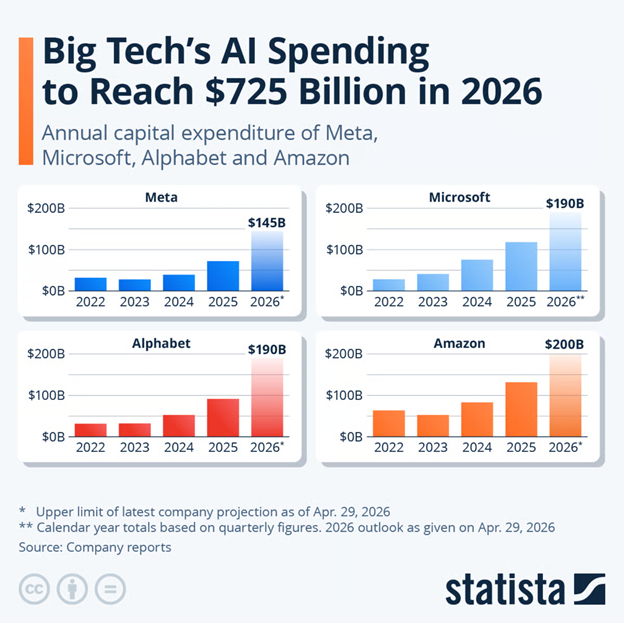
The AI arms race has entered a new phase. The battleground isn’t innovation alone — it’s capital spending. Capital expenditures are surging as companies race to build the infrastructure needed to power the next generation of intelligent systems. (Source: Statista)
While the tech sector still speaks the language of software, balance sheets increasingly resemble industrial companies. (See: The Great Race, Restated)
Every major AI breakthrough now rests upon an enormous foundation of semiconductor fabrication, electrical generation, cooling systems, data centers, transmission infrastructure and financing.
Nvidia CEO Jensen Huang often describes the AI economy as a layered structure that begins with energy and computing long before consumers ever encounter the applications built on top.
The observation helps explain why utilities, pipeline operators, electrical-equipment manufacturers and engineering firms suddenly find themselves connected to one of the most important investment stories of the decade.
Artificial intelligence increasingly looks less like a software boom and more like a vast industrial mobilization project.
💵 The Sponge That Financed an Empire
That industrial buildout is arriving at a moment when another, much older system appears to be changing beneath the surface.
For most Americans, the petrodollar system always felt abstract.
People occasionally heard the phrase on financial television, usually accompanied by maps of the Middle East and discussions of oil markets. Then the conversation moved on.
Yet the petrodollar system quietly helped finance both American prosperity and American power for nearly fifty years.
Countries that needed oil accumulated dollars. Countries holding dollars needed somewhere to invest them. Treasury bonds became the natural destination. The result created a self-reinforcing cycle where global demand for energy produced global demand for dollars, and global demand for dollars produced global demand for American debt.
Congress could spend more than it collected. The Treasury could borrow on a scale that would have frightened previous generations. The Federal Reserve could create money more aggressively than most countries dared because a significant portion of those dollars eventually migrated overseas into foreign reserve accounts.
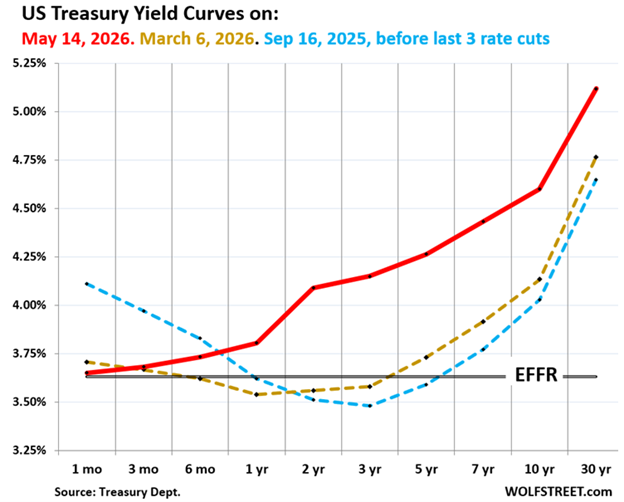
Every geopolitical shock tests the financial system. Wars, sanctions, trade tensions and political upheaval continue to reshape the global landscape. But it continues to reinforce the dollar’s unique role at the center of the global financial system. (Source: U.S. Treasury Department)
Foreign governments absorbed dollars, absorbed Treasury debt and absorbed much of the monetary expansion that otherwise might have remained inside the domestic economy.
The recent U.S.-Israeli conflict with Iran reminded the world that Tehran controls one side of the Strait of Hormuz, one of the most important energy chokepoints on earth. China continues building payment systems designed to operate outside traditional dollar channels. BRICS continues expanding. Central banks now hold a smaller percentage of reserves in dollars than they did a generation ago.
None of these developments individually threatens the dollar.
Taken together, however, they suggest that the financial architecture supporting Pax Americana no longer enjoys the same unquestioned dominance it once did.
That reality increasingly appears in long-term Treasury yields.
Thirty-year Treasury rates rising above 5% are not just a curiosity for bond traders. They represent the cost of financing government borrowing in a world where foreign demand cannot be assumed. Every increase eventually works its way into mortgages, business loans, commercial real estate financing and household budgets.
The bond market is signaling something much larger than inflation.
It is signaling the gradual deterioration of the system that financed the globalization era itself.
🌎 Dollar 2.0 on Thin Ice
Treasury Secretary Scott Bessent has been surprisingly direct about what comes next.
When the GENIUS Act became law, Bessent described stablecoins as a mechanism that could expand access to the U.S. dollar economy for billions of people worldwide while increasing demand for Treasury securities. Most coverage treated the statement as another cryptocurrency headline. In reality, it may reveal one of the most important financial strategies currently unfolding inside the Trump Administration.
The administration appears to recognize that the world still wants dollars even if governments increasingly explore alternatives to the traditional petrodollar framework.
A family in Argentina is trying to escape chronic inflation. A business owner in Nigeria is attempting to preserve working capital. A software developer in Turkey seeking protection from currency depreciation. None of these people necessarily cares about American foreign policy. They simply want access to a more stable monetary system than the one available at home.
Stablecoins provide that access.
Every digital dollar issued by companies such as Tether or Circle requires reserves. Those reserves increasingly consist of Treasury securities. As adoption expands, demand for digital dollars creates demand for government debt.
The relationship begins to resemble the old petrodollar system, except that the buyers are no longer primarily foreign central banks.
There are millions of individuals, businesses and entrepreneurs carrying dollar-denominated savings inside smartphones.
The goal extends beyond financial technology. The administration appears to be building a new source of global demand for dollars at precisely the moment the old source shows signs of weakening.
Whether the strategy ultimately succeeds remains an open question. The Clarity Act remains stalled in the Senate. (We’re going to dig in and talk about the issues facing the Clarity Act on Grey Swan Live! with Mark Jeftovic today! See below.)
🚀 The Great Race Accelerates
This is where the various stories we follow each day begin converging.
Artificial intelligence requires unprecedented capital spending. That spending requires enormous financing. Financing depends upon Treasury markets. Treasury markets increasingly depend upon new sources of demand. Stablecoins appear designed to create that demand while simultaneously extending the global reach of the dollar.
Viewed separately, these developments appear unrelated. Viewed together, they resemble pieces of a coherent national strategy.
The Trump Administration appears to believe the United States can preserve financial leadership, dominate AI infrastructure and maintain geopolitical influence by rebuilding the monetary architecture beneath the system while simultaneously rebuilding the industrial architecture above it.
Whether that gamble succeeds may become one of the defining questions of the decade.
🕯️ Tiananmen and the World We Are Leaving Behind
Today also marks the anniversary of one of the defining events of the modern era.
On June 4, 1989, Chinese troops entered Tiananmen Square and crushed a pro-democracy movement that had drawn hundreds of thousands of students and citizens into the streets of Beijing. Western audiences watched the confrontation unfold on television as Chinese authorities killed and arrested protesters demanding political reform.
The brutality shocked much of the world.
Yet history rarely follows the path observers expect.
China did not democratize politically after Tiananmen. Instead, Beijing pursued economic modernization while preserving centralized political control. Western corporations continued investing. Manufacturing expanded. Supply chains deepened. Globalization accelerated.
Much of the world investors came to know during the 1990s and 2000s emerged from that decision.
The era of globalization that followed Tiananmen delivered extraordinary prosperity. It also created the financial and industrial system now being challenged by artificial intelligence, geopolitical rivalry and the gradual erosion of the petrodollar order.
Thirty-seven years later, the United States and China find themselves competing to shape whatever comes next.
The students who gathered in Tiananmen Square believed they were fighting over the future of China.
History suggests they may also have been witnessing the beginning of the world we are now leaving behind.
~ Addison
P.S. The most important stories often appear unrelated while they are unfolding. A stablecoin law in Washington, a trillion-dollar AI buildout in Silicon Valley, a bond market demanding higher yields and the anniversary of a student protest in Beijing seem disconnected on the surface. Yet each point toward the same question investors increasingly need to answer: who will control the financial, industrial and technological foundations of the next global order?