
If May felt like a win, you can thank retail investors.
The S&P 500 surged 6.1% — its best May since 1990 — and it wasn’t the quants or suits behind the curtain doing the heavy lifting. Retail investors dumped a record $2 billion into stocks, single-handedly dragging the index uphill like Sisyphus on margin.
But here’s the tell: hedge funds sold $1.5 billion. Institutional investors offloaded $2 billion. Professional sentiment hasn’t just cooled — it’s standing in the shade, arms crossed, holding a sell ticket. In other words, the big boys are cashing out.

Retail’s buying the rally, but everyone else is either selling or quietly buying something else. Metals are rising. Bitcoin’s moving. Foreign currencies are outperforming against the dollar.
And year-to-date?
This has not been a good year for U.S. stocks.
The S&P 500 is up a grand total of 0.5% — the third-worst start to any year since 2010.
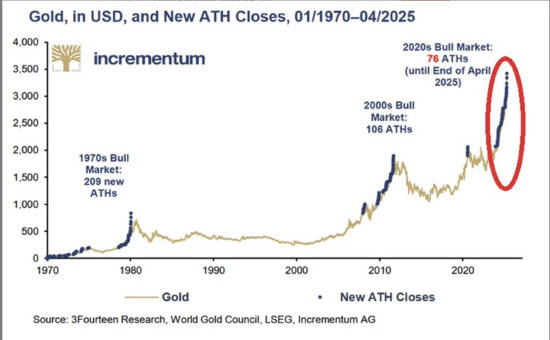
By comparison:
- Gold: +25.3%
- Silver: +14.2%
- Bitcoin: +11.8%
- 1–3 Year U.S. Government Bonds: +2.1%
- Euro: +8.9%
- Swiss Franc: +9.7%
- Japanese Yen: +9.6%
Call it a rally if you must — but it’s not the kind you want to retire on.
 BlackRock Eyes the Masses
There’s no big surprise here, then. BlackRock is gearing up to bring more private-market products to individual investors outside the United States.
The world’s largest asset manager is planning a hiring spree and forming partnerships with digital investment platforms across Europe, the Middle East, and Africa.
The goal? Offer mom-and-pop investors access to the same opaque world of private equity and private credit that’s usually reserved for pension funds and endowments.
“We want more people in private markets,” said Fabio Osta, who leads BlackRock’s alternative efforts for wealthy clients in EMEA.
Translation: the gate is creaking open — but watch your step. Private markets don’t come with handrails. Or a quick exit if you need the liquidity.
The BlackRock holy grail would be cornering the $8.9 trillion in capital held currently in the U.S.’ 401(k) accounts – a big source of wealth, and one that’s relatively unconcerned with short-term market swings.
Hidden Stock Under $5 Holds Tech World Hostage
Tech monsters can no longer avoid doing business with this one company that trades for less than $5…
All of them are held “hostage” by the “Patent King” CEO’s brilliant business tactics.
And what’s even crazier…
Is that his tactics reach all the way to the public.
He intentionally set up his company’s stock under a secret trade name…
Did he fool you too?
 Trump’s Trade Tangle, Today’s Tiff
The temporary “deal” Trump struck with Beijing in Switzerland is now little more than diplomatic dust. On Sunday, the president accused China of “totally violating” the terms, which, critically, were never codified in the first place.
Tensions are surging over access to semiconductors and rare earths, where Beijing appears to be playing the long game… and holding better cards. Defense Secretary Hegseth spent the weekend rattling sabers in Taipei.
Back home, legal challenges to Trump’s tariff regime are mounting. Federal judges are questioning whether many of the levies, including those first imposed in 2018, exceed executive authority and violate the separation of powers — specifically, the part where Congress makes the laws.
And yet, the show goes on.
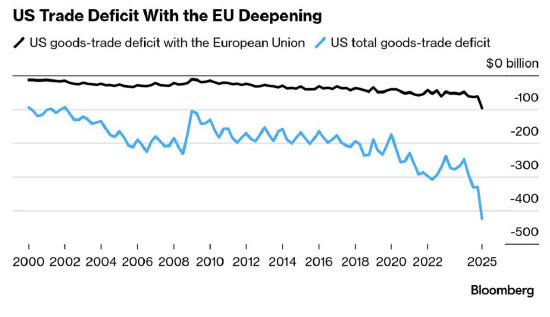
Trump has now threatened to double tariffs on steel and aluminum from 25% to 50%, effective June 4.
The European Union called the move “deeply regrettable,” and its trade chief, Maros Sefcovic, will meet U.S. Trade Rep. Jamieson Greer in Paris this week — while EU negotiators head to Washington for back-channel talks. The EU is preparing retaliatory measures and says it may accelerate their timeline if the U.S. follows through.
Markets took note. Tech bounced Monday — Nvidia led a 1.5% rally in chip stocks — but steel and aluminum names also soared, defying the threat of international backlash. The S&P ticked higher to start June.
 Treasurys Take Another Hit
While stocks flinched and rebounded, Treasurys continued to moan. The long bond — already the worst performer of 2025 — got punished again Monday, with 30-year yields pressing against the 5% mark.
Blame renewed tariff fears, persistent deficits, and a data week that began with a thud. The ISM manufacturing index came in weaker than expected and remained in contraction territory (below 50). Even so, bond yields resumed climbing across the curve.
BlackRock warned this week that the U.S. fiscal outlook could send term premiums even higher if Congress adds trillions in new spending without a credible budget plan.
DoubleLine’s Jeffrey Gundlach, never shy about calling a turn, is either avoiding or shorting long-dated Treasurys outright. And he’s not alone. Pacific Investment Management, TCW Group, and others have joined the retreat to the short end of the curve, where at least you can earn something without signing up for 30 years of government dysfunction.
This rare divergence — rising 30-year yields while 2-, 5-, and 10-year yields fall — has only happened once in a full calendar year since 2001. It suggests a growing mistrust in America’s long-term fiscal trajectory.
Whispers are even floating around that the Treasury could scale back or suspend auctions of the 30-year bond altogether. That’s a far cry from a government that needs lower rates – and investors who ideally lock in those low rates for as long as possible.
 Where This Leaves You
Multiple themes are converging to kick off June: retail enthusiasm, professional skepticism, a wounded dollar, a bond market rebellion, and a White House that believes every economic problem can be solved with a 50% tariff and a steel plant photo op.
But this isn’t 2019. It’s not even 2022. Interest rates continue to trend higher, now lower. Debt’s ballooning. And global capital — slowly but unmistakably — is diversifying away from the American center.
Real wealth is moving into things with scarcity, protection, or shorter duration. Private credit. Gold. Oil infrastructure. Bitcoin. Timberland. Nuclear. Think tangible, not theoretical.
Stay liquid. Stay alert. The conditions that caused markets to go from all-time highs to a bear market in just a few weeks haven’t gone away.
~ Addison
P.S. Grey Swan Live! returns Thursday at 11 a.m. ET.
This week: “The New Global Currency Question.” If the dollar’s losing altitude… what parachutes are left? We’re finalizing a special guest now. Stay tuned for more details…
Your thoughts? Please send them here: addison@greyswanfraternity.com