Some facts on the ground before we get to today’s trade: Crude oil is trading at $105 a barrel this morning, up sharply from late-summer Strait of Hormuz “ceasefire” levels.
Commercial shippers waiting in the Gulf are cautious. Saudi Arabia’s East-West pipeline, built to move crude around Hormuz, has been hit by drone attacks. Gulf diplomacy has stalled. Global tanker traffic is severely retarded.
Oil, of course, gets the headline because oil is visible. It trades by the minute, moves inflation gauges and shows up on every gasoline sign in America. Liquefied natural gas (LNG) matters too, because the Gulf is a central corridor for global energy exports.
When Hormuz slows, the world reprices fuel, shipping, insurance and everything tied to them.
Helium is the quieter problem.
Qatar is one of the world’s most important helium producers. Its helium supply is tied to natural gas and LNG production, which makes the Gulf shipping system critical. If LNG flows are disrupted, helium supply can be disrupted as well. Hormuz then becomes more than an oil chokepoint. It becomes a semiconductor, health care and AI chokepoint.
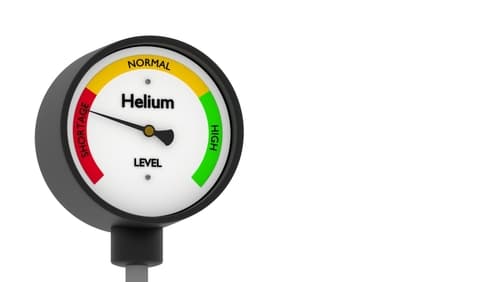
In July, China banned exports of helium. And while helium pricing isn’t as dynamic and vast as the oil market, the price data we do have shows a similar price jump for the gas:

China’s ban was already bidding up helium prices before the Hormuz crisis began. That detail matters.
The helium market was tightening before the latest Gulf disruption added a geopolitical premium. Hormuz did not create the trade from nothing. It exposed a shortage already forming underneath the surface.
Most people still think helium means birthday balloons. That is the least important use case.
Helium is used in MRI machines, semiconductor manufacturing, fiber optics, aerospace, welding, advanced electronics and laboratory research.
The AI boom may be sold as software, but the chips behind it still require specialty gases, precision manufacturing and a long chain of physical inputs.
Data centers need chips. Chips need advanced fabrication. Advanced fabrication needs helium and other industrial gases.
A helium squeeze becomes another bottleneck in an AI buildout already constrained by power, cooling, copper, turbines, substations and utility interconnection queues.
Health care is exposed, too. MRI machines use liquid helium to cool superconducting magnets. Roughly 30% of helium demand is tied to medical uses, especially imaging. A sustained helium shortage would raise costs for hospitals and chipmakers simultaneously.
The investment opportunity is in scarcity.
Helium is a small market with few investable names.
Oil gives investors producers, refiners, service companies, pipelines and royalty vehicles. Helium gives them a much shorter menu.
The industry is narrow, underfollowed and thinly capitalized after years of low prices and mediocre demand.
That makes the trade riskier. It also concentrates the upside. Companies with real production, reserves, processing capacity or offtake agreements can begin trading less like sleepy resource names and more like strategic scarcity plays if helium prices keep rising.
For Grey Swan Pro, we are not looking for every company with helium in a slide deck. We want production, reserves, contracts, balance-sheet survival and a credible path to cash flow.
The market is small enough that promotion will arrive quickly. So will fraud, fantasy and geology-by-PowerPoint.
~ Addison
P.S. Tomorrow in Grey Swan Live!, we’re bringing back Ronan McMahon of Real Estate Trend Alert. We continue our exploration of global investing — outside the dollar — in all its facets.
Ronan is the leading frontier development opportunities in high-end overseas real estate – for lifestyle and income.
Join us for Ronan’s breakdown of where the prices are much better relative to the value than in most U.S. markets. Which deals are most attractive to U.S. investors trying to preserve their retirement capital and generate strong income.

Ronan’s business development strategy is his secret weapon. It’s worth joining us for Grey Swan Live! just to hear how the deals work in your favor.
We might be able to get him to sing an Irish ditty for entertainment, too!