Beneath the Surface
We Sent Congress Two Warnings… The Second Cost $32 Trillion More

November 10, 2026 • 4 minute, 30 second read
“Ignoring warnings is costly.”
~ Debra Doyle

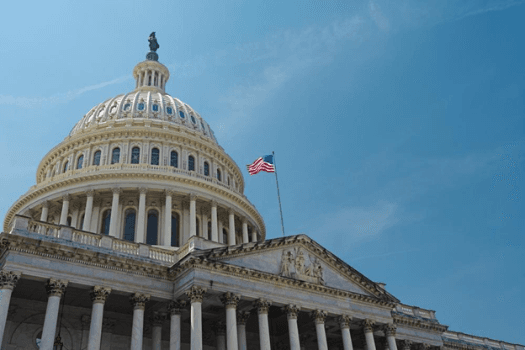
America doesn’t just have enormous debts. It has enormous assets, too. But a closer look reveals how putting them to work could change the equation. (Source: Shutterstock)
Note from Addison: Today we begin a series we’ve been calling “Financial Reckoning and the Trifecta Solution.” It’s perhaps entertaining enough to parse the debt crisis that’s been festering our entire adult lives. But we thought we venture a few solutions, too. Not that the political status quo is going to change on Capitol Hill any time soon.
In November 2005, we mailed a copy of Empire of Debt to every member of Congress, the Federal Reserve and the White House.
When we wrote Empire of Debt the national debt was approaching $8 trillion. Seems kind of quaint these days. The figure we were worried about at the time was how quickly we were approaching $10 trillion.
Turns out the die had already been cast. Congress had spent more money than it collected, and taxpayers who hadn’t yet been born were being left with obligations they hadn’t approved.
We included a warning that America couldn’t repay its accumulated debts on the course its elected officials had chosen.
We don’t know how many members of Congress read the book. We’d be delighted to discover that one has been sitting on a congressional desk for 20 years, occasionally mistaken for a paperweight.
We do know that Congress continued borrowing.
The Second Letter
On June 12, 2024, we sent another package to Congress. This time, it contained the Post-Pandemic 3rd Edition of Empire of Debt and a strongly worded letter warning that the federal debt was approaching 130% of annual economic output.
The letter clued them in to a 2020 Hirschmann Capital report that found “51 of 52 countries that crossed 130% debt to GDP since 1800 defaulted.” A stat sounds terrifying until you read the fine print. Hirschmann counts restructuring, devaluation and high inflation as default, not just missed payments.
We wanted legislators to see what had happened since the first mailing. During the financial crisis of 2008 and the pandemic of 2020, Congress had authorized extraordinary spending while Treasury officials sold securities to finance it.
The federal government added roughly $7 trillion to the debt during two years surrounding the pandemic, according to our research.

Washington’s pandemic response came with a hefty price tag. Six years later, the virus is largely forgotten, but the debt remains — along with the politicians who seem to believe there’s no such thing as a fiscal hangover. (Source: Drinzio)
By the time we prepared our latest warning, the national debt had exceeded $40 trillion.
The Treasury was paying more than $1 trillion a year in interest.
If you own government bonds, you may receive some of those payments. If you pay federal income taxes, you help supply the government’s revenues. You may find yourself on both sides of the transaction without ever having requested the arrangement.
The Debt Congress Must Finance
The federal government’s borrowing has a feature that political speeches rarely mention.
A Treasury security has a maturity date. The owner expects repayment in accordance with its terms.
Congress can argue about next year’s spending bill, but Treasury officials still have to arrange payment on securities issued under earlier administrations.

Washington’s borrowing binge has developed an expensive side effect: interest. The government now has to devote an increasingly enormous sum just to keep up with the payments on money it has already spent. (Source: Congressional Budget Office)
When the government cannot cover its financing requirements from revenues and available cash, Treasury officials sell additional securities.
They can’t require new investors to accept the rates offered 20 years ago.
That leaves an increasingly expensive obligation for the people who will be earning wages, paying taxes and raising families when those securities mature.
The Other Side of the Federal Balance Sheet
The Trifecta Solution proposes something we wish Congress had examined more seriously during those 20 years: income from productive public property.
The proposal identifies federal lands, mineral royalties, energy infrastructure and potential leases connected to AI computing facilities.
Instead of spending every available dollar of public-asset income, Congress could establish rules for investing an agreed portion in a national wealth fund or using it to retire outstanding debt.
The proposal doesn’t provide an executed lease, a completed debt retirement or an audited statement showing the money available. Congress would have to establish the rights, contracts and financial controls before counting any revenue.
But it identifies a choice that wasn’t present in either of our warning letters.
In 2005, we asked Congress to confront the obligations it was accumulating. In 2024, we asked again.
The Trifecta asks legislators to consider what the public already owns before borrowing still more against what future taxpayers may earn.
~ Addison
P.S. Every so often, politics, technology and markets shift at the same time. When they do, fortunes get made and lost in a hurry. I believe we’ve entered one of those stretches.
So for the first time, I’ve partnered with Strategic Fortunes chief strategist Ian King and Money & Markets chief investment strategist Adam O’Dell to launch a new service called The Alliance, where each of us covers one of these forces and the opportunities it creates.

Our 12-position Final Reckoning Portfolio is designed to help you navigate this market shift, and you’ll get weekly updates, alerts and new ideas from all three of us along the way. Learn more here.