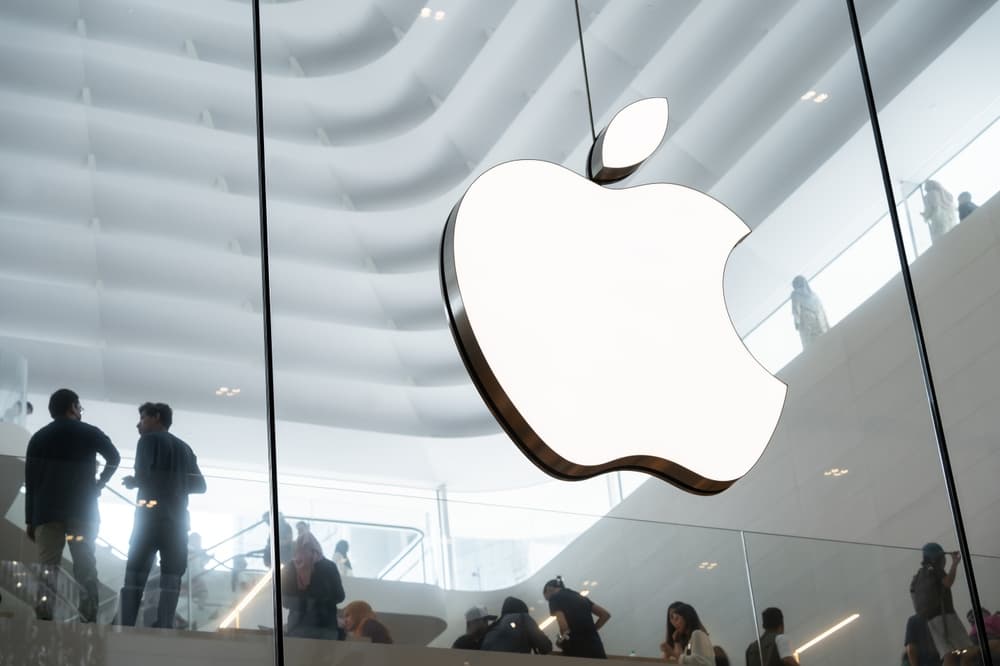
Yesterday, Tim Cook stepped down as CEO of Apple (AAPL), a role he had held for 15 years following Steve Jobs’ death.
During Cook’s term, in 2018, the tech giant became the first U.S. company to notch a $1 trillion market cap.
Over the past 15 years, shares are up 2,200% – and that’s before dividends – a fantastic investment, despite its large-cap status.

Tim Cook’s tenure at Apple has seen every dollar invested turned into $22 (before dividends), thanks to high profit margins and financial engineering. (Source: Statista)
Unlike Jobs, Cook is not an innovator. Anyone watching and paying attention to the company could have told you that from day one.
Jobs was famous for the drama he cultivated for new product launches. In 15 years, Cook did not preside over one.
Cook focused the design team on new iterations of existing products. A slightly better iPhone may not sound like much, but if you upgrade from an iPhone 12 to the 16, the metrics are phenomenally different.
Apple’s platform services, such as iTunes and cloud services, are high-margin cash cows for investors. Even without new product development, revenues rose by 166% during Cook’s tenure.
How, you might ask, did shares rise 2,200%, if revenues only increased 5% of that number?
Cook used Apple’s prodigious cash flows to buy back billions of dollars of Apple shares every year. The reduced float of shares, divided by slightly growing earnings, is a masterpiece of what we call “financial engineering.”
Typically, a company will buy back its own shares to hide large stock option awards to executives. Or to hide declining cash flow.
Apple used slower revenue growth from a rabid fanbase – and share buybacks – to goose “shareholder value.” A phrase the good doctor Kurt Richebacher used to bristle over back in the day. Wall Street, he used to emphasize, had become a “cult of shareholder value,” a dangerous trend he attributed to late-stage capitalism.
In fact, during Cook’s tenure, Apple became the first company to use buybacks and dividends to return over $1 trillion to shareholders.
Perhaps, Apple still has strong days ahead and a return to innovation. Under the new direction of John Ternus, Apple is expected to announce its first foldable iPhone at the Steve Jobs Theater at Apple Park in Cupertino, California, on September 9.
Perhaps the buyback engine will simply grind on, continuing to create market-beating returns for investors.
Either way, the Cook era will stand out. Whether you’ve owned shares directly or simply owned a market index, Apple under Cook would often be one of the top five market constituents, and shareholders went along for the ride, too.
Today, Andrew is banking on a return to innovation and a bit of the old Apple sheen to light a fire under investors… again. Sign up for Grey Swan Pro to get the specifics.
~ Addison
P.S. This week on Grey Swan Live!, we’re bringing back Jeff Opdyke.
A former Wall Street Journal writer, Jeff has been living and investing internationally for two decades. Jeff currently pens the Global Intelligence Letter from his home in Portugal.

Jeff has already joined our mission to create a global fraternity of thinkers, philosophers, and investors. On Thursday, he’ll share his unique view on America’s decline from abroad, providing critical insight ahead of the midterms.
If Japan is the canary in the coal mine for the bond market, America may be the canary in the coal mine for the political order. The midterms are approaching. The debt burden is rising. The old assumptions about U.S. exceptionalism are being tested in real time.
A program note: We will also be speaking at Jeff’s Summit in Dublin in October. The theme: how Americans can think, invest and live with more freedom when the old home-country assumptions begin to fail. More details to come.
Join us on Thursday as we chat with Jeff on Grey Swan Live!