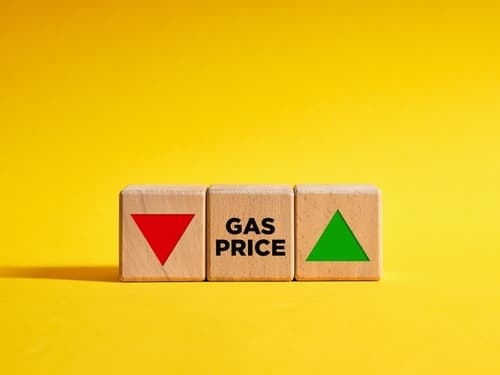
That little sigh of relief holiday drivers felt at the gas pump over the Fourth of July holiday did more work for the stock market than most economists would care to admit.
The consumer price index (CPI), the government’s headline yardstick for measuring inflation, fell 0.4% month over month – the largest monthly drop since 2022, when the economy was still stumbling out of the pandemic with one shoe missing.
The reason? Simple enough. Gasoline prices fell about 3.5%, and when gas gets cheaper, the CPI looks better in a hurry:

CPI inflation dropped 0.4% month-over-month but remains elevated on an annual basis. (Source: Zero Hedge)
That is the good news. A softer inflation print throws a little egg on the face of the Federal Reserve governors who are pushing for a rate hike this year. It also gives Fed Chairman Kevin Warsh some renewed vigor to argue that rate cuts are needed to lower borrowing costs for the real economy and the AI buildout.
The tentative bad news is that oil prices are up roughly 12% this month. The ceasefire with Iran has broken down, and traffic through the Strait of Hormuz is running well below pre-war levels. Add in a depleted Strategic Petroleum Reserve (SPR), and last month’s “disinflation” begins to look less like a trend and more like a lucky weather report.
Markets, of course, do not wait for certainty.
If investors continue to ignore the mess in Iran, money will start looking for the stocks that benefit most from lower interest rates. Sectors punished by sticky inflation and conflict-dependent high energy prices will catch a bid.
We have some early evidence that the trend is already shifting.
The Russell 2000, a key benchmark for small-cap equities, has significantly outpaced the large-cap-dominated S&P 500 Index over the past month, pushing its year-to-date advance to 20%. Unlike brief or speculative spikes, the rally shows deep fundamental strength, with all 11 small-cap GICS sectors outperforming their large-cap counterparts.
Market rotation has been fueled by hopes for lower borrowing costs, a resilient domestic economy… and easing inflation.
If Warsh gets his way, the Fed’s attitude will change with the market.
Right now, the opportunity is not in pretending inflation has vanished. It is recognizing that the market may be pricing in the next move before the Fed board of governors has the decency to announce it.
Today’s Grey Swan Pro reveals an interest-rate-sensitive business that gushes cash flow, produces a 6.8% dividend and has been knocked down with the tickup in inflation earlier this year — details here.
~ Addison
P.S. Tomorrow on Grey Swan Live!, we return to one of our favorite themes: Argentina’s economic turnaround. While DOGE met the Washington establishment and the establishment won, Mieli’s Argentina has truly taken a chainsaw to the administrative state.
We’ll get the latest from our man on the ground, Joel Bowman, author of Notes From the End of the World.